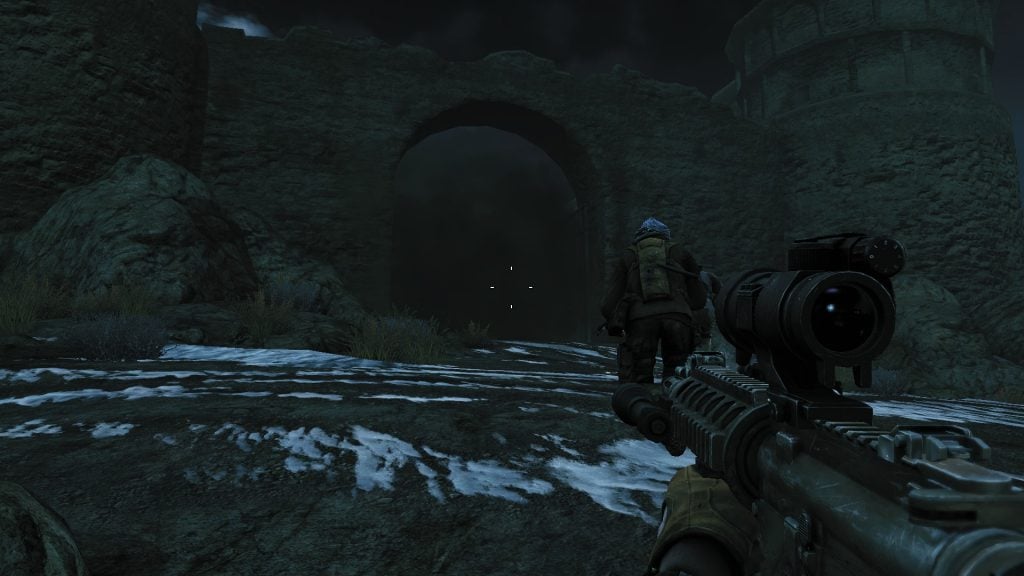
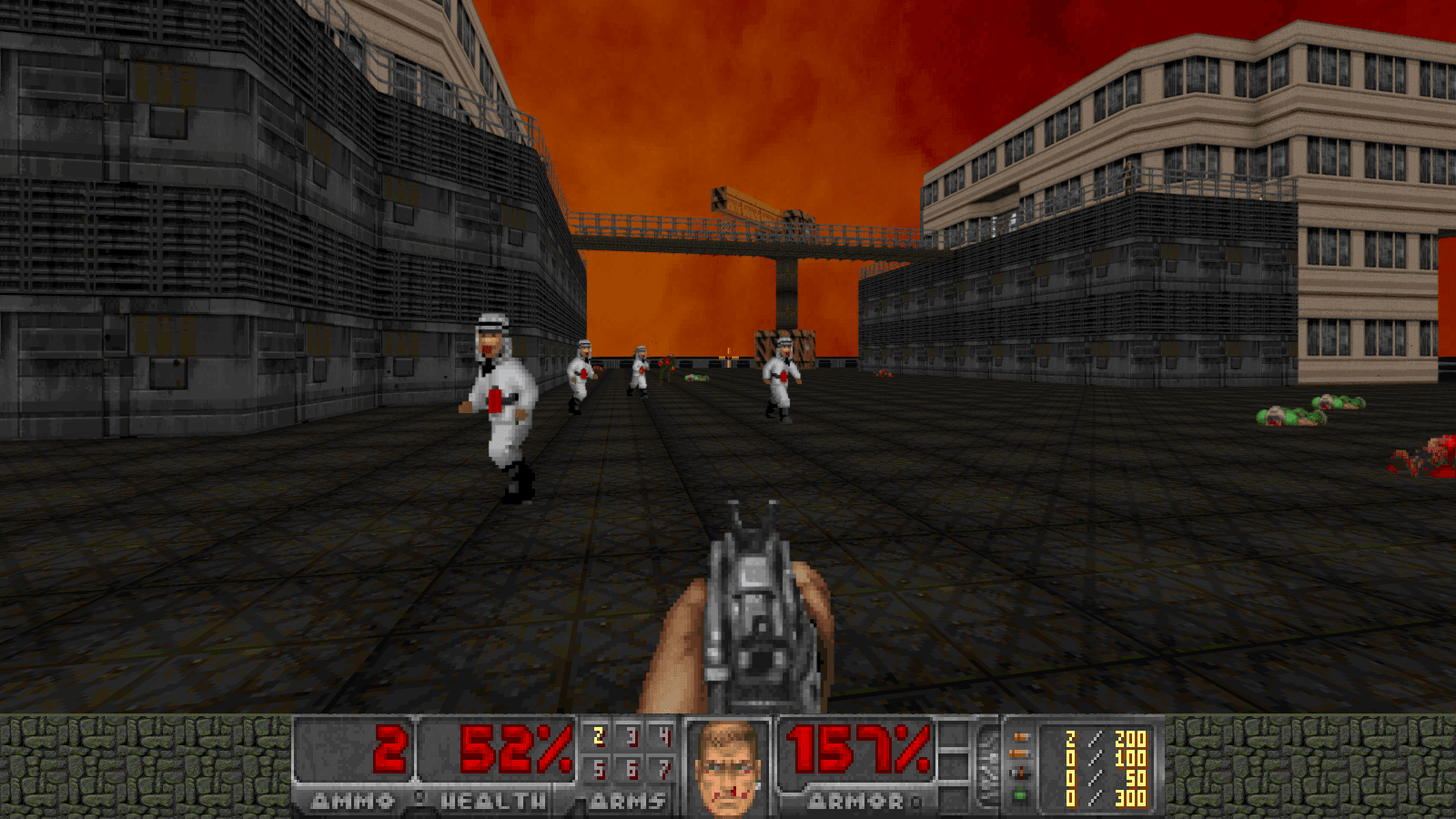
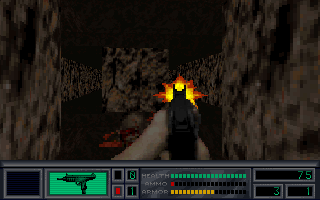
When I wrote about Half-Life: Before, I had realized that writing about such a mediocre Half-Life mod felt disappointing to me. I usually try my best to avoid going for easy punches and writing about bad stuff. Besides, there’s other people that cover bad stuff so much better than I ever will.
So I wanted to make good and write about a different Half-Life mod. After all, Half-Life is probably the game that got me interested in mods, after Wolfenstein 3D and Doom. So after playing and writing about Before, I had stumbled upon an existing mod that had recently updated, and decided to give it a whirl once more.
I always get a kick out of crossover mods. Counter-Strike into Half-Life. Mario platforming in Doom. That sort of stuff. I don’t remember how I found this one, but last year I had stumbled upon one of the coolest crossover mods I’d seen. This Half-Life mod takes the concept and character from another iconic game franchise and transplants him into the original game.
This is why I said “grab your Berettas and painkillers” at the end of the Before article. We’re about to do some bullet time in Black Mesa.
“I was in a game modification. Funny as hell, it was the most horrible thing I could think of.”
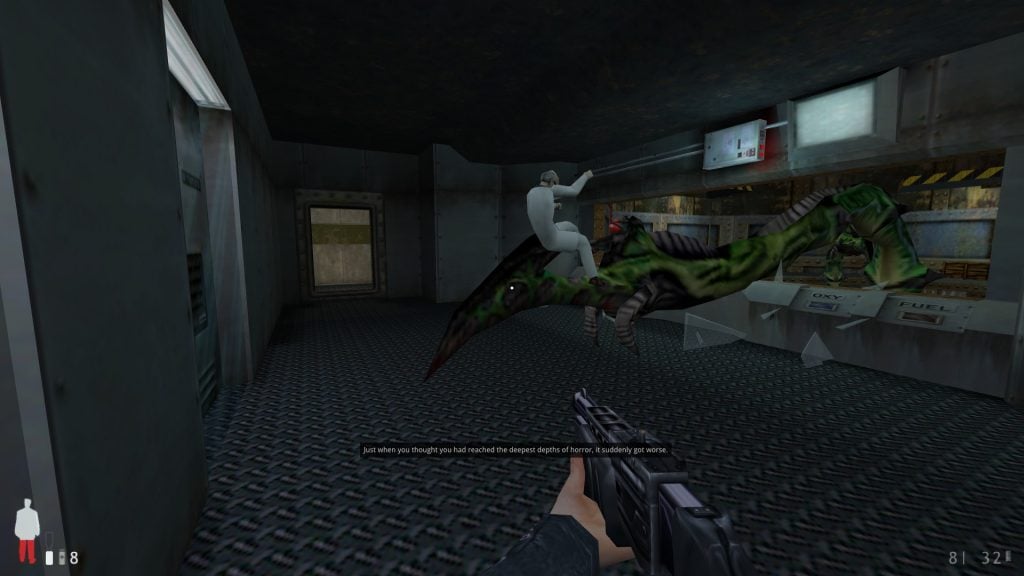
Half-Payne is pretty self-explanatory: It’s Half-Life but instead of the crowbar-wielding silent protagonist Gordon Freeman, you play as Max Payne, the pill-popping, dual-wielding protagonist from the titular series.
I remember when this sequence was pretty cool. A shame that nowadays it looks out of sync…
Sounds pretty simple on the surface. Max Payne’s primary gameplay feature was the “bullet time” mechanic, one of the earliest action games to use that feature. Go into slow motion and shoot enemies with your trusty Berettas. That seems easy to make, right?
I remember a couple years ago when Steam Greenlight was a thing. A way for more independent publishers and developers to get their games on Steam, Greenlight was a simple voting system where one’s game could be published under the system if it got enough support.
Unfortunately this lead to a lot of fairly questionable works hitting Greenlight. A fair share of games using stock assets from Unity, Unreal, and such. Others were people not understanding copyright law and posting stuff like World of Warcraft to Greenlight. One game was a fairly unremarkable team shooter that got re-posted to Greenlight several times after the creator had difficulty taking constructive criticism, even changing the name to “Tactical Anal Insertion” in a fit of rage.
On the bright side, games like Divekick, Broforce, and Undertale were some of the more standout choices that made it to Steam thanks to Greenlight. So it wasn’t all bad, even if there were people spending the $100 to release a proof-of-concept game that wasn’t even in a playable state.
Though, not everything was a game. Sometimes software made the Greenlight seal of approval. Even community mods like NeoTokyo made it into the mix, which was nice for people to get their project noticed. Though, much like a majority of Greenlight submissions, not all of them were winners, such as this one.
is it “artifact” or “artefact”? and what parallel world are we talking about here?
Half-Life: Before is a cheap free mod from developer Creashock Studios, a one-man studio who I hadn’t heard of until this game.
Now I’ve played a bevvy of Half-Life mods. Some of the best and most notable like They Hunger, Poke646, Azure Sheep and many others. Though for every good mod, there’s at least a dozen bad ones. Before falls into the latter category.
The story really doesn’t make a lot of sense: You play as Black Mesa scientist Andrew Winner as they’re teleported onto a cargo ship to… find something to go to Xen? The story isn’t that clear, and the brief amount of story given doesn’t explain much beyond what the Steam store page and the main menu gave me.
One option when you start is using this machine gun in this helicopter to take down the headcrab zombies. Or you could just take them down with your normal weapons.
So it’s a Half-Life mod. Some mods try to make the areas look unique and different, changing up everything so it barely resembles what Valve made, like Poke646. Others are content with just giving the player new levels to play with while leaving the Half-Life formula intact. This is not a bad thing, I’ve played a fair share of decent level packs.
It feels weird these days that there’s no James Bond video games being released. The last major James Bond game was 007: Legends in late 2012, made to advertise the then-new Skyfall film. Activision revoked the James Bond licence the following year, and unfortunately killed off the wonderful Eurocom in the process. Since then, nobody has come up to the plate to bring the titular spy back in a big-budget licensed game. A shame, really.
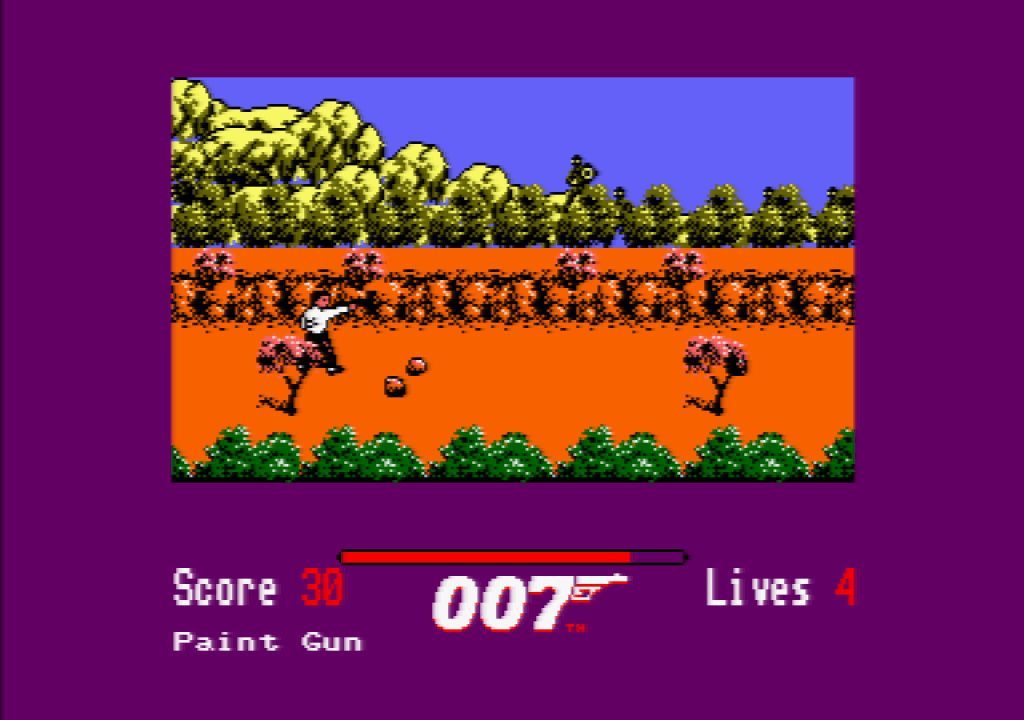
While most people probably remember the heyday when Nightfire was the in-thing, or even tried to give stuff like 007 Blood Stone a try, James Bond games have been around much, much longer. There’s so many of them, more than you’d expect. Most of these are fairly quick to talk about, except for one that came out in the early ‘90s.
But before Activision, before EA, even before Goldeneye 007 was having people go Slappers Only in The Basement, there was those really awkward years throughout the 80s and 90s.
Before Nintendo published James Bond 007 and the famous Goldeneye, there wasn’t really a definitive publisher of James Bond games. Parker Brothers put out a passable action game on the Atari 2600 where you play as one of Bond’s fancy cars rather than the character. Mindscape published a few Angelsoft text adventures – written by James Bond historian and later Bond book author Raymond Benson – at one point even Interplay got in on the Bond thing, taking Delphine Software’s Operation Stealth and slapping the James Bond license on it, changing only a few names here and there. But the primary publisher for a lot of Bond games during this period was British publisher Domark.
When Domark had the license throughout the late 80s to early 90s, they released many different kinds of games. Often times these were action games inspired by existing games, like the game based on The Spy Who Loved Me being a passable Spy Hunter clone. There were also games based on Licence to Kill, Live and Let Die, and The Living Daylights.
I do not recommend actively seeking out these games. If you’re morbidly curious, find a cracked copy where you can turn on cheats. A lot of these games are stupidly hard, probably to cover up how little there was in overall game content. For example, Licence to Kill can be beaten in less than 15 minutes if you’re skilled enough. Probably wasn’t worth the $50 price tag with that little gameplay value.
While most of these games were on home computers, there was a James Bond game on home console and it was quite an interesting little piece, and I’m not talking about that busted THQ game based off the short-lived James Bond Jr. TV series. No, I’m talking about what ended up being Domark’s final James Bond game: James Bond 007: The Duel.
Domark really loved using this publicity photo from Licence to Kill, didn’t they?
Released in 1993 for the Sega Genesis/Mega Drive and Game Gear, this is an action-based platformer. Developed by “The Kremlin” – in reality Domark’s in-house development team – this is the only James Bond game to appear on Sega platforms. Surprisingly this is not based on an existing film, but rather an amalgamation of various elements of Bond films up to that point.
This also got a Master System and Game Gear release, mostly identical to the Genesis game gameplay wise, but for the sake of this article I’m covering only the Genesis version.
It even features Timothy Dalton as Bond. At least, a video game rendition of him. This is interesting because he hadn’t done a Bond film since 1989’s Licence to Kill, and this was around the time where the James Bond franchise was in limbo because of legal problems between MGM and United Artists. Dalton would leave the role in early 1994, with Pierce Brosnan being the next James Bond later that year. Had this game come out just a little bit later, we probably would’ve gotten Pierce Brosnan making his James Bond game debut here. Oh, what could’ve been.
I have made a fair share of questionable purchases over the years. Back when I was still a Nintendo apologist, during the heydays of Gamecube puttering along way behind the PS2 and when the Game Boy Advance was king of all portable gaming, I had bought stuff that in hindsight wasn’t that useful. Such as the GBA-GC link cable that connected a GBA to a Gamecube to transfer data, or in the case of games like Final Fantasy Crystal Chronicles, have all the action take place on the GBA.
Doesn’t this look neat at first glance? Oh, if only.
But that isn’t nearly as much in terms of questionable purchasing decisions as me buying into Nintendo’s e-Reader. Not to be confused with an eBook reader, the e-Reader was a Game Boy Advance add-on where you could scan cards with codes printed on the side to get cool goodies. It sounds like a good idea on paper, but the execution was poor: Games sometimes needed 3-10 codes scanned to play something, you could only hold one thing on the e-Reader’s memory at a time, and you needed a GBA link cable if you wanted to transfer anything from an e-Reader to another system, or the Gamecube.
It was a mess. Needless to say, Nintendo of America wasn’t having more of this and discontinued the thing around 2004. Thus leaving me with a bunch of cards I had acquired that I didn’t really have much use for anymore.
52 e-reader pickup (digital photography, 2018)
Over 15 years after the e-Reader came out, I still have the damn cards. And I’m gonna show some of them off here. Now, these aren’t the most rare, or the most valuable, these are just cards I find interesting, because they have a story to them. Note I’m only gonna list cards I personally own, as much as it would be interesting to write about Japanese exclusive e-Reader cards, I don’t have those.
Props to Nintendo for using the original Famicom cover art, at least.
Donkey Kong Jr.-e
One of the two pack-in classic games – the other being Pinball – this was part of the “Classic NES Series” which featured almost nothing but early NES games, the ones you see crop up everywhere on Nintendo platforms: Donkey Kong, Balloon Fight, Ice Climber, even much-maligned brawler Urban Champion got the e-Reader treatment.
The first card shows how to play the game, with each subsequent card giving some important tips on how to play and eventually master the game. It’s nice considering people even of my generation never grew up on the older NES catalog, but them not being based on more “powerful” NES games like Super Mario Bros. really made this particular series only interesting to diehard Nintendo fans.
It also didn’t help it came on five cards, with one set of two dot codes each. That’s 10 codes I had to scan to play this thing. Worst off, if I wanted to play any other game, I had to remove the game from memory, thus requiring me to scan all ten codes again if I wanted to replay it.
Funny enough, some of these games later got treatment as part of a brief stint of a different “Classic NES Series,” which was on traditional cartridges. These featured more of the NES classics you’d be familiar with, like The Legend of Zelda and Metroid. Why scan 10 codes of Ice Climber when you could buy the same thing for a higher price on a traditional cartridge? Nintendo probably didn’t think that one through too well.
I’ve seen some of these Classic NES Series card packs on sale during the Portland Retro Gaming Expo, and I sometimes get the temptation to get another one of these. Then I realize I’d have to scan 10 codes, and I could play that game elsewhere with less hassle.
…Have I mentioned I hated having to scan 10 freakin’ codes yet?
Hey folks. Sorry that my posting is still somewhat erratic at the moment. Things have been going on in my life, and for a good while I didn’t have anything interesting to write about. I’ve amassed so many junk items over the years that they’re all strewn about in my room, hoping one day they’ll be played and/or written about.
So instead of struggling to think about something, I’m gonna do some posts about some of the games I’ve beaten throughout 2018. Surprisingly it is a small list, as I had fallen into the trap of playing the same quick pick up and play games instead: Killing Floor 2, Payday 2, Asphalt 8: Airborne, and more recently, Quake Champions.
Despite having a massive backlog, I still did finish a few games throughout the year. This was originally gonna be a post with two reviews, but this particular review got so lengthy that I had to split it up.
So let’s talk about a failed reboot of an iconic franchise, shall we?
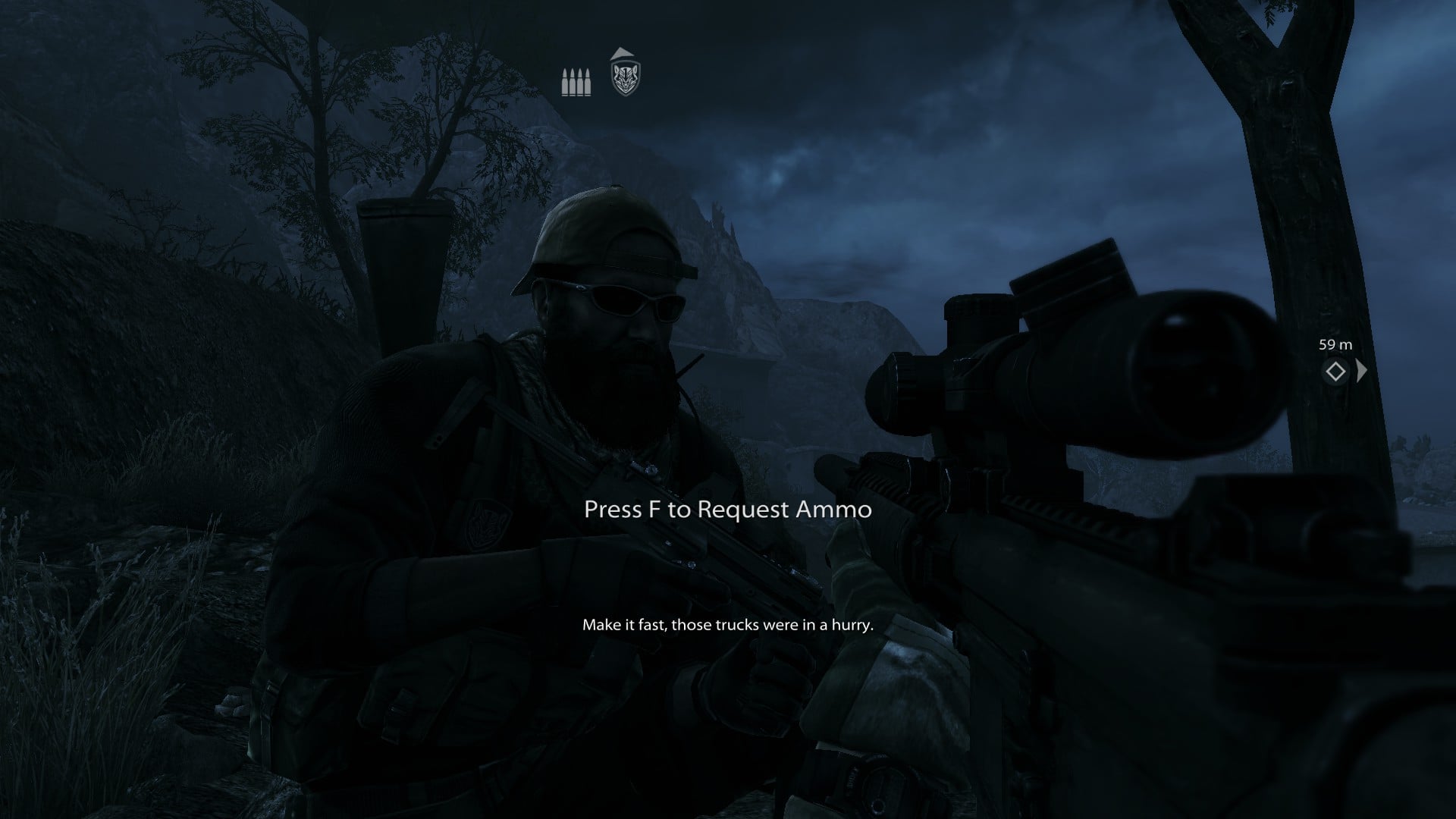
Mr. DudeMcLargebeard getting ready to shoot the evil people.
(Warning: Spoilers for the story of Medal of Honor 2010 and Call of Duty: Modern Warfare 2 lie within.)
Back around 2014, I had written (but oddly didn’t publish) a thing about Medal of Honor: Airborne, which I had replayed because a friend was streaming the game. It’s one of his personal favorites, and while I liked some elements of it like being able to drop anywhere on the in-game map, or even the creative weapon upgrade system, it just felt like a tired shooter going through the motions, and was going beyond the more historical angle of Medal of Honor, even having Nazi super soldiers wielding MG42s like it was nothing.
At the end I had written something to the effect “It’s not as amazing as Frontline or Allied Assault, but it’s probably better than Medal of Honor: Warfighter.” At the time, I hadn’t played the most recent Medal of Honor games, and 2018 felt like the time to tackle Medal of Honor 2010 – as I’m gonna call it from here on in, to distinguish it from the 1999 original – and I felt disappointed all the way through.
I finished this back in January, as the very first game I beat in 2018. This was not a good start to the year.
Realizing World War II games were on their way out after a near ten-year period of them constantly coming out, EA was in a bind. Medal of Honor was considered this prestigious franchise, and they didn’t know where to take it. Their solution was to see what their competition already did three years prior and follow suit: Go modern, and see if it stuck.
The problem was that this came out right after the extremely successful Modern Warfare 2, and was out the same year as Call of Duty: Black Ops – probably in my top three favorite Call of Duty games for various reasons – so already EA was climbing a very, very steep hill. With Medal of Honor 2010, EA didn’t get to the top, but instead slipped and started rolling down the hill, giving themselves bruises and broken bones along the way.
Gameplay wise, it’s a boilerplate roller coaster of a modern military shooter. Shoot the bad guys, reload, occasionally use a grenade launcher or call in airstrikes. Right click aims, Left click shoots. Occasionally you get medals for headshots or multikills, a holdover from Medal of Honor: Airborne that doesn’t make sense here. There’s even a level where you’re in a helicopter. Occasionally soldiers go “hooah” and speaking military lingo so frequently that it’s almost self-parody.
Even something like this has been done, and done better elsewhere.
It’s clear Danger Close was glancing at what Call of Duty 4 did years prior, and tried to copy it, but didn’t understand what made Call of Duty 4 such the blockbuster success.
Sometimes when you’re like me, sifting through thrift stores and finding unusual stuff, you sometimes find things you remember hearing existed, but didn’t know if it was real.
I’ve written about game show games in the past, from portables to knockoffs. I try my best to keep up with the current game show-related merchandise, and that includes games. Yet, this was one I wasn’t expecting to find.
Welcome to the Concentration Hellzone, human.
Concentration: The Classic Game of Mix and Match, based off Concentration, a show you might’ve heard of if you’re as old as I am, or know a lot about game shows like I do. Developed by casual game developers Freeze Tag and published by Mumbojumbo, this came out around 2007 for PCs, and is something I honestly forgot existed until I picked this up and talked about it on a recent post.
For those who never saw the game show, I’ll give a brief explanation since there are betterplaces that explain the show in more detail: Concentration was a game show that aired on television throughout the 1950s all the way until the early ‘90s. It first aired on NBC from 1958 until 1973, being a daytime staple for the network. After being canceled, the show was revived two times: Once as a syndicated show from 1973-1978, and once more back on NBC from 1987-1991; this time under the name Classic Concentration and famously hosted by Alex Trebek. Classic’s last new episodes aired in 1991, but it aired in reruns until 1993.
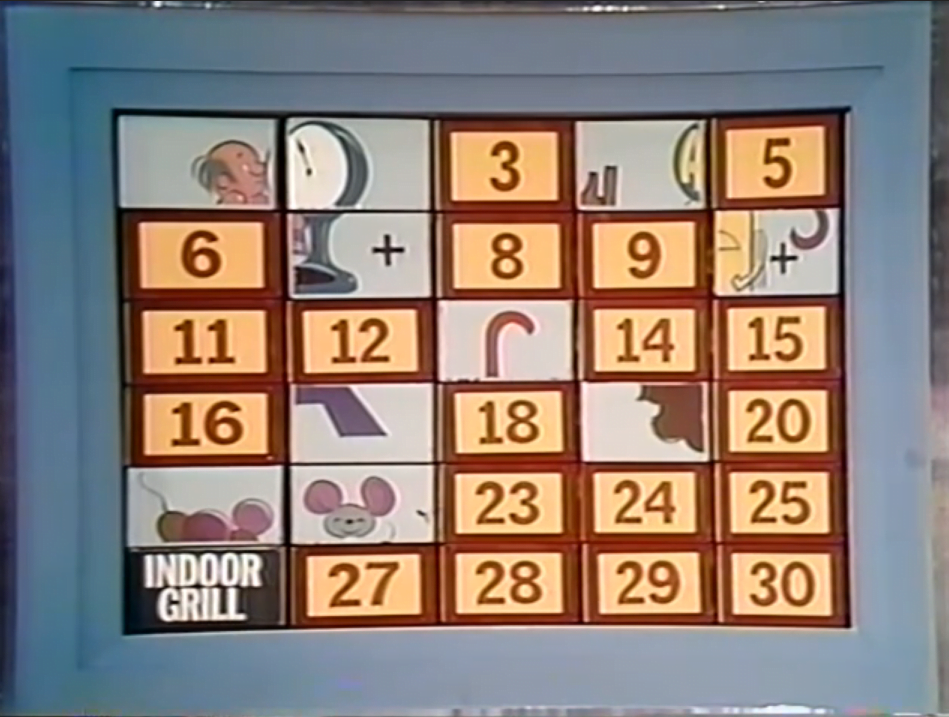
A sample board, from the later 1970s revival.
A combination of the board game Memory with rebus puzzles, players tried to find matches to earn prizes and eventually win them by solving the mystery rebus puzzle beneath. There were changes and rule adjustments throughout the 35 years the show was on the air, but that’s the general gist of the game.
So why I am surprised this exists? Well, Concentration is slowly becoming one of those shows forgotten by the general populace. The last time it aired anywhere in the US was in 1993, when NBC reran Classic Concentration.
From Classic Concentration, a player found a red TAKE! and a Wild Card, giving them an opportunity to steal an opponent’s prize.
Unlike other classic game shows, it never reran on USA Network’s game show block, or even on Game Show Network. This is because NBC bought the rights to Concentration back in 1958 from Barry-Enright Productions, a TV company who was a part of the big quiz show scandals at the time. Even though the later revivals were produced by Mark Goodson and Bill Todman’s production company – producers of Match Game, Family Feud, and The Price Is Right – the show was still owned by NBC. Presumably NBC was asking too much for rerun rights, hence why the only places you can watch Concentration is YouTube videos of old VHS recordings.
(Update: It seems pigs are flying and what was the impossible is now possible, as Buzzr, Fremantle’s game show channel, is now airing both the 1970s Concentration with Jack Narz and Classic Concentration on their network daily. I’ve kept the out-of-date information just so people know what it was like before those two shows got a new life.)
Through various acquisitions and mergers over the past sixty years, Concentration is now pretty much under the arm of NBCUniversal. Make a note of this, as it will come up later.
Now that I’ve given the refresher course about the show, let’s talk about this game, shall we?
It certainly looks pretty… simple. The logo looks better than other ones I’ve seen for this game, though…
I don’t go to thrift stores all that often anymore. I’ve bought too many things over the years that I should write about, but haven’t gotten the time to. It also doesn’t help that thrift store hunting is an adventure in and of itself, so I think I can’t just hit one. But I did just hit one, and it was good to me.
I’ve mentioned Deseret Industries down in Portland before. It’s where I found a bunch of old demo discs from the 90s and 2000s for real cheap. I’ve found PC games I’d never expect to find, even stuff like a cardboard long box copy of NFL Gameday fairly recently. For some reason, this store tends to give me the best luck in finding stuff I wouldn’t expect to find otherwise, whereas I could go to the same Goodwill and be lucky to find a single thing I want, let alone several.
But enough about that, what’d I get?
Well, that’s an unexpected spread of games.
$1 each:
Mad Dog II: The Lost Gold (PC)
Chronomaster (PC)
Concentration (PC)
Mad Dog II is the sequel to Mad Dog McCree, the fairly popular laserdisc-based light gun game. It’s probably American Laser Games’ most iconic game, next to maybe Crime Patrol or Who Shot Johnny Rock. The sequel is however mostly forgotten, however it didn’t stop American Laser Games from porting it to every system known to man after its arcade run had finished.
I honestly bought this more as a lark. These games are fairly simple, easy to memorize, and beatable within 10-30 minutes. It’s just a novelty, through and through.
In the many years I’ve been writing about games, I try my best to broaden my horizons and check out stuff that’s not as well known, or written about. In some cases I just end up writing about obscure first-person shooters from the ‘90s most people don’t know about. Such as Operation: Body Count.
Gotta say this is a rather dull title screen.
For those unaware, Operation: Body Count was a first-person shooter released in 1994 by Capstone Software. In it, you play as a nameless commando who has to stop the evil Victor Baloch and rescue world leaders. It had a fair share of interesting features like AI buddies you could control to help you complete floors, semi destructible environments, a map of the area to avoid getting lost, and a semi-realistic environment in the days when things looked pretty abstract.
I knew I had to get my hands dirty, but I didn’t think they literally meant it…
The game gives a really bad first impression where Our Hero has to fight the dreaded sewer rats under Baloch’s brainwashing for the first several levels. It also doesn’t help the game looks like… well, this.
This guy couldn’t stop walking into me until I backed up so we could even hit each other.
It looks like a bad Wolfenstein 3D clone, doesn’t it? Well, it uses id’s Wolfenstein 3D engine as a base, which looked pretty cool in 1992-93. Many games ended up using the engine for their games, including Apogee’s Blake Stone: Aliens of Gold and Rise of the Triad.
But then Doom happened. Basically any FPS that still had the 90 degree maze-like look of Wolfenstein looked extremely dated, especially by 1994 standards. Even Capstone’s other big FPS of the time, Corridor 7: Alien Invasion, didn’t fare so well either for the same reasons as Operation: Body Count. I wouldn’t be surprised if many FPS developers were swearing their heads off when the shareware episode of Doom hit in 1993, with its open areas, tall floors, and level geometry that went beyond 90 degrees.
Ah, to think of what could’ve been…
Despite the game’s relative obscurity, a Doom modder by the name of Impie decided to take the fairly maligned DOS game and give it a Doom-style makeover. The result is nothing but amazing. Also called Operation: Body Count, the game is similar to the 1994 Capstone original, but with significant changes that make the gameplay more fun and exciting.
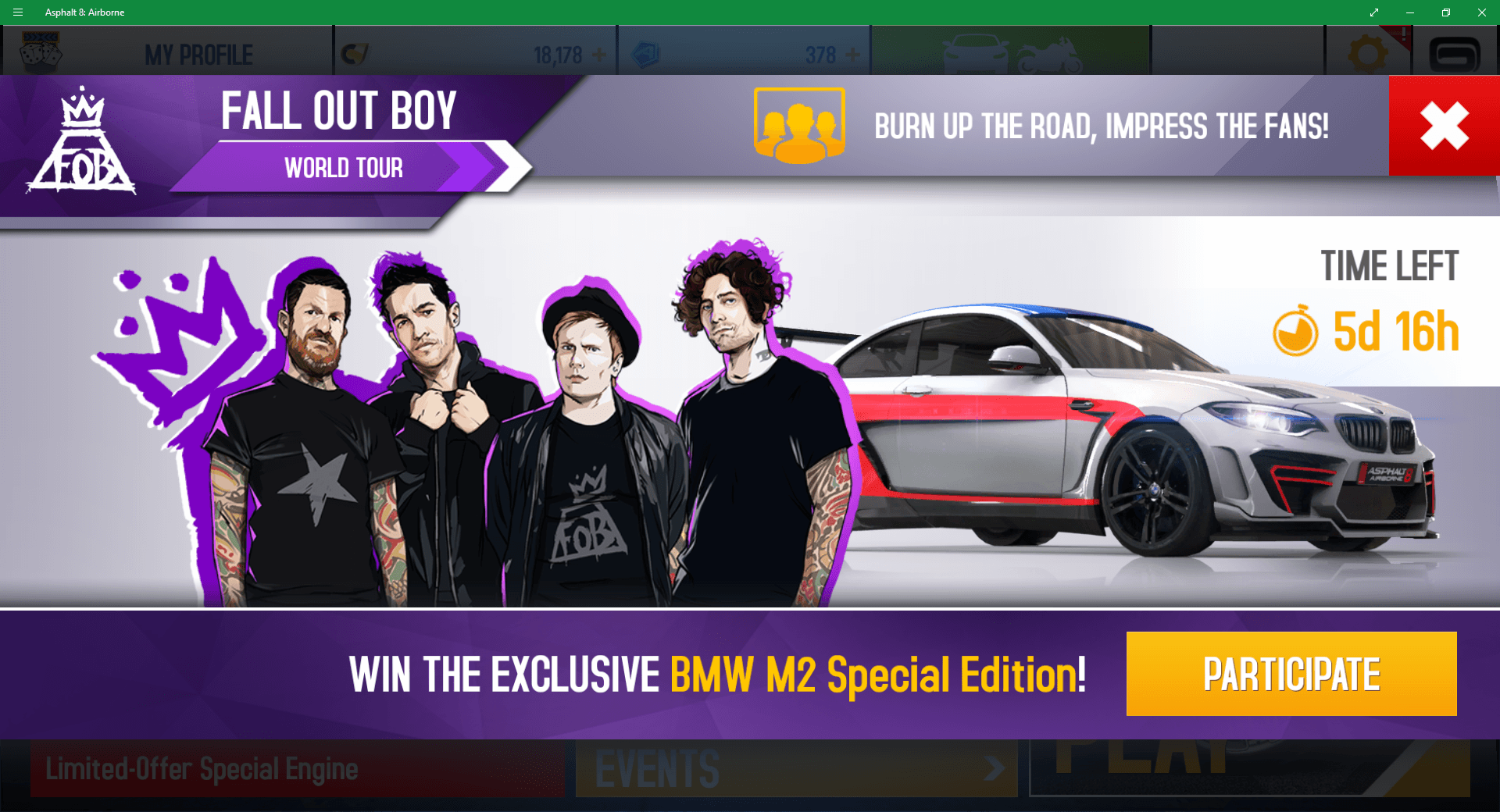
So I was playing Asphalt 8: Airborne, a fairly fun if grindy racing game, and suddenly this popped up on my screen.
Is the title *supposed* to look that weird?
Asphalt 8 meets Fall Out Boy, meant to advertise their newest album? Now that’s a crossover I wasn’t expecting to see.
Admittedly, I don’t listen to a lot of Fall Out Boy. I know a few of their songs, but I always kept confusing them with My Chemical Romance and similar “emo rock” bands that permeated the landscape in the mid-2000s. From the songs I have heard from them, they seem to be an passably entertaining rock band, and I’m surprised they’re still going in 2018.
Like this car? It’s cool, huh?
You’re probably wondering why this crossover exists. They’re a pop-rock band that hasn’t really mentioned being big racing game fans, so it seems like an ill fit, right? Well, Vivendi, the French mega-conglomerate, owns Island Records, which is Fall Out Boy’s label; as well as Gameloft, the developer behind Asphalt 8. So while it’s not completely random like, oh say, KISS Psycho Circus, it certainly doesn’t feel like a natural crossover.
The event goes like this: You join a new racing league, the Fall Out Boy World Tour. In it, you must build enough hype to impress the staff and members of the band to win the championship and earn a brand new car, the BMW M2 “Special Edition,” which differs from the standard BMW M2 in game by having rear spoilers and a cool paint job. You’re given a whole week in real time to do this.
This nerd deserves a swirly.
However, the fight will be tough as you’ll be facing stiff competition, including one from the “ultimate Fall Out Boy fan,” Adam Knowles. He’ll taunt you throughout, saying he has the best tuned-up vehicle and that you’ll never beat him. As you complete challenges and gain fans, you’ll eventually have to defeat multiple AI in head-to-head races to win the championship and the BMW M2.
Some of the challenges get pretty tough as time goes on.
So how does this work? You gain fans by completing challenges in each race. Most of them are fairly simple challenges – beat the race in the target time, get first place, knockdown more cars than your opponent – others more difficult, such as requiring you to do 6 flat spins off a ramp or drift for 4,000 yards. Successfully pull off the challenge and you’ll earn fan points and build up hype. Hype increases the amount of fan points starting at 1 times the value, to 1.5 times the value, all the way up to 3x the normal value. Every normal race is 200 points, whereas the championship racers increase drastically in value as the story progresses.
Over the many years I’ve been collecting games, I’ve always found particularly unusual game show games. Besides the common Jellyvision/Jackbox collective, I’ve found stuff like Outburst, a board game that decided to become a poor man’s You Don’t Know Jack; Another Jack clone that was endorsed by MTV’s TRL, the list goes on. I even have Pat Sajak’s Lucky Letters, which makes me one of the 34 people who bought a physical copy, and that’s also worth talking about. But this one’s a bit different. It comes from across the pond, and features one of the most notable fads of the mid-2000s…
I wonder if us Americans thought Carol Vorderman was like Mavis Beacon.
It’s Carol Vorderman’s Sudoku. A somewhat obscure Sudoku game, this came out courtesy of Secret Stash Games, a weird Eidos Interactive imprint. Though Empire Interactive is also credited on the box and in the game itself, which mostly published games in the UK (and were the original distributor there, presumably).
So you’re probably asking: Who the heck is Carol Vorderman, and why is she endorsing a Sudoku game? I’m going to assume the people reading this post are not from Britain and/or game show nuts, so I’ll give the skinny on who she is: Carol Vorderman is a long-standing television host, being the co-host for a British game show called Countdown.
Countdown is a fairly simple game show where players either try to come up with the longest word from a semi-random pick of letters, or solve a mathematics puzzle by hitting a target number with six randomly chosen set of numbers.
Carol solving a particularly devious numbers round.
Vorderman was well known especially for the latter, sometimes getting solutions to the math problems that even the players couldn’t figure out. She was on the show for a very long time, from the show’s early beginnings until 2012. She’s almost like Britain’s Vanna White, but does more than touch screens and clap all day.
As for Sudoku, it’s a little more complex. A long standing game that got an unusual resurgence around the mid 2000s, the game involves placing the numbers 1 through 9 on a 9×9 grid split into 3×3 subgrids. The goal is to make it so each row, column, and subgrid have one of each number without any duplicates. It’s a nice mental puzzle that gained traction in unusual ways, and it’s one of the mini-games in Nintendo’s then-popular Brain Age games. It’s certainly more enjoyable than Jumble or Crossword puzzles, anyway.
Presumably this was made for a pittance, since this was around the time Phoenix Games were churning out sub-par budget games in the UK, so this likely got tossed in that same pile. Though in my case I only paid a few bucks for it at a gaming convention, so it’s no big loss.
So here’s the first problem I have with this game. Carol Vorderman doesn’t have the name recognition that someone like Gordon Ramsay or James Corden has outside their native England. Had I not told you who Carol Vorderman was, you would probably assume she was a fictitious entity like Mavis Beacon.
But I assure you, she’s a real person who endorsed a Sudoku game, and for some reason somebody thought it was fitting to bring it here without any context of who she is or where she’s from.
This looks like this was made in like five minutes while the Ui designer was taking a bathroom break.
But enough about what person gets to endorse the sudoku game, let’s get back to the game itself. The version of Carol Vorderman’s Sudoku I’m playing on is the PS2 version. Though it did get a PC release, I couldn’t get it to work on Windows 10. I assume both versions are identical in terms of content, but when it comes to something like Sudoku, you can really only change so much.