The Build Engine is a fascinating piece of tech. Made by a young Ken Silverman, the engine was made as one of those engines that could rival Doom in features, and was used to great effect with its design, features and most importantly, interactivity. Build brought us some of the coolest mid-90s FPS games: Shadow Warrior, Blood, and of course, the granddaddy himself, Duke Nukem 3D.
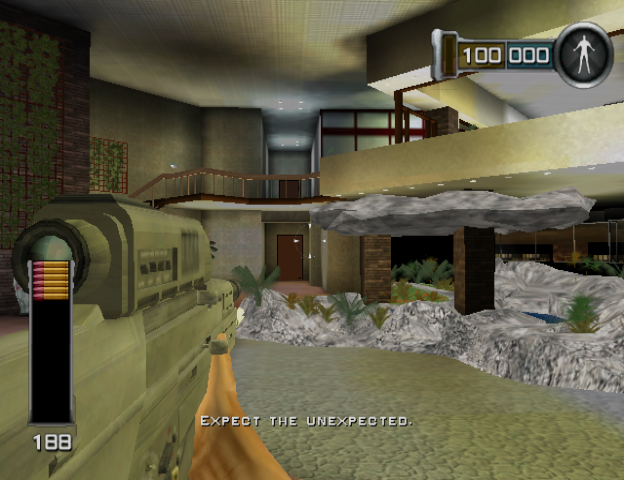
Still looks cool as hell as it did in 1996.
With news breaking of someone leaking a work-in-progress build of Duke Nukem Forever from around 2001, I’d be kinda getting an itch to go back to the ‘roided up wisecracker. Problem was finding good Duke-related content.
While Doom’s mod community is well documented and reported upon, I feel the Duke Nukem 3D mod community is talked about a lot less. Granted, there isn’t a whole lot of outstanding mods, and some of the more notable ones like Plunder & Pillage have an unfortunate history behind it. But somehow, I found a modification for Duke Nukem 3D that for a good while was my go-to if I wanted to play a game that wasn’t a Call of Duty title.
Quite the content warning you got there.
Duke Nukem: Alien Armageddon is a modification for Duke Nukem 3D using the eDuke32 source port of Build. At first glance, you’d think this is just a few new levels and maybe a few monsters. Oh, it’s much, much more than that.
Made by a team called “Dukeboss,” the team mostly consists of sebabdukeboss20, a modder known for the AMC Squad for Duke Nukem 3D, and DeeperThought, whose Duke Nukem Attrition mod for Duke Nukem 3D was something I played constantly for years. There’s a myriad of other developers involved, including mappers, artists, even voice actors; but those are the most notable members of team Dukeboss.
New content, same old Doomed Space Marine.
Alien Armageddon is a combination of Duke Nukem 3D with a myriad of new items and features. The original episodes from Duke Nukem 3D: Atomic Edition alongside two of the official expansion packs – Duke It Out in D.C. and Duke Caribbean: Life’s a Beach – which add new cutscenes, animated features and even abilities like an RPG system and an AI partner. I’ll get into that more in a bit.
Please note: This article was written in June 2022, which covered version 4.54, the most recent version of the mod at the time of publication. As the mod is often updated to add new content or fix bugs, some of the things mentioned here may differ from a more recent version.
Okay, I’m genuinely impressed about how they made this episode selection thing.(more…)
It really cannot be overstated how much Portal made an impact to video games when released in 2007. Valve snatched up a few Digipen students with an ambitious project, gave it that high quality Valve polish and released it as part of The Orange Box. The game was considered tertiary to the rest of The Orange Box – the more hyped games being the long-awaited Team Fortress 2, and Half-Life 2: Episode Two, the continuation of the Half-Life 2 saga – but Portal somehow became that surprise smash hit that started making small waves in the puzzle platforming genre.
In the years following, a fair share of games would copy Portal’s first-person perspective but try it with different ideas. Antichamber did puzzle-solving in impossible spaces. Quantum Conundrum involved shifting between dimensions to affect objects in the world. Even something like The Ball had the titular ball be used to solve tricky puzzles. But I couldn’t think of a puzzle game that involved gravity and polarity. Until now.
He looks like Cole MacGrath from inFAMOUS‘s dorky half-brother. (Cover courtesy of Mobygames.)
Enter Magrunner: Dark Pulse. A first-person puzzle platformer that involves polarity and gravity to solve puzzles. Released in 2013 for the PC, Xbox 360 and PlayStation 3, it’s another one of those puzzle platformers that involve shooting objects to solve puzzles.
This was developed by 3AM Games, a small development studio based in Kyiv, Ukraine. They had done contract work with Frogwares, the developers of the myriad of Sherlock Holmes games. Funded on the crowdfunding site Ulele, they received €110,000 in funding, just barely hitting their €100,000 goal. With some help from Frogwares and distributor Focus Home Interactive, they were able to make this game a reality. As far as I know, this would end up being 3AM’s last known project, as most of the team joined Frogwares proper not long after.
I had gotten this for free on GOG not long after its release, and had mostly thrown it into The Pile that is my neverending backlog. Struggling to figure out a game to play, I let The Backloggery’s Fortune Cookie feature do its magic, and it picked this. Though I opted to use my Steam copy, of which I don’t remember when I got it. Maybe around the same time as I snagged the GOG edition. So if you’re wondering why this game might be in your game library, that might be it.
2 Unlimited not included. You gotta go to BioMetal if you want that.
You play as Dax Ward, an orphaned child whose parents died rather unexpectedly. Being mentored by a mutant scientist named Gamaji, Ward enters a contest to be one of the first people to use MagTech’s space training program, sponsored by LifeNet, a major social media conglomerate. The whole Magrunner event is broadcast and shown, featuring Magrunners from all walks of life.
Everything starts out smoothly, where Magrunners are solving the puzzles within. Parts of Magrunner start out feeling very Portal-esque at first. Dax moves from test chamber to test chamber through elevators, the test chambers are very clean and scientific like Portal’s Aperture Science test chambers, stuff like that. So far you’d expect that it’s gonna be similar to that, right?
Then the power starts malfunctioning and people slowly are dying. Dax must survive and get to the bottom of this mess by solving puzzles involving polarity. Which sounds silly, but hey, it’s a puzzle game, those things don’t need that strong of a plot.
The polarity in action, with a fancy cube. Yes, it does look like Christmas by default.
If you’ve played Portal, most of Magrunner’s mechanics will make sense pretty quickly. Dax has two polarity colors – Red and Green by default, though they can be changed to any color – of which he can put onto objects highlighted in yellow. Much like magnets and polarity in real life, two objects of the same polarity color will often stick together, while two objects with different polarity colors will repel them away from each other.
Throughout Dax’s journey through the catastrophe, he’ll solve a multitude of polarity puzzles, flinging boxes, using platforms, trying to avoid turrets that’ll shoot him on contact – sorry, these ones don’t talk with a cutesy voice – all the typical puzzle platformer stuff.
This section required me to bring three platforms to an ideal height so I could jump off the box at the top. This… took a while to complete.
Wow, it’s been… about two and a half years since I’ve done a blog post on the things I’ve bought. For the most part, motivation was the main reason I didn’t make any, but then there was this thing called the COVID-19 pandemic which made me pretty afraid to really go shop and risk getting a life-threatening illness in the process. Thankfully masking up, vaccinations and a general change in my perspective made me a bit more confident to head out again starting in 2021.
I kinda like doing these posts – previously under the boring, uninspired “Game finds” and the unfortunate initialism of “I Bought Stuff!” – and in spite still of buying things here and there during the pandemic times, I never really compiled enough to make a new post during that time. But I figured with such a hiatus that it would get me the inspiration to write, as well as document some of my hobbies and interests.
For this article, I chronicled all the times I bought something physical throughout last Winter: December 2021 to March 2022. Of which I’ll talk about my reasons for the purchase and any sort of information I could gleam off the internet or remember from the recesses of my mind.
While there is some video game talk in this article, they are definitely not the forefront of this article. So if you decide to tune out of me nerding out about old bands and board games from 50+ years ago, I understand, but I do plead for you to stick around regardless.
But before we get to the nitty-gritty, there’s a handful of things I skipped upon that in hindsight I should’ve grabbed instead:
A box copy of The 7th Guest (DOS). The CDs were missing, floppy disks for a bootleg copy of SimCity 2000 were in there instead. Tried to see if the CDs were in the CD section, to no avail. I probably could’ve just bought the box and found a loose CD copy to replace it, which is what I might do from now on if something like this comes up again.
Vietcong (PC), a clunky budget shooter made to cash in on the Vietnam War in the early-to-mid 2000s. I was considering this, but then I put it aside and someone else had snagged it not long after me. A shame, I probably would’ve added it to the pile here otherwise.
A copy of a VideoNow XP disc featuring The Batman. Youtuber Techmoan had recently covered the VideoNow, a defunct video disc format made by Tiger Electronics, and the XP was the last model Hasbro released before killing the entire product line around 2007. In addition to having viewable TV episodes, XP discs also had interactive Q&A elements. I passed this up because I don’t have any of those players, and finding one in the wild without having to resort to eBay seemed unlikely, so I passed it up for now. (I may buy it again in the near future if it’s still there, so I’m not ruling it out.)
Now we’ll start with my sole purchase from mid-December 2021, at a nearby thrift store I’ve talked about countless times in this series. Most notably, the time where I had found a dozen old demo discs and some PC games back in 2012. This has always been a reliable place for interesting things, and here was no exception.
Getting my racing game on.
$2 each:
Need for Speed III: Hot Pursuit (PS1)
Need for Speed: High Stakes (PS1)
Rage Racer (PS1)
I’ve probably mentioned this before, but the original PlayStation was one of those platforms that completely passed me by. Since I was basically a Nintendo diehard in the late 90s, I didn’t get a PS1 until I bought the discount portable PSone in the early 2000s. I’ve been slowly amassing a collection of games to try to right that wrong, and when I saw a bunch of racing games at this one thrift store, I couldn’t resist. Even though I’m not a big racing game aficionado.
Need for Speed is a franchise that I wish I really got into like some people did. I had played a few from the Street Racing era like Most Wanted from 2005 and Carbon, and the 2010 Hot Pursuit reboot by Criterion that everybody loved that I just didn’t like. But when it comes to the early era of NFS, I’ve played very little. At most maybe a little bit of Need for Speed II on PC years ago. I figured NFSIII was one of the most popular ones of the older games, and I thought it was worth a try. Now to just get used to how these games handle, because they hit a middle ground when it came to racing: Not super arcade-like a Cruis’n, but not a hardcore simulation like Gran Turismo.
High Stakes is the followup to Hot Pursuit, of which I know very little about. I bet it’s fine for the price I paid. Though honestly I wish I found one of the V-Rally spinoffs instead, which were branded as Need for Speed titles in North America. I’m starting to realize that my knowledge of the pre-Underground days of Need for Speed is very little, and I should probably change that by playing these games a bit more.
Finally, Rage Racer. The third installment in the long-running Ridge Racer franchise, and this is the one that introduces franchise mascot Reiko Nagase. The Ridge Racer games were another one of those franchises that I never really paid attention to, which is a shame because I’ve heard they’re surprisingly good at being fun racing games without being too simulation-heavy. I don’t know if this installment is well-received or not, but I figure it would make a nice addition to my game collection.
After writing about Doom Eternal last month, I felt like I was kinda losing my touch when it came to offbeat, weird stuff. Struggling to think of something to write about, I thought of something. And it’s time to head back to the unofficial expansion mines once again.
I’ve been down this road countless times at this point, but this is one I had to come back to, since I mentioned it briefly before late last year. Since I covered one of the unofficial expansions — Zaero for Quake II — back in November 2021, I had to go back and look at another expansion for Quake II. And y’all, it’s a doozy.
“Headgames is in no way affiliated with id Software.” Gee, I never would’ve guessed. (Cover courtesy of Mobygames.)
Juggernaut: The New Story for Quake II – quite a mouthful – is an unofficial add-on for id Software’s space marine Strogg-killing shooter Quake II. The second of two unofficial add-ons, this came out around 1998 as a way to add more to your Quake II experience.
I became familiar of this thanks to Something Awful, back when they used to “review” video games of dubious quality. Much like a lot of internet writing of that era, it’s really hard to go back to reading, especially since its creator Richard “Lowtax” Kyanka was an absolute piece of shit. But I had been curious about this add-on, so I started looking for a copy. Turns out it was a bit tougher finding a complete copy than I thought it would be, thus I put it aside and wrote about Zaero instead. It wasn’t until after I published that did a friend come and help me find a copy.
Much like previous add-ons – official and unofficial – the game offers you to shoot and gib monsters, grab keys and have a fun time, right? I wish this was true, as this is not the case with Juggernaut. Problem number one is who published it.
Sadly not sponsored by Foreigner.
Head Games was a fairly infamous budget publisher through the late ‘90s, alongside some of the more infamous ones like Valu-Soft. While they dabbled in publishing unofficial expansions like the previously talked about Aftershock for Quake, their bread and butter was the “Extreme” line they published from 1999-2000, like Extreme Rock Climbing, Extreme Boards & Blades, and yes, the infamous Extreme Paintbrawl games. They’re not known for a high pedigree of quality, so buying a Head Games product meant you had to put your expectations real low. And this was before Activision acquired them.
That looks more like a dome than a canopy.
Though we can’t just blame the publisher: Developer Canopy Games has their own tale of making clunky games as well. For the most part, they were known mostly for budget-label driving games based on Harley Davidson, Hot Rod Magazine and oddly Initial D of all franchises; as well as Midnight Outlaw: Illegal Street Drag, a racing game clearly made to cash in on the Fast and the Furious franchise that Something Awful also covered back in the day. (This will be the last time I mention that site in this article, promise.)
They occasionally dabbled in other genres, including the then-lucrative market of hidden object games in the late-2000s, but from the research I did shooters were not really their thing. Juggernaut would end up being their only add-on for a commercially released game. So I don’t have high hopes for this.
These cutscenes are… interesting, to say the least.
According to what I gleamed through the cutscenes and the readme files, the story goes like this: In the far-flung future, a Juggernaut ship exported people from Earth to the two moons on Jupiter – Europa and Callisto, respectively. You’re a soldier named “The Defender” who lives on Europa, doing your usual mining business until you find out that settlers of Callisto are doing science experiments on people that turns them into mutated beings. The Defender must fly to Callisto and eliminate those mutated freaks before their demon stuff… spreads throughout the universe? It’s not really clear, the story is likely explained more in the manual or the intro cutscene than it is in-game.
Fun fact: In this intro demo, the player has god mode on. Already a bad sign.
Something I’ve constantly talked about on this blog is how eternally behind I am in games. Procuring a massive backlog, buying games thanks to Humble Bundles, cheap Steam sales, and gifts of spare keys from friends has been the primary causes of my never ending back catalog.
Yet, I try to keep myself in arms’ reach of the current video game landscape, even if I’m not a fan of the direction the industry is going sometimes. This results in me playing the newest games usually years after their release. Anyone who’s been a reader of this site has seen me write about big popular games after their popularity, such as BioShock Infinite last year. But this time around I kept myself a bit closer to the zeitgeist this time, by playing a game a year or so after its initial release. And it’s from one of my favorite game developers.
Still fun as heck to this day.
Let’s talk a bit about id software. They’re the absolute pioneers of the first-person shooter realm: Wolfenstein 3D, Doom, Quake. Important games that really made an impact on the industry as a whole. However, there was a sea change by the late 1990s. When John Romero left id on less-than-pleasant terms to form his own studio, there was a very clear change on how id Software worked as a company: Pushing technology at the cost of making games that while good on a technical level, were kinda boring to play.
Any excuse to use this screenshot again.
I’ve talked about Quake II a few times on here, and while my opinion has softened a bit in recent years, I still think that while a technical marvel was just boring to play.This was id’s MO during the age of John Carmack. Stuff like Quake III Arena, and Doom 3, while solid games, didn’t have the massive highs that their early works did. Indeed, their competition – Epic’s Unreal Tournament and Valve’s Half-Life 2 respectively – were making more of an impact on the industry in a way people could easily see.
Rage was sort of the lowest point of this era, the unremarkable first-person exploration game of which the only good things about it were John Goodman voicing a character and its reload canceling mechanics, of which I wrote about way back in 2016, and that was around the point id was no longer the amazing developer it once was. Hell, I even had doubts id Software were ever gonna release an awesome game ever again.
Then John Carmack left, a bunch of people got shuffled around, canned a version of Doom that was more like a big-budget shooter like Call of Duty, and gave us the 2016 Doom reboot. While the multiplayer beta was enjoyable but boring, the rest of the game turned out to be the return of id Software as an awesome company that could make good games. With an amazing game like Doom 2016, it’d be pretty hard to follow up. But in 2020 they decided to give it another try, with Doom Eternal.
Not to be confused with Eternal Doom, a pretty alright megawad for Doom II released in 1996.
The story of Eternal is a bit more pronounced than in the previous game: The Doom Slayer has noticed that there’s been Hell on Earth with demons destroying what’s left of the planet. In typical Doom fashion, the Doom Slayer must travel around Earth and Mars to eventually stop the Khan Maykr’s hell demons from invading everywhere once again. Pretty simple stuff.
It doesn’t help that you can customize the look of the Doom Slayer, thus making them look like an absolute goofass in serious, emotional cutscenes.
It’s kinda weird to see Doom Eternal go all in on story. While Doom (2016) had a story, it was just about enough of it to give motives on why the Doom Slayer must rip and tear and it worked. In Doom Eternal, they go all-in, with cutscenes that take place in third person, giving diatribes that would seem in line with many contemporary games. It’s not bad per se, but compared to the previous game where there was basically one motive — Stop the demons by any means necessary — it just feels a bit ridiculous here.
Over the 10 plus years I’ve been writing about video game stuff, one thing that’s stayed constant is me writing about the most jankiest, clunky games out there, often in January. So much so that I almost considered making an event called “Jank-uary,” where people would play these particularly busted games as a celebration of the underdogs and trash of video game culture. Maybe I’ll still consider that in the future if there’s any interest.
Since it’s the start of a new year, what better thing to write about then yet another janky FPS? After all, might as well keep up my tradition of writing about this jank to start the year. This time with a developer I’ve talked about a few times in the past!
“Bet you can’t scream louder than me, human!” Cover courtesy of Mobygames.
Alien Rage is a first person space shooter made by the present-day masters of budget label games: CI Games, the company formerly known as City Interactive. Released on Steam, the Xbox 360, and PlayStation 3 in 2013, the game came out to mostly uneventful fare, often being forgotten except by people like me who are a glutton for punishment as well as quality Eurojank™.
We’ve talked about CI Games/City Interactive twice before: Once in January 2019 when I wrote about the interesting-but-flawed Enemy Front, a World War II FPS that tried to be a bit more stealth-action like the old school Medal of Honor days; and again in April 2021 where I covered the infamous Terrorist Takedown, a rail shooter that was made during peak War on Terror, and for a long while was CI Games’ most iconic franchise before Sniper: Ghost Warrior came around.
Since I’ve played a myriad of the company’s work at this point, I know to go into this with the lowest of expectations. And boy those expectations were met and then some. The result is a game that doesn’t quite understand what it wants to be.
It’s always those rare materials that we’re looking for, isn’t it?
Taking place in the distant future of 2242 AD, humans find a new material named Promethium on a space rock, which they use to make a space colony. Then the Vorus, an alien race, come in and invade, taking over the Promethium, and starting a war between the humans and the aliens. Eventually the aliens burrow underground to further stop the humans in their tracks, and it’s all hinging on the help of one supersoldier named Jack to go in and eliminate the Vorus threat once and for all. Yep, in typical classic shooter fashion, they send one guy to do the job of a whole platoon. Though Jack is not alone in his journey, Jack is supported by an AI assistant named Iris and a soldier buddy named Ray. Guess you gotta give Jack someone to talk to, eh?
“Hmm. This certainly looks like Something Bad’s about to happen…”
Alien Rage is a run-of-the-mill first-person shooter. Jack can hold three weapons: a sidearm and two human or Vorus weapons he procures throughout his journey. Standard WSAD controls for movement, left click fires, right click ironsights, F does a melee attack, and E is the catch-all use button, where Jack will activate keypads and climb over chest-high walls when prompted.
Middle mouse button activates a special alternate fire which changes for each weapon: A burst fire for the pistol, a grenade launcher for the SMG, etc. The player can hold a maximum of five of these overall, and can be used for any of the game’s weapons, so one must be careful when using them on a pistol rather than a rocket launcher.
It’s the holidays again – at least as of this writing – and naturally I thought about writing about a holiday themed game. Realizing that’s not a particularly big pool of games to choose from, I opted for games based on media franchises that took place during the holidays. Like Die Hard.
We could have the never-ending debate of whether or not Die Hard is a Christmas movie, but instead I’d rather talk about the strange resurgence of Die Hard video games throughout the late-90s to early-2000s. After the Lethal Weapon-like Die Hard With a Vengeance hit theaters, the fate of the franchise seemed to be in doubt, with whether or not a fourth film would even be made.
I… sorta miss these? Companies publishing their own video game adaptations is something solely lacking these days.
During this time, 20th Century Fox decided to get into the video game business, forming the short-lived Fox Interactive, licensing some of their film franchises for video games, with varying levels of success. The Alien vs. Predator games were fairly popular, with the original No One Lives Forever franchise also being one of the more critically positive ones. Also a bunch of terrible games based on The Simpsons, but the less said about those, the better.
The action-packed Die Hard Nakatomi Plaza. Surprisingly alright, in spite of budget game jank.
Naturally since 20th Century Fox produces and owns Die Hard, it too got a fair share of video games. There’s the notable Die Hard Trilogy which did three different gameplay styles in a single game, which was uncommon around that time. There’s that time Sega made a game inspired by the film called Dynamite Deka that got localized as Die Hard Arcade when it hit the States. There’s even the Lithtech-powered Die Hard Nakatomi Plaza which was originally meant to be a free mod until copyright lawyers came in, converting it became a full-fledged budget title. I wrote about that one back in 2015, of which you can read here.
But there was one more attempt at a big Die Hard game. But this time instead of adapting the original film, they wrote a story that could’ve been the plot for a fourth film. And it’s the kind of game that will make you wish blew up Die Hard like Nakatomi Plaza.
Wouldn’t be a Die Hard game without some explosions.
Die Hard Vendetta is a first-person shooter developed by Bits Studios and published by Sierra and Fox Interactive, released in 2002 for the Nintendo GameCube. Initially, this Die Hard video game project had its origins as a Nintendo 64 title, but once the popularity of the N64 waned, they pivoted hard to the newer consoles, thus the game was shifted over to the more powerful GameCube. There’s a lot of information on the Nintendo 64 iteration on Unseen64, of which it’s an interesting read.
At the time, critics were nonplussed by this edition of the franchise, with Jeff Gerstmann of GameSpot giving it a rather scathing review at the time. Other critics were about as critical, with this game being thrown to the pile of licensed video games that got mostly forgotten. I picked this up game several years ago when GameStop was slowly phasing out used GameCube games from their store. I remembered the GameSpot review for the game, and when I see a critic be rather harsh about a game, I kinda wanted to see for myself if it was truly that bad. Turns out they were right in this case.
Funny enough, I got Die Hard Vendetta around the same time I got swindled into trying StoneLoops! of Jurassica through GameStop’s short-lived Impulse digital distribution service. I wrote about StoneLoops! way back in 2012, one of the early posts on the blog. Funny little coincidence, there.
This is totally inaccurate to the movies. John McClane wouldn’t have hair nearly this good.
Taking place years after the events of Die Hard With a Vengeance, John McClane is a semi-retired NYPD police officer who moved to Los Angeles… sorry, Century City, who’s watching a news report from Dick Thornberg, the snarky news reporter from the first film, where he’s reporting at an art gallery where they’re announcing a piece of art being recovered from Piet Gruber, the son of Hans Gruber from the original film.
Guess getting William Atherton was a bit out of the budget for this game.
Eventually a massive shootout happens, leading to a hostage situation at the art gallery. Several people are at risk, including the art gallery owner and John’s daughter Lucy, who’s now grown up and followed the life of her dad by also being a police officer. Being the caring parent John McClane apparently has become now, he grabs his service revolver and heads down to the art gallery to find out what’s going on.
Bet that destructibility was pretty neat by 2002 standards.
Naturally, Die Hard Vendetta is a first-person shooter. Fairly straightforward shooter controls for the time in spite of the GameCube having fewer buttons than its contemporaries: The control stick moves, C-stick aims, L button does more refined aiming, R button fires, Z button reloads. Fairly easy to understand stuff.
Fumbling with an inventory system while in the midst of combat is not my idea of a good time.
D-pad up and down will switch items and weapons, and left and right can switch between John’s arsenal and items he’s acquired throughout the mission. X and Y are your jump and crouch buttons, hitting X twice will do a dive to prone, which is required to progress in some parts of the game. While the game does have a dedicated jump button, the game also unlocks an auto jump option where if you’re on a ledge, McClane will automatically try to jump across. It’s interesting and can be useful sometimes, but a lot of times McClane will either not jump far enough, or will jump when I don’t want him to. Worst off, the game has some rather nasty fall damage if you miss these jumps.
(Updated 8/10/2023: Updated a few URLs, and some minor grammatical changes.)
When I wrote about the previous Mods and Maps article about Soldier of Fortune, Inc., I honestly wasn’t expecting it to go beyond Quake. When I found it that there were new tie-in levels made for Quake II, it made me replay through Quake II and its expansions, something I hadn’t done in years. I was originally not so hot on it, and I thought maybe a replay would give me a fresh perspective on the game. Sadly, it didn’t.
Wouldn’t be an id software game without some classic monster infighting.
Quake II is… fine as a game, I guess. A solid shooter with lots of colored lighting, a derivative story, and a killer soundtrack by Sonic Mayhem – with contributions by Bill Brown, Jeremiah Sypult and Rob freakin’ Zombie of all people – that just lacked the sort of bizarre mish-mash that Quake did the year prior that I enjoyed thoroughly. It just felt rather derivative as a game. Considering how id software was in turmoil at the time, I’m not surprised it feels kinda boilerplate, because they knew anything with an id logo on it would sell gangbusters.
While playing those Quake II themed levels for that Soldier of Fortune, Inc article, it dawned on me that despite having written about all kinds of retro FPS stuff for Doom, Quake and Half-Life, I hadn’t written about anything related to Quake II. That changes today, as I look into one of the more deeper cuts of Quake II, released during that wild west period of the early-to-late ‘90s: unofficial expansion packs to games.
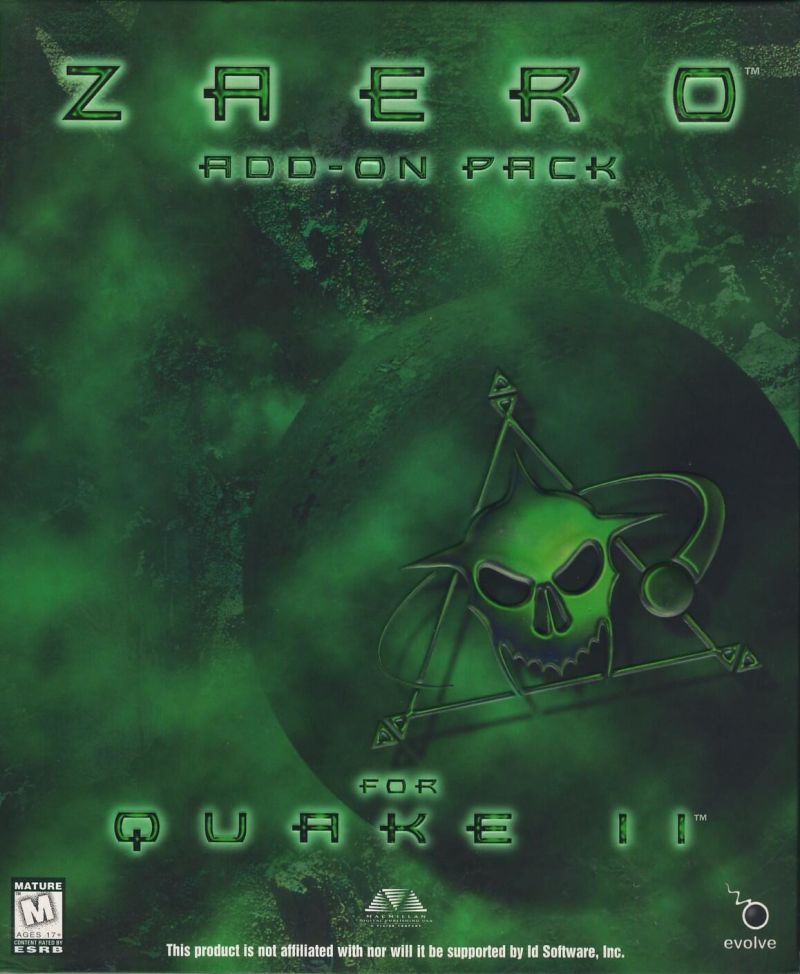
Good to know it’s not supported by id Software, I guess. Cover courtesy of Mobygames.
Zaero for Quake II is one of the aforementioned unofficial expansion packs. Developed by a group named Team Evolve, this expansion added new levels and weapons to the main Quake II arsenal. But how did this expansion come about? For those who weren’t really around when this was big – and admittedly, I was only tangentially aware of it back then – let’s give a quick refresher course on the shovelware compilation boom.
I get to use this cover again! It’s just as ridiculous as it was the first time.
For a period of time, a fair share of shovelware budget publishers such as Softkey, WizardWorks and others found a new way to make some easy cash: capitalizing on some of the biggest game franchises by releasing compilations of levels for these game, often downloaded off the still fresh-to-the-world internet, for $20-30 a pop. It was interesting to go to a store and find a compilation of new levels for Doom, which was becoming one of the biggest video game cultural touchstones of the 1990s.
Unfortunately this practice raised the ire of some developers, feeling that those publishers were profiting off the backs of independent hobbyists and budding game designers. At one point id Software themselves decided to respond with The Master Levels for Doom II, a small set of levels made by a handful of the notable members of the Doom community, which came with its own compilation of Doom levels compiled from the web called Maximum Doom.
The simple boxy shapes of Aftershock for Quake, one of these unofficial expansion packs.
By the time Quake came out, these publishers pivoted from outright taking levels off the web to contracting people to make more original levels as unofficial expansion packs. These would often come with a few levels or in some cases full episodes of content, for the same budget price. I’ve talked about one of these at length before: Aftershock for Quake, which you can read here.
Naturally with Quake II being the Next Big Thing from id software, people capitalized by selling unofficial expansions for that game as well, which competed against both of the official expansions – The Reckoning and Ground Zero, respectively. While none of these were more popular than the official expansions, they did carve a small niche for those who were jonesin’ for more Quake II stuff but didn’t have good enough internet.
Zaero was one of a few unofficial expansions for Quake II, with Juggernaut being the other notable one. I nearly wrote about Juggernaut instead, but the version I seemed to find online was not the final version of the game. Meanwhile the version I found of Zaero seemed content complete, so I opted to write about that one instead.
A few months back, to celebrate its 25th anniversary, Bethesda re-released the id Software classic Quakeon modern systems and the PC. Ported to the versatile KEX Engine by Nightdive Studios, it added the base game, the two official Mission Packs, the MachineGames developed Dimension of the Past made for the 20th anniversary in 2016, and a newly made expansion, Dimension of the Machine, also by MachineGames.
Going back through Quake was a nice nostalgia trip, and while I had already played through the game countless times in the past – most recently in June to test out the fan-made Copper rebalance mod – It felt good going through the tech bases and castles with nailguns and the Thunderbolt once again.
The official port has licensed mod support, similar to the Unity-powered Doom remasters on these same platforms from a year or two back, with Midway’s port of Quake to the Nintendo 64 being the first supported mod. Though it does also support some older Quake mods if they were just simple levels and not involving complex scripting from recent source ports, which means stuff like the oft-praised Arcane Dimensions don’t work in the remaster yet.
Colored lighting on Quake 64, at the cost of more boxier level geometry. A fair trade, honestly.
It made me think of many old custom levels from the early days of modding, and one that I thought of was during that wild west period, when map makers would offer to make stuff based on licensed properties as free promotion. One of which was based on a TV show that most of you probably don’t remember.
Kinda hard to watch this show nowadays, but okay.
Soldier of Fortune, Inc. for Quake is not what you think it is. It has nothing to do with the later 2000 game by Raven Software. Rather, this three-level pack existed as a promotion for a television show, back in those days when people could just make custom levels and have them officially sponsored by those companies, akin to stuff like Chronic for Quake III Arena made to promote The Marshall Mathers LP.
But what is Soldier of Fortune, Inc.? SOF was a TV series created by Dan Gordon, an ex-Israel Defense Force soldier turned screenwriter, produced by Don Simpson/Jerry Bruckheimer Productions and Rysher Entertainment. Named after the magazine of the same name, SOF was an action series involving a rag-tag group of soldiers trying to stop various people doing the bad things. In essence, it was a modern-day Mission: Impossible. It often aired in late-evening time slots alongside shows like Baywatch, which meant it was made to be one of those shows that tried to capture some of the Baywatch audience by also being an action-packed romp.
The show did get renamed for the second season, losing the Soldier of Fortune branding. Now called SOF: Special Ops Force, the show had a few notable cast changes, including basketball player Dennis Rodman playing a supporting character and Peter Graves doing an introductory narration, further leaning into the Mission: Impossible trappings. The show ended in 1999 after that second season, being mostly forgotten by the general populace.
I was reminded of this show’s existence thanks to a podcast. It Was a Thing on TV – a TV obscurities podcast hosted by a few of my game show colleagues – had recently done an episode on Thunder in Paradise, another short-lived action show starring Hulk Hogan and Chris Lemmon stopping evil villains on beachfronts. Much like Soldier of Fortune, Inc., Thunder in Paradise was trying to capture the Baywatch crowd, but wasn’t successful at it either, only having one sole 22-episode season.
Thunder in Paradise would get a video game adaptation for the Philips CD-i and DOS that was during the peak of full motion video, using an episode from the TV series but with more footage shot for the game. It made me think of similar action shows from the ’90s that got video game adaptations, and suddenly I started thinking about how a similar action show somehow got a custom level pack for Quake, back when that was a thing that could happen. Nowadays those same entertainment companies just cut a check to Activision to put John Rambo in Call of Duty: Black Ops – Cold War for $25, complete with low-quality sound bites from the movies.
I’ve had a Steam account for about 18 years. I got mine the day it was available to the public: September 12, 2003. More than half of my life has been giving money to Gabe Newell and the folks in Bellevue so I can play PC games. It’s kinda surreal when you think about it.
It took Valve several years to make Steam a reliable service. Those first few years of Steam were not very great: The always-online factor, an unreliable community service where alternatives like Xfire shined, having to get used to not being able to play games on day one due to server overloads, the works.
A handful of companies weren’t on board with Valve, one of them being 3DRealms, who opted to sell their gravity-defying shooter Prey on rival service Triton first. And that’s not even getting into the recent kerfuffle Epic Games has been doing by trying to posture themselves as the David to Valve’s Goliath.
Those early years were pretty much bolstered by Valve’s offerings and any small-time developer or publisher that was willing to support their endeavor. Stuff like Rag Doll Kung Fu and Shadowgrounds. But a small fledgling UK company by the name of Introversion Software, who self-proclaimed themselves as “the last of the bedroom programmers,” decided to try putting one of their games on Steam, and it was quite a game.
This was available to people on Patreon one week early. Thankfully you don’t need any computer skills, just $1. You can support me here.
One of the many intros the game will play after the initial launch. Others include a cracktro, a dedication to Cannon Fodder, and even a reference to the ZX Spectrum.
Darwinia is one of those early Steam darlings. Originally released in 2005, the game would be Introversion’s second game after Uplink, and featured a similar theme of computers. Though instead of being a hacker like in Uplink, you’re a user trying to stop an evil threat on a network.
Wow, a free keychain and poster? Sweet!
Back then I wasn’t 100% on-board with digital distribution – technically I’m still not on-board, but regardless – thus I ended up getting this game not through Steam, but through a physical copy published by Cinemaware Marquee, a publishing label known for taking niche games and bringing them to US audiences. In essence, Cinemaware Marquee was the Limited Run Games of the 2000s.
It came with the game, a poster and a keychain of one of the little Darwinians. Funny enough, since the game is so tiny, the game comes with a 500MB video splash screen that is about 10 times more than the size of the game. While I still have that physical copy, I eventually grabbed Darwinia on Steam proper along with a bunch of other Introversion games years later.
They don’t take long to throw you into the fray.
Darwinia is a real-time strategy game with some action game elements. You play as the unseen, unnamed player who’s entered the world of Darwinia, a life simulator with little characters called Darwinians. Darwinia has been infected by a mysterious virus which is slowly corrupting the world, of which you join in just as it’s happening. After being briefly scolded by creator Dr. Sepulveda, he lets you learn the mechanics to hopefully stop the virus.
This is quite a simple start compared to other RTSes….