You know what I haven’t covered in a while? A game mod. How about a game mod for Half-Life, one of my favorite games of all time? Sounds good.
I’ve always been fascinated by Half-Life‘s mod scene, which had some really creative stuff being made for it. Even to this day people are doing some outstanding work with the that 25-year-old game engine. But let’s jump back to 2005, when Half-Life 2 was new. Let’s talk about Black Ops.
No, not that one.
Not that one either. We talked about that one years ago.
There we go. Third time’s the charm.
BlackOPS — or Black Operations as it’s called in-game — is a Half-Life mod that covers the Black Ops soldiers, the reskins of the HECU soldiers initially introduced in Half-Life: Opposing Force. Released in 2005, BlackOPS was primarily the work of three folks: Stephan “little_otis” Grabenhorst, Volker “Thrillhouse” Schreiner and Daniel “DeeGee” Grabenhorst, who came from the German custom mapping scene.
By this time, Half-Life 2 had been released and the fancy new Source engine was starting to be one of the go-to engines to mess around with. Despite that, GoldSource — the old Half-Life engine — still had some legs in it, so much so that there were still mods being made for the seven-year-old game. Honestly, the Half-Life mod scene post-HL2 is really interesting to me, so let’s check it out.
Anomalous materials, eh? I see what you did there.
The mod starts with an exposition of the creation of the Black Operations squad in game, and mentioning the Black Mesa incident that happened in Half-Life. Eventually we’re dropped into the Black Ops HQ as the protagonist, Declan Walker, is briefed upon his mission: Go to Metro City, find Dr. Gallagher, a rogue scientist, and procure a special case he was holding onto. Doing this while fighting off any aliens and soldiers along the way.
“Here, have some dessert: Lead!”
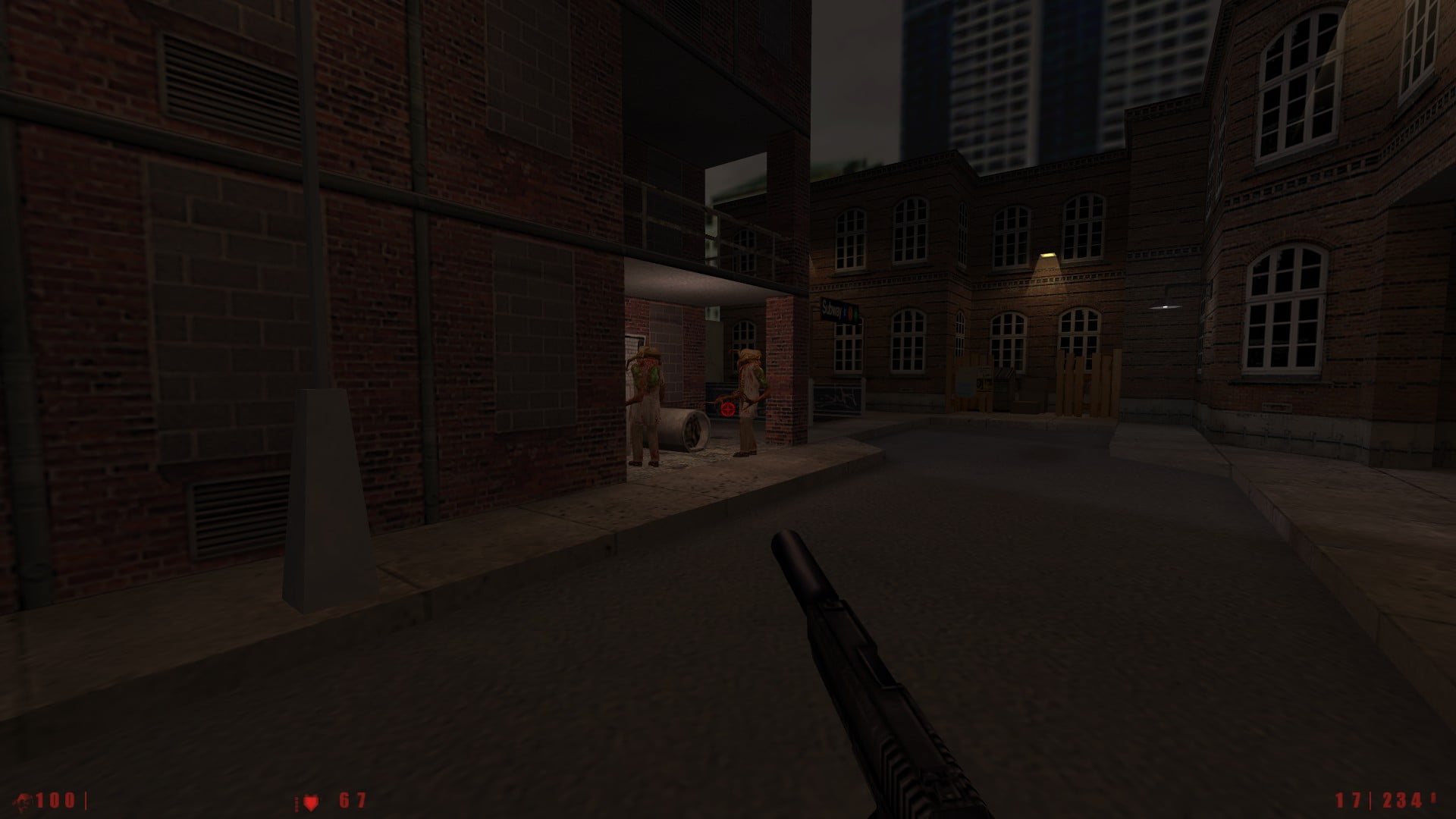
Initially armed with only a silenced pistol, Declan fights his way through the apartments of Metro City, fighting mostly headcrabs, zombies, houndeyes and even the Alien Controllers from later on in Half-Life. Declan’s journey eventually takes him to a subway, into the belly of a drug-addled club, through the obligatory sewer, before arriving in Chinatown.
Game show video games are fascinating to me. They’re neat ways to enjoy your favorite shows, it can be good practice for how you’d actually do on the show itself, and it’s interesting to see how they adapt certain game shows to video game form. I never understood why some retro gamers balk at these games, a lot of them seem to miss the point why they’re fun.
If you’ve visited the site before, you’ve probably read a few pieces on me talking about game show games in various ways, from comparing game music versions of iconic game show themes to game show-adjacent games. But if you haven’t, let me make this clear: I like game show video games. And once again, we’re gonna talk about them.
Yes, in this image, it’s deliberately off-center. Don’t ask me why.
For a good chunk of the 80s and 90s, GameTek was the definitive game show game publisher in North America. A subsidiary of IJE Inc, the publisher would license various game show franchises – usually Wheel of Fortune and Jeopardy!, two of the biggest game shows in the USA – and put them out on every platform imaginable. Nintendo Entertainment System, Sega Genesis, DOS, Windows, you name it, they likely published a game show game on a system you had.
They published other stuff too: They helped publish Frontier: Elite II for instance. Hell, their UK branch helped distributed the work of Capstone, “The Pinnacle of Entertainment Software.” Despite this, they will always be the game show game guys to me.
Unfortunately by the late 1990s, GameTek was struggling, and in December 1997 they had filed for Chapter 11 bankruptcy. Some of the projects they were making, like RoboTech: Crystal Dreams, got canceled. But in spite of the bankruptcy, they had one last hurrah, by releasing two games that they were mostly well-known for: game show games based on the one-two punch of one Merv Griffin.
You can kinda tell these were made in a hurry. (Covers courtesy of GameFAQs.)
Wheel of Fortune – released around November 1997 – and Jeopardy! – released in February 1998 after Take-Two Interactive acquired GameTek’s assets – are the final two game show adaptations published by GameTek. By this time, GameTek was developing the games in-house, forgoing the early NES/SNES days of having contract developers make the games for them. For a company who had a decade+ of game show games under their belt, having their last games be yet another version of Wheel and Jeopardy! was a sad way to go out.
I remember these games because Nintendo Power had covered both games in different issues of the magazine: Wheel of Fortune in December 1997’s issue, and Jeopardy! in the January 1998 issue, of which I owned. It’s surprising to see these games to get a multi-page spread on the magazine.
“Vanna?” I know that these are probably made months in advance but you couldn’t check to make sure that you’re covering the right game show here, fellas?
Why they decided to dedicate magazine space to these two games is a bit weird to me. I know the Nintendo 64 was struggling for a good while, but to give multiple pages about these games makes me think the system’s library was pretty dire until The Legend of Zelda: Ocarina of Time. Of course, maybe I’m wrong and they always covered stuff like this.
I’m going into these with the assumption that you know what these shows are and how they play, mostly. If you don’t… well, you might wanna catch up on that first. With that preamble out of the way, let’s give these a shot, shall we?
I kinda liked this logo. But only because using the actual Wheel as part of the logo makes it look cooler to me.
I’ll start by covering the one that came out first: Wheel of Fortune. This was one of the first games I got for the Nintendo 64, alongside stuff like Diddy Kong Racing and Super Mario 64. Me being a game show fan meant naturally I was gonna have this game in my collection.
It’s like I’m talking to Vanna through Zoom.
Much like most Wheel games until around 2010, our “host” is Vanna White, the show’s co-host and letter turner. Or in this case, “letter toucher,” as this was released just as the new modernized puzzle board was revealed, something prominently shown on the cover.
This menu definitely isn’t a looker, that’s for sure…
Like most adaptations, there’s character customization, AI opponent difficulty, even the option to play 3-5 fixed rounds of play, or a “full game” which can go for the maximum six rounds or until the game decides time is up and goes into the Speed-Up portion, complete with Vanna giving the Final Spin of the day.
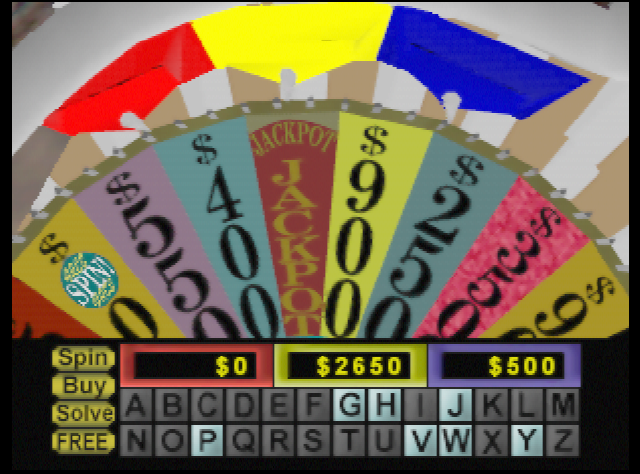
Wheel‘s core format is fairly simple: A puzzle similar to Hangman is revealed, spin the wheel, land on a dollar amount, call a consonant and hope it’s in the puzzle. Wanna know if a vowel’s in the puzzle? You can buy one for $250. Try not to hit Bankrupt as you’ll lose all your money you’ve earned that round. Highest scorer wins.
I never really cared for post-apocalyptic stuff. That stereotypical dystopia of derelict cities fighting off some zombie horde or devastating dust storm while people living in squalor… It all felt a bit too played out to me. Considering what’s happened in the past few years with us living through a global pandemic, I can’t say I’m really interested in playing too many things that hit a bit too close to reality like that.
That doesn’t mean I never play those kind of games. I’ve played stuff like Fallout 3 and Telltale Games’ The Walking Dead which take place in dystopian worlds and yet still enjoyed them. But it’s definitely not something I actively seek out.
Yet, I decided to start 2023 by playing a game that took place in a post-apocalyptic world. One that was recommended to me as something interesting, but fairly clunky. And as you’re gonna learn, feels like the dollar store brand of something more notable.
I mean, it’s better than being dead, I suppose.
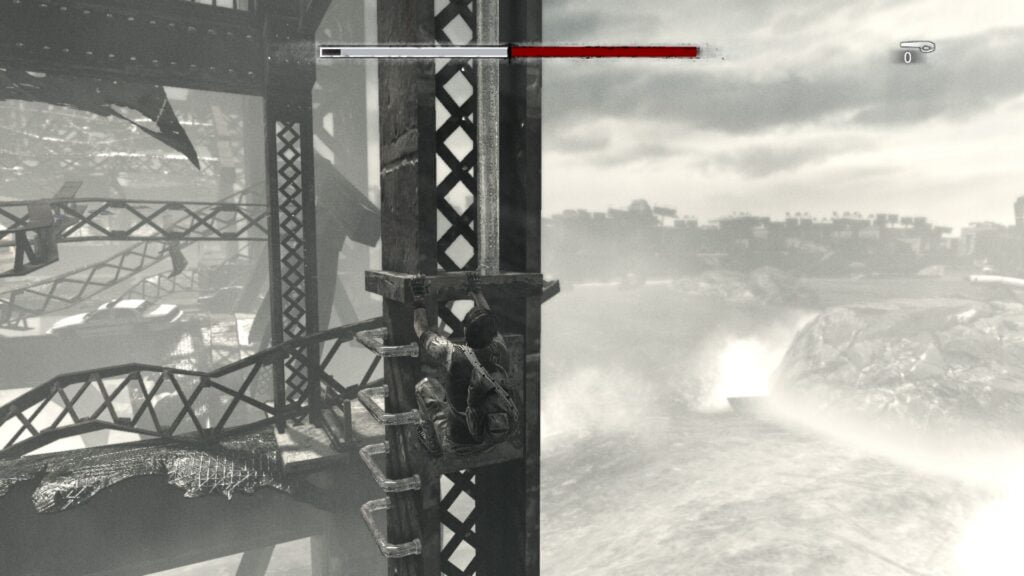
I Am Alive – a title that while grammatically correct, still sounds weird to my ears – is a survival action game published by Ubisoft and developed by Ubisoft’s Shanghai studio. Released in March 2012 for the Xbox 360, PlayStation 3, and later the PC through Steam and Uplay Ubisoft Connect; the game was one of those aforementioned post-apocalyptic games, coming out just as the survival action genre was starting to take off.
Originally announced as just Alive in 2008, I Am Alive was being developed at Darkworks, a French studio who had done other similar games, such as the interesting survival horror game Cold Fear and the mostly-forgotten Alone in the Dark: The New Nightmare.
After an initial trailer showing a player surviving a catastrophic event in Chicago, Illinois, the game went dark, with only occasional news reports of the game still being alive (no pun intended). After countless delays, the game was rumored to be canceled until Ubisoft moved the development in-house around 2010, while also shifting the game’s focus from a major retail title to a smaller digital-only title. Darkworks shuttered its doors not long after.
Unless some Darkworks developer held on to some unfinished development code, this particular version of I Am Alive is presumably lost, with only some proof of concept trailers still available online.
Even after moving development to Ubisoft Shanghai, they opted to take Darkworks’ concept and start completely fresh, basically making a new game under the same name. Let’s see if they revived this concept, or if it should’ve stayed dead.
It’s like I’m watching a found footage movie!
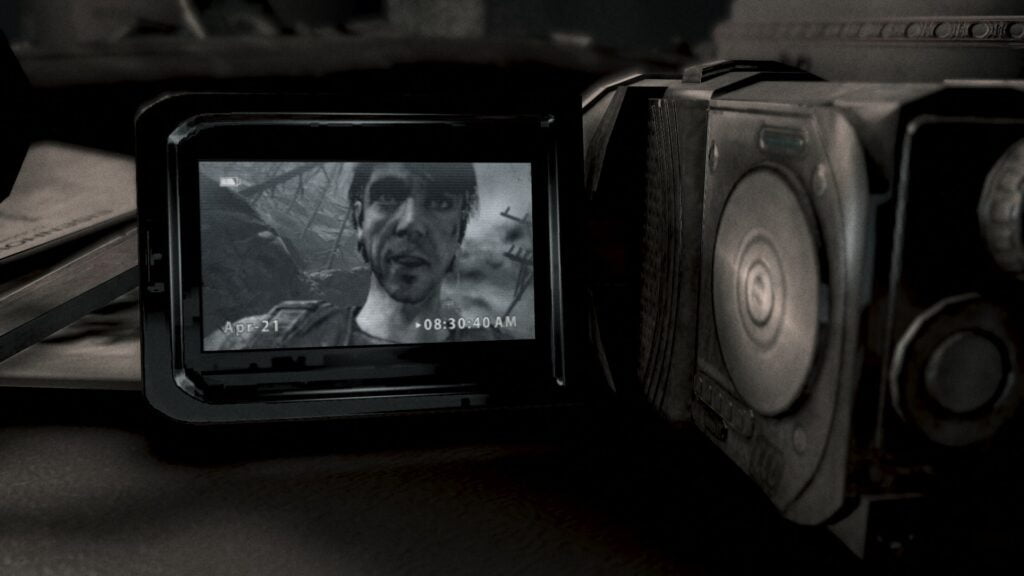
In I Am Alive, we’re introduced to the playable character, a boring, run-of-the-mill dude protagonist whose name is never mentioned at all during the game. For some reason, I thought his name was “Ethan,” but all the sources I checked have him unnamed, so he’ll be named Our Hero going forward.
After The Event – the nebulous term the game uses for the apocalyptic event that ravaged the country – Our Hero returns to Haverton, a fictitious New York-like locale. He goes to find his wife and daughter – who do have names unlike Mr. Unknown here – but after finding that they’re not home, Our Hero then gets wrapped up in a journey that involves reuniting other families, getting supplies, and taking advice from various strangers around Haverton to eventually escape out of this hellhole.
Well, it’s the end of the year. When I wrote about visiting The Last Blockbuster back in August, I had promised a regular post as well as another I Bought Some Stuff article at some point. I’ve since fulfilled the former, and now it’s time for me to fulfill the latter.
Since the last I Bought Some Stuff, I’ve… kinda slowed down on buying things. That combined with my fluctuating mental health gave me little incentive to go out and shop. Though, when I did head out, I found some really neat things. This will cover May to December of this year, and mostly rides the gamut of music and video games. Let’s wrap up this year with some oddball stuff.
I will forewarn you like before that I will nerd out about music in this one, like I did in the last one. There are games in here, don’t worry!
Not long after the previous entry, I ended up checking a Goodwill around my neck of the woods right at the end of May. It’s not one of the usual places I visit, I was doing something that required me to be around that neighborhood and I figured since there was a Goodwill nearby I might as well poke inside. Well, I’m glad I did.
Ooh, a new stand! This is my bookshelf that I intend to get rid of next year.
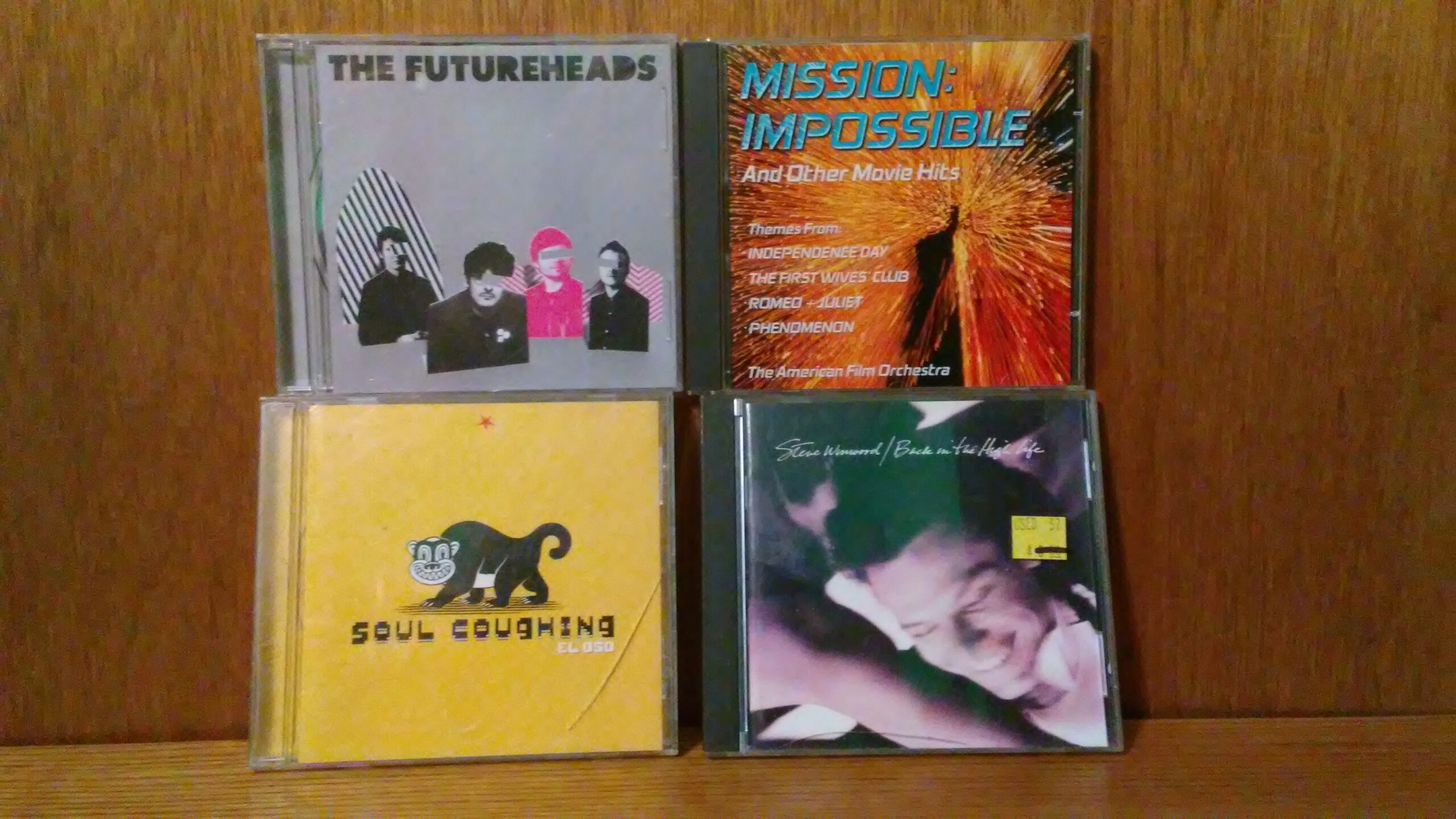
$2 each:
Back in the High Life by Steve Winwood
El Oso by Soul Coughing
The Futureheads’ self-titled debut album
Mission: Impossible and Other Movie Hits by The American Film Orchestra.
Already I’m starting with some rather eclectic choices. Hey, I never said my purchases make sense!
Back in the High Life is one of those albums that we already have but was in terrible condition, so this is one of those “replacement” discs. Much like a lot of ’60s-era musicians, Winwood mounted a brief comeback thanks to “Higher Love,” which was a Billboard Hot 100 number-one hit. The title track is alright, but otherwise the whole album is inoffensive yuppie pop music. Stereogum’s Tom Briehan in his article covering Billboard number one hits, called “Higher Love” white man’s overbite music, and I agree with him.
El Oso may not be an album you’re familiar with, but if you’re a Person of a Certain Generation and watched a fair share of Cartoon Network in the mid-to-late ’90s, you’re probably familiar with their song “Circles” being used as a montage for Hanna-Barbera cartoons, almost in a proto-Anime Music Video sort of way:
Another song from this album, “Rolling,” was also used the same way as a music video, set to a Betty Boop cartoon. I honestly grabbed this album because I remember those songs, and thought it might be an interesting listen.
The Futureheads are one of those 2000s indie rock bands that populated the landscape around that time. I’m familiar with them because one of their songs, “Decent Days and Nights,” made it into the Burnout 3: Takedown soundtrack courtesy of EA Trax. (Remember EA Trax? That was definitely A Thing.) I basically grabbed it only for that, and also because they covered Kate Bush’s “Hounds of Love,” and considering how “Running Up That Hill” was gaining traction thanks to Stranger Things, I figure it was nice timing to get this.
Finally, one of my go to YouTube channels is Oddity Archive, where Ben Minnotte covers the pop culture and technology obscura. One of my favorite series from him is Record Ripoffs, where he’ll cover the myriad of knockoff albums “performed by The Original Artists*” and how they stack up to the original article. That album was basically me being curious how a composer made an album to capitalize on a big Hollywood hit at the time — in this case, 1996’s Mission: Impossible. And according to the album, this is literally one guy, Lee Johnson on keyboards. It’s… an interesting listen.
Updated 11/11/2025: Fixed some weird image glitches and some minor updates to some things mentioned here. This article was originally written in late 2022, thus any infamous moments from 2023’s Game Awards onward are not mentioned here, for reasons stated below.
It’s December! Around this time, The Game Awards makes its presence known, with World Premieres, sponsored content and of course, games winning awards. Started by Geoff Keighley in 2014, it’s now entering its eighth year of trying to be something that’s the video game equivalent of the Academy Awards. Whether or not he’s succeeded is up for debate.
Way back in 2012, Year One of this blog, I had made a post about the “highlights” of Spike TV and their Video Game Awards, the predecessor to The Game Awards. It was rather crude, much like a fair share of my first few years of this blog, of which I eventually went back and gave it an overhaul in 2019. You can see the updated version here. I figured since I’m still going at this “writing about games” thing 10 years later, I figure it’s time to do part two of this series, covering the current version of the Video Game Awards.
I wonder if it’s ever been explained what that logo is meant to resemble. I’d like to think they look like waffle fries.
The Game Awards are something I really hold no love to. It’s the most crass, commercial thing of the entire video game industry, replacing E3 as the most visible but problematic thing about the toxic game industry. Thus much like the first post, I’m going to point out some of the more awkward and stupid moments of this “revered” Game Awards.
But first, some ground rules: We’ll go year by year, covering what I feel are the most notable parts. We won’t talk much about what games actually won, as awards like these are arbitrary, and having a conversation about what should’ve won is like people who constantly debate about game review scores: pointless.
We’ll only cover things that I think are worth being a lowlight, which might be missing out on some things that others might consider “cringe” and should be covered here. (Which means you won’t see me add something about SonicFox winning Best Esports Player in 2018 on this list, because he deserved that. Sorry.)
That being said, let’s get started.
Please note that this covers everything up to 2022’s Game Awards. I’d rather not keep updating this year-by-year unless there’s a good reason to. Plus this was something I had to do frequently when writing the Spike VGAs article and it was kind of annoying to have to do, so apologies if I missed something that happened in like, 2024’s Game Awards or something.
The Repeat Offenders
Before we get into the inaugural year of The Game Awards, I’m gonna start by covering certain events that happen repeatedly in several years, to speed things along.
Poor Kyle Bosman. Heard he was respectable, at least.
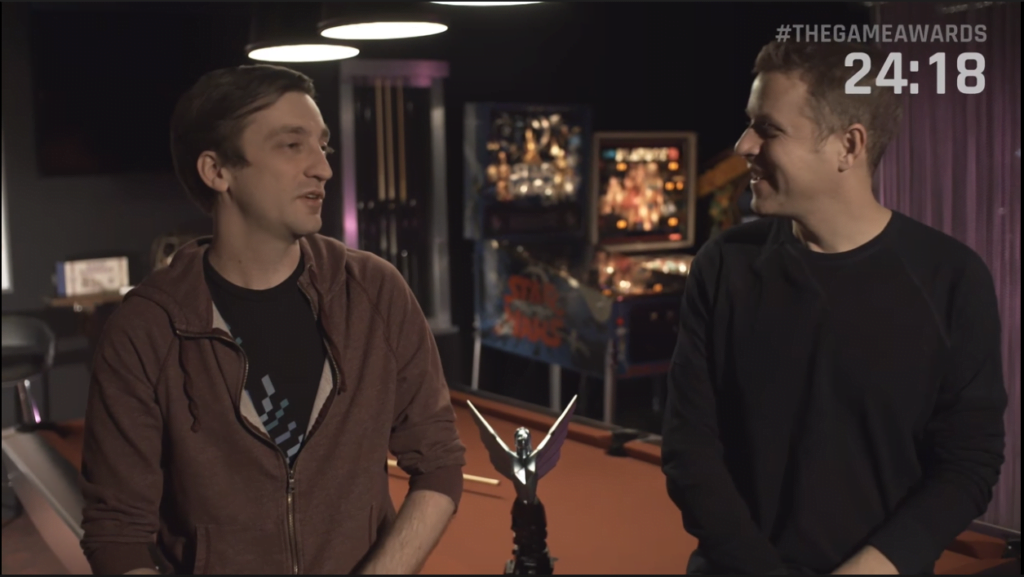
From 2016 onward, each Game Awards starts with a 30 minute pre-show. During this process, they would alternate between interviews about the show, and showing off World Premieres and giving out some awards before the actual broadcast. In essence, the pre-show is like the regular show but at a faster clip. The hosts changed from year to year, but the hosts were Kyle Bosman (2016-2017), Geoff Keighley (2016-2018), and Sydnee Goodman (2019-present).
It has to suck to have the chance to win an award, only for it to be rattled off quickly by Geoff 5 minutes before showtime.
What awards get mentioned during the pre-show vary from year to year, but usually it’s the ones that wouldn’t have people come up to accept the award, or in the case from 2019 onward, the Esports-centric awards. Shoving these off to a pre-show just to have more World Premieres always felt scummy to me, but apparently most contemporary award shows don’t cover all the awards in a single broadcast either, so… I don’t know. At least in some categories, they do have people come up to accept the award, so they at least get some time in the spotlight, just not on center stage.
In addition, this rapid-fire announcement of awards continues well into the regular broadcast. In a lot of cases, Geoff will appear on stage and go through up to 3-4 categories at a time, most of the time being the ones that are voted on by viewers. Again, nothing really wrong with this per se, but it just makes the actual awards just be a prop so we can get more World Premieres in.
Damn it, I try to get away from commercials, not have them blasted in my face!
Finally, returning from the Spike Video Game Awards, there are promotional ads everywhere. These change from year to year, but they’re often the go-to digital services of today: Discord, Grubhub, TikTok, Spotify, the works. Sponsors for upcoming video game films and video game-adjacent products are prominent. Facebook Gaming sponsors a taped segment each year covering gamers from around the world. And in some years, there’s ads for services that no longer exist, like go90 being incredibly prominent during 2015’s broadcast, or 2019, which had several ads for Google Stadia, a service shutting down in early 2023.
Much like its predecessor, there’s still award categories sponsored by brands like Samsung, Gillette, and Subway. While there’s no “Most Addictive Game fueled by Mountain Dew” category anymore, it makes the award show feel a bit hollow to have brands sponsor specific awards.
2014
The debut year of The Game Awards was an… interesting affair. Since Geoff and the show’s production team were transitioning from broadcast television to internet streaming, there’s a fair share of technical problems that happen throughout the broadcast. Microphones don’t work, awkward camera cuts, the works.
Ever wanted the most unflattering angle of Troy Baker? The Game Awards 2014 has you covered.
One of those technical problems seems to be this secondary camera angle that they constantly cut to when not on center stage, where Geoff will either be talking or doing an interview with someone like Marty O’Donnell. I assume this camera angle has a purpose: maybe to get a better angle of the people being interviewed. But instead it just looks like someone in the control booth accidentally switched to the wrong camera. It’s kinda funny to get rather unflattering angles of people like Reggie Fils-Aime.
I wonder if this was the highlight of his career.
One common award featured during these broadcasts is “Trending Gamer,” an award voted upon the community highlighting notable internet gaming personalities. The award would eventually get renamed to “Content Creator of the Year,” but with the same rules in place.
The inaugural year has Justine “iJustine” Ezarik and Stephen “Boogie2988” Williams presenting the award, of which the candidates were a bunch of relatively unknown Youtubers, Pewdiepie, and weirdly, Jeff Gerstmann. The winner ended up being John Bain, better known as “TotalBiscuit.”
I’m putting this here because TotalBiscuit was one of those personalities who was very much on the side of Gamergate, even though he tried to renounce it a few times. He was a fairly toxic personality when it came to gaming culture, complete with saying that his critics “didn’t actually play games,” and introducing The Framerate Police, a Steam Curators group that basically wagged fingers at games that dared to have locked framerates for their games, like the original Tomb Raider from 1997.
TotalBiscuit passed away in 2018 from cancer, a few years after this award. At the time TotalBiscuit had found out he was in the early stages of cancer, thus he accepts his award from his home.
For the record, I do not wish he died of cancer. I wish he was still alive so that he could get his head on straight and not try to pander to the angry gamers crowd like he had. At worst, he could’ve gone the Pewdiepie route and powwowed openly with right-wing fascists. At least then I could rightly ignore the guy. Though, in retrospect, The Game Awards did go with the more safer choice, because if Pewdiepie won, the award would’ve been a much worse look today. But honestly, I wish Jeff Gerstmann won. After all, Jeff Gerstmann is still a threat.
Let’s just stop everything in their tracks so a guy can accept his award during an interview.
In a continuation of the slapdash production of the first Game Awards, we have miscommunication leading to an awkward presentation.
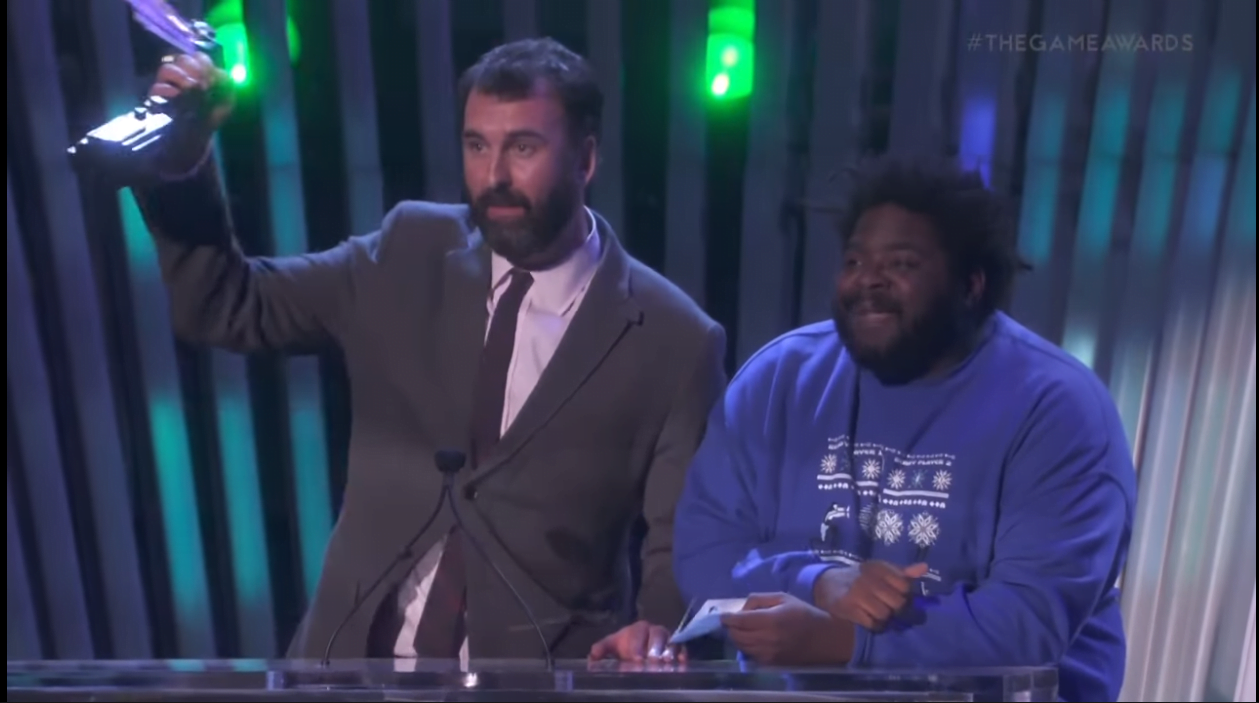
Best Mobile/Handheld Game was presented by comedians Matt Braunger and Ron Funches, two fairly amusing people — I always loved when Funches appeared on The Giant Beastcast. After doing a silly bit where they try to rip off Angry Birds, they announce the winner: Blizzard Entertainment for Hearthstone. Matt then says “Blizzard can’t be here tonight,” and they accept the award in their honor. Cut to Geoff, confused, where he mentions that someone from Blizzard is at the show, but continues with a conversation with Nintendo’s Reggie Fils-Aime. Eventually Blizzard producer Eric Dodds appears to accept his award and give his speech at the little nook where Geoff is interviewing Reggie. It’s kinda hilarious that such a thing happened, and wouldn’t be the last time we would see award mishaps like these.
About 10 years ago on another WordPress blog I had, I made a rather dumb wordy rant about how retro pixel-style games sucked and how I was getting sick of them appearing everywhere. This was before games like Undertale and Celeste came out, games that showed how you could make that style work perfectly. In essence, I was being a graphics snob, which is somewhat uncharacteristic of me these days.
I only mention this because this post is gonna be about a game that uses pixel art, and how surprisingly good it looks. Basically letting my past self have some crow. Though in this case we’re talking about a fox, not a bird.
Oh no the fox is kinda cool-looking
FOX n FORESTS is a retro-style 2D platformer developed by Bonus Level Entertainment and Independent Arts Software, two studios based out of Germany. Bonus Level is a modest indie studio founded by Rupert Ochsner, a former developer who worked on projects at Deep Silver including Saints Row The Third, though mostly in a business role. Independent Arts on the other hand, are known for a myriad of games, mostly ports of games like Tropico 6 to console platforms and the Moorhuhn series of games (known as Crazy Chicken outside Germany). So two developers with at least some amount of game history, just on the more “shovelware” side of things.
Originally pitched on Kickstarter in 2016, FOX n FORESTS was released in May 2018 on all the major platforms: Xbox One, PlayStation 4, Nintendo Switch and of course, PC via Steam. Outside of getting mentioned by James Stephanie Sterling in their “Greenlight Good Stuff” series, this game very much came and went when it came out. Yet I’m always curious about lesser-known games that aren’t talked about much, so I was willing to give it a try.
“Fifth season” sounds like a boy band from the ’90s. I guess it fits, considering what the game is referencing.
You play as Rick, a “foxtastic” – their words, not mine – hero who is persuaded from murdering a poor partridge to help the Season Tree, who’s lost their magic bark to various villains around the seasonal world. It’s up to Rick to recover the pieces of magic bark and give them back to the season tree to save the day, and get handsomely rewarded in the process.
Is the story a bit silly? Yeah, definitely. But I’m not expecting high-quality writing here, especially for a game trying to hearken back to the days of retro platformers from the SNES era.
Rick’s journey begins! …and already it’s a bit tougher than he was expecting.
Rick starts with a fairly simple arsenal of a sword and a bow. The sword is used to attack enemies while moving, crouching or jumping. The bow is used to attack enemies at a distance, but requires Rick to be completely stationary and on the ground. As Rick progresses, he gets arrows that can alternate between special fire modes that come in handy later on for damage, or to activate platforms he couldn’t get to previously.
Damn, I wish he could do that for real!
The sword has a very special ability: pressing on either left or right trigger changes the season, which varies from level to level. The first level lets Rick switch between the warm summery colors to a wintery cold, which freezes all the water and makes some platforms easier to see.
Another level switches between a spring dusk to a fall breeze, complete with growing fruit and falling leaves that double as platforms to make progress. This is a pretty neat mechanic. However, visiting the other seasonal area slowly drains your mana bar, so this requires a balance of switching between seasons at the most opportune times to make progress.
Damn, this badger ain’t even phased by those bees
At various points, another character named Retro the gaming badger appears to save the player’s progress mid-level, at the cost of some gold. Naturally he spouts off a bunch of retro video game references, as a wink and a nod to the games inspired by FOX n FORESTS.
Oh, right! It’s October. Usually that means having some kind of “spooky” game to write about. Under normal circumstances I would find some fairly obscure Halloween-themed action game and write about that. But it’s been quite a busy month for me, combined with there not being many spooky games that aren’t just horror clones ripping off Amnesia: The Dark Descent or SOMA. This makes actively seeking out something like that a challenge for me.
So instead I’ll probably dip more into the side of spooky games I can deal with. A spooky shooter game that thanks to recently replaying it again, has gotten me to appreciate it in a way I hadn’t done so before.
Dude, gross! Couldn’t you have washed your hands first?
I replayed Monolith Productions classic horror-humor FPS Blood. Released in early 1997, it’s been labeled one of “the Holy Trinity” of Ken Silverman’s Build Engine, the others being Duke Nukem 3D and Shadow Warrior, a game I wrote about way back in 2012. Of course, there’s other games that use that engine, though most of them are mediocre-to-bad, like Redneck Rampage or NAM. But that’s only a small blemish on an otherwise good game engine. After all, you haven’t truly made it as a game engine if you didn’t have a stinker or two using said engine.
A Discord server that I’m on has a monthly event where folks play a randomly determined game by poll. Blood ended up being the themed game for October, and that gave me enough of an incentive to jump back in and toss dynamite with the best of them. The last time I went through the game was 2019, so let’s see if I remember how this classic FPS plays.
“I live… again!” …I always liked the sound of that.(more…)
My family were packrats. For the longest time, we’d just hoard things that we might need someday. But as time goes on, we’re slowly culling away those things we held onto, often times just books and old toys we no longer need. Often times it’s just stuff we didn’t need to hold onto, but some of it was fairly sentimental.
During this process of unearthing storage, we discovered a bunch of old things I honestly thought we tossed away, like the Sega Dreamcast keyboard, various board games and electronic toys. But there was one thing that we found that suddenly caused a wave of nostalgic feelings: A kid’s cassette boombox.
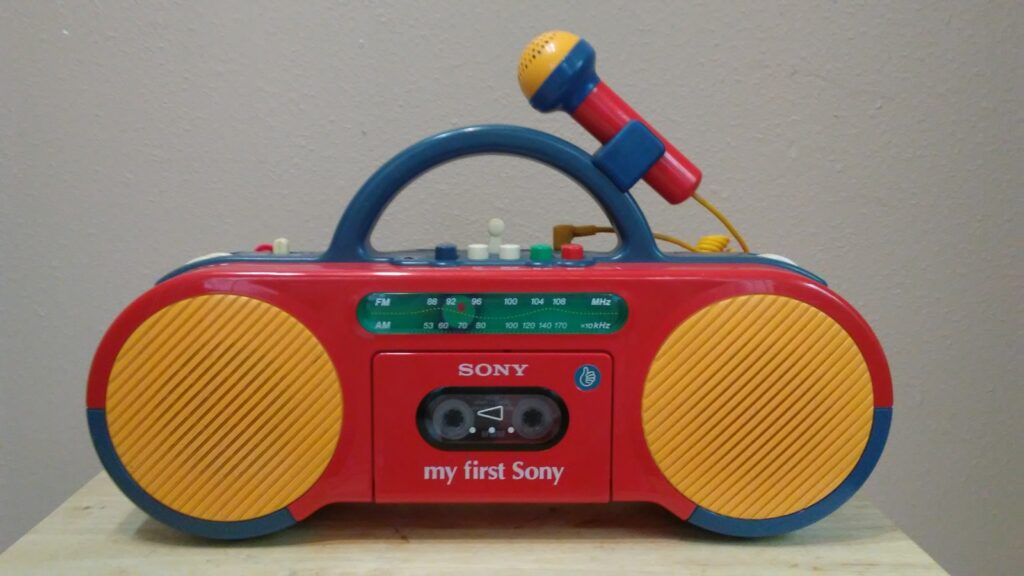
If your reaction is “This looks like a kid’s toy!” you’d be right.
This is the “My First Sony” CFS-2050 cassette boombox, released around 1992-93. My First Sony was basically Sony trying to make music players that were more child-friendly, with a red-yellow-blue color scheme. This one also came with a microphone that could be used for recording onto the tape, or just doing amateur karaoke. It could also double as an AM/FM radio if that’s more your thing.
Much like a lot of old hardware, the system came with problems when it was unearthed out of the storage tub it was in: The tape mechanism didn’t work at all. One of the most common problems with cassette players of this vintage is that the belts that handle playback have disintegrated, turning into rubber goop upon use. Indeed, after trying to use it once, one of the belts broke off and just wrapped itself around the motor. The other belt was still on the cassette deck, but I figure it wasn’t gonna be long before that too would end up breaking.
Looks rather daunting, but I bet I can make this work.
I am not really much of a repair person, but this thing’s held a bunch of memories to me that I couldn’t toss it away. A brief web search made me find the service manual, which had the part names for the two belts, which I was able to find thanks to a website that sells replacement parts for old music players. (I’ve linked the site in question at the bottom of this post.)
After removing the old belts and using rubbing alcohol to clean off any residue that might be still be on the wheels, I replaced the belts. After testing it opened up with a tape I had, it sprung to life and started playing music again.
Perhaps this is my age showing, but there’s a time where I fondly remember going to a video rental store to pick out a movie and have fun with it for a few days. There was a local video store in my neighborhood where we’d constantly go to for movies, though most of the time I just rented from their NES games, usually the game show ones. Though I did constantly see stuff like Golgo 13: Top Secret Episode and Fester’s Quest but never really got curious enough to play them.
Then Blockbuster Video opened up in the late 1980s. When the 1990s hit, they started to expand, appearing all around the United States. At this point, the local video rental store wasn’t the hot place anymore as we rented from both Blockbuster and its rival Hollywood Video more often as they had the newest stuff more immediately. Said video store has since shut down and been replaced by a Mexican food store. I still kinda miss that place.
Blockbuster was often our family’s go to for recent movies and video games. A fair share of games I played during the SNES and Genesis era came from Blockbuster. In an old post I made about my mom’s love for ToeJam and Earl, I mentioned that I still have the cartridge which was engraved with “Blockbuster Video” on the back. Still do, and it brings some nostalgic memories of not just my mother but also this video store chain.
But then we get into the 2000s, with internet streaming slowly becoming a thing. Netflix comes around and does similar services to Blockbuster Video but without all those late fees. They try to compete but it’s too late. Even with trying to be antagonistic towards Netflix with a somewhat infamous tweet, it isn’t enough. Blockbuster Video stores start closing in the US. The one that was in my area gets replaced by various stores including a Cricket Wireless store and a doctor’s office.
Normally, that would be the end of the tale. A business that muscled its way into being the primary market for something, got blindsided by new technology, and then just fizzled away to a past nostalgic memory. Blockbuster Video isn’t much of an entity in the United States these days. Except for one.
The sun-faded look of the Blockbuster letters is charming, in a sense.
Bend, Oregon has what is considered to be “The Last Blockbuster Video on the Planet,” and that store became somewhat legendary because of its staying power, being the last open store as of 2019. I’ve gone on camping trips near La Pine, Oregon over the years and every time we always drove past that Blockbuster, even though we were aware of how famous it was now. When the COVID-19 pandemic hit, I was genuinely worried about that place shutting down due to lagging sales as many other businesses did, thus not giving me the opportunity to visit what was considered a cultural landmark. Thankfully that didn’t happen, and I was able to visit it this year.
It’s no secret that I play a lot of competitive first-person shooter games. While I vary in skill from an absolute noob to top of the leaderboards depending on the game and match I play, I do play a fair share of competitive games. Often times these become my podcast games, where I just mindlessly shoot things while hearing about video games, history, or forgotten TV shows. And yet, I seem to do okay most of the time with not that much focus.
However, there’s one particular quirk about these kind of games that bothers me. One that’s been set in stone since the early days of online deathmatching with Doom and Quake almost 30 years ago. Something that has become more of a problem in recent years: Unbalanced teams.
We’ve all likely had those kind of experiences, the ones where you realize the other team is just too good, and there’s no way in hell a victory is on the horizon. You get fragged frequently, oftentimes by people with reflexes so sharp that you’d swear they’re hopped up on amphetamines. You may get a lucky frag or two, get a “comeback” medal, but it’s not enough. The game ends with an outright blowout: 100-48.
Nothing more demoralizing than something like this, from a match of Call of Duty: Black Ops Cold War.
Sometimes when players see the writing on the wall, they’ll bounce out of the game mid-match, forfeiting an XP bonus for staying with the match, ending up with a game that ends up being 6 vs 3, making it more lopsided and unbalanced, even as new players join in to make it balanced again. Back in the day you’d see players swapped over to the other team to try to balance things, but not anymore. Once a team’s in a game, that team’s set in stone until the game ends.
For some, it’s discouraging. It feels like one’s skills are inadequate enough to play these games. It demoralizes the player, so they may not give their best. Thus when the odds are stacked against your team, and they know the other team’s filled with the kind of player that’s likely doing sick YouTube frag videos, it just stops being a fun experience.
Granted, some games like Call of Duty have made it so if you joined a losing game in progress that it doesn’t count as a loss against you, but it’s a patchwork solution to a bigger problem. Even recent elements like Skill-Based Matchmaking, which has become sort of a bane to some high-level players, can only do so much to help out games that are clearly favoring one team.
Even being on the winning side of a crushing battle, from Call of Duty: Modern Warfare (2019), doesn’t feel fun to me.
I’ve thought about this problem for a while. While I am not a game designer – I tried that in community college and it went over my head so much that one of our team members, a person with Actual Gamedev Skills and is likely in the industry nowadays, had to bail us out of our final class project – I am familiar with some of the tenets of game design that I think I can make an idea to resolve this. I’ve called it the “Mercy Rule.” It’s not a catchy title, but I think it works in theory.
How does the “Mercy Rule” work? Well, if there’s a large score discrepancy between two teams, the game ends early, regardless of time or frag limit. The winner is immediately decided, XP is rewarded, and everyone’s moved back to the lobby. A fairly simple rule that I think could make a slight difference in terms of multiplayer gaming. Letting games end early with this new Mercy Rule could make a difference when it comes to gameplay. It means matches don’t drag along to the finish line, games finish quicker, and there’s more incentive to stick around rather than ragequit, especially if there’s some extra incentive like bonus XP or something.