Tag: review

  • Counter-Strike: Global Offensive Music Kits Series 3: A goddamn smorgasbord.

    Counter-Strike: Global Offensive Music Kits Series 3: A goddamn smorgasbord.

    About a day or so after I finished writing the last post about Counter-Life, I took a nap. When I woke up, I found out about this:

    More CS:GO music kits.

    Not only more of them, but practically doubling the total number of music kits from 16 to 30. I nearly fainted after that. This time it seems we’re getting a big variety sampler pack, from returning artists to new contributions from notable film composers, to even an interesting collaboration between Valve and a record label. In addition to the new music kits, they now added “StatTrak” variants that keep track of the times you’ve become the MVP in competitive matches. It seems a bit silly, almost like a joke someone made to Valve without saying they were kidding afterwards. But if you want it, it’s there for $6.99 if you want them, or on the marketplace for cheaper.

    Since I’ve written about the previous ones before, it’d be remiss of me not to continue the tradition. Like before, I’m gonna write how I felt about each one, mentioning some of my favorite tracks, and whether or not it’s worth the $5-7 to grab, with a quick verdict at the end.

    Now in the last collection, I had made videos of the new kits, but this time I passed on doing that. It’s not that it wasn’t fun to make, it’s that considering my meticulous nature for making these things, I would’ve taken a month to work on something that’s already been eclipsed by other YouTubers for lesser effort. So for the sake of this, I linked to other YouTubers or CSGOStash if you wanna listen along.

    So without further ado, let’s get started…

    AWOLNATION, I Am

    awolnation_01

    DESCRIPTION: AWOLNATION Alternative Rocker AWOLNATION brings you a music kit for the ages. This kit is jam-packed with an eclectic selection of tunes and includes cuts from singles ‘I Am’ and multi-platinum hit ‘Sail’.

    LISTEN ON: YouTube (through the official Red Bull Records YouTube channel), CS:GO Stash

    Over the past year or so, we’ve gotten fairly notable electronic musicians: Noisia, Feed Me, that sort of jazz. For this series of kits, Valve teamed up with Red Bull Records to bring three notable artists from their label, including AWOLNATION.

    AWOLNATION (yes, in all caps) is a notable artist because of their multi-platinum award winning song “Sail.” A lot of this music kit features tracks from their recent album Run, though it’s all instrumental with the occasional shout here and there.

    Alas my knowledge of the band comes from “Sail” and little else, so I had to hunt down what songs were used for each track thanks to Spotify.

    The kit is named after one of the songs, “I Am.” Surprisingly, it’s not the main menu track as expected, but another track from the album, “Windows.” Other songs like “Hollow Moon (Bad Wolf)”, “Run” and “Jailbreak” are used for the Action cues, Bomb Timers and Lost Round/10 Second Timer, respectively. “I Am” shows up as one of the action cues, whereas their biggest hit “Sail”, the only song from their previous album, shows up as both an action cue and the MVP Anthem.

    Yep, once you frag dudes and get the MVP, everyone will be hearing the keys along with Aaron Bruno yelling “SAIL!” at the end. It’s worth it just for that alone.

    VERDICT: Recommended just on the MVP Anthem alone.

    Beartooth, Disgusting!

    beartooth_01

    DESCRIPTION: Beartooth brings an agressive [sic] back-to-basics hardcore stomp that gets crowds moving and breaking stuff. A perfect soundtrack for your no-scope scout frags. Rock ’till you’re dead.

    LISTEN ON: YouTube (through the official Red Bull Records YouTube channel), CS:GO Stash

    Here’s Valve/Red Bull Records collab number two. Beartooth is a metalcore band by Caleb Shomo of Attack Attack! fame. (Just so we’re clear: We’re talking about the Attack Attack that did that awful guitar crab-walking to a song called “Stick Stickly,” not the Attack Attack from Wales that’s the infinitely superior band.)

    I’m fairly picky about my taste of music. If there’s anything I hate about metal sometimes, it’s a guy screeching incomprehensible words into the microphone. If that’s all the talent you need to be a metal singer, then I should be auditioning to be one right now. Thank god the music kit is strictly instrumental, which unearths some pretty decent metal underneath.

    All the songs here come from their 2014 album Disgusting. Their single “In Between” serves as the main menu track, whereas other songs like “Keep Your American Dream” and “Body Bag” are the action/round cues. There’s some pretty okay metal on these tracks, and if you loved stuff like Skog’s Metal from the original set of nine, this is right up your alley. I’d be okay with them releasing more stuff like this.

    VERDICT: Lightly recommended, get it on the Steam marketplace for cheap. Great for those who want more rocking in their CS:GO soundtracks.

    Daniel Sadowski, The 8-Bit Kit

    danielsadowski_03

    DESCRIPTION: Daniel Sadowski creates the first ever 8-bit Music Kit for Counter-Strike complete with authentic 8-bit sounds.

    LISTEN ON: YouTube (courtesy of YouTube user DeezTurbed), CS:GO Stash

    Our first returning composer, and I honestly wasn’t expecting him to return for a third time. This is Sadowski’s third music kit for CS:GO. This, along with the DOTA 2 music kit he also did recently, makes me think he’s practically a official composer for Valve considering how much he contributes to their games recently. It’s great, really.

    Considering the name, you can guess this aims for a chiptune approach, which is drastically different from his previous offerings (Crimson Assault and Total Domination). While we got fairly close to chiptune with an unused MVP track in Feed Me’s High Noon, this is the first music kit to actually go for the retro game music approach, and he does a fine job here.

    Some of my favorites include the Start Round, Choose Team and Start Action tunes. A lot of these fit right in line with NES-era music, which I consider to be a fairly difficult thing to master.

    After hearing this, I’d love to actually see notable chiptune composers have their take on chiptune game music for CS:GO, such as Rushjet1, or Danny Baranowsky. If someone like Sadowski can make a solid retro game music soundtrack, I’d love to hear someone else’s take at this.

    VERDICT: Recommended. Good for those who love chiptunes that actually are chiptunes and aren’t just someone adding samples to crappy MIDIs.

    Darude, Moments CSGO

    darude_01

    DESCRIPTION: Yield freely in the soundscapes of Finnish producer Darude’s familiar musical flavours and tones. Enriching yourself with access to a heavy fusion of progressive overtones and scores of tingling melodic structure from the sounds banks of one of dance music’s most renowned pioneers.

    LISTEN ON: YouTube (courtesy of YouTube user CSGOPoetry), CS:GO Stash

    Ah yes, Darude. That guy who made that “Sandstorm” song that got popular in the early 2000s. Then it got popular again because Twitch chat users thought it’d be funny to go “DUDUDUDUDUDUDU Kappa” and make “Sandstorm” jokes on DOTA2 and CS:GO matches. It seems Darude has taken this in stride, at one point DJing at The International 4 after party and pretty much trolling the entire crowd by teasing “Sandstorm” the entire night before finishing it as the encore.

    I’ll mention this upfront: No, “Sandstorm” is not in this kit. The kit itself has tracks that sound like “Sandstorm,” but none of the tracks are actually “Sandstorm.” Rather, it’s a unique track made specifically for the game, though it’s titled after his most recent album. Despite being named after an existing Darude song, “Moments,” it sounds nothing like the music kit featured here. In fact, I really couldn’t find the song he used here, so it’s likely an original composition named after his most recent work.

    A lot of the tracks have the same catchy beat to it, with additional instrumentation where appropriate. The first Start Round/Action has good instrumentation, and I like the slowdown touches on the Round Loss and Deathcam cues. But a lot of it sounds similar, which is slightly disappointing, but hey, this is a bigger get than when DOTA2 got deadmau5.

    VERDICT: Lightly recommended, get it on the Steam marketplace on discount. It’s not Sandstorm, but Darude made a good enough substitute.

    (more…)

  • Kiss Psycho Circus: Glam rock meets the paranormal.

    Kiss Psycho Circus: Glam rock meets the paranormal.

    I am not a fan of Kiss. I only know a few of their songs, mostly because they appeared in Rock Band. I’m aware of Gene Simmons’ mastery of marketing the band, complete with corny ’70s live-action specials, their shift to hair metal in the 80s, and of course, the infamous Kiss Kasket.

    They have a couple good songs, at least. “Love Gun,” “I Was Made for Lovin’ You,” even “Strutter” is pretty solid. Kiss is a band I can appreciate and respect, but I don’t really care for them.

    The late ’90s was the time for a Kiss comeback: The original line-up got back together and released an album in 1998 called Psycho Circus. With that title, and probably with a pinch of Gene Simmons’ marketing mastery, it eventually lead to a comic book series written by Spawn creator Todd MacFarlane, and of course, a video game. Prepare for the Nightmare Child.

    This is one of four different covers. I guess they hoped people would buy all four in a way to recuperate the development cost?
    This is one of four different covers. I guess they hoped people would buy all four in a way to recuperate the development cost?

    Kiss Psycho Circus: The Nightmare Child is a video game adaption of the Psycho Circus comic book series by Image Comics and Todd MacFarlane Productions. The comic involved the band members becoming supernatural beings and saving the universe as part of the silly team moniker Four-Who-Are-One. The video game borrows elements from the comic, but has a wholly different story.

    This was released on PC and Dreamcast in 2000, not long after games like Quake III Arena and Unreal Tournament were getting big. Though this being released on the Dreamcast and not the then-forthcoming PlayStation 2 is rather baffling, but maybe it’s for the best.

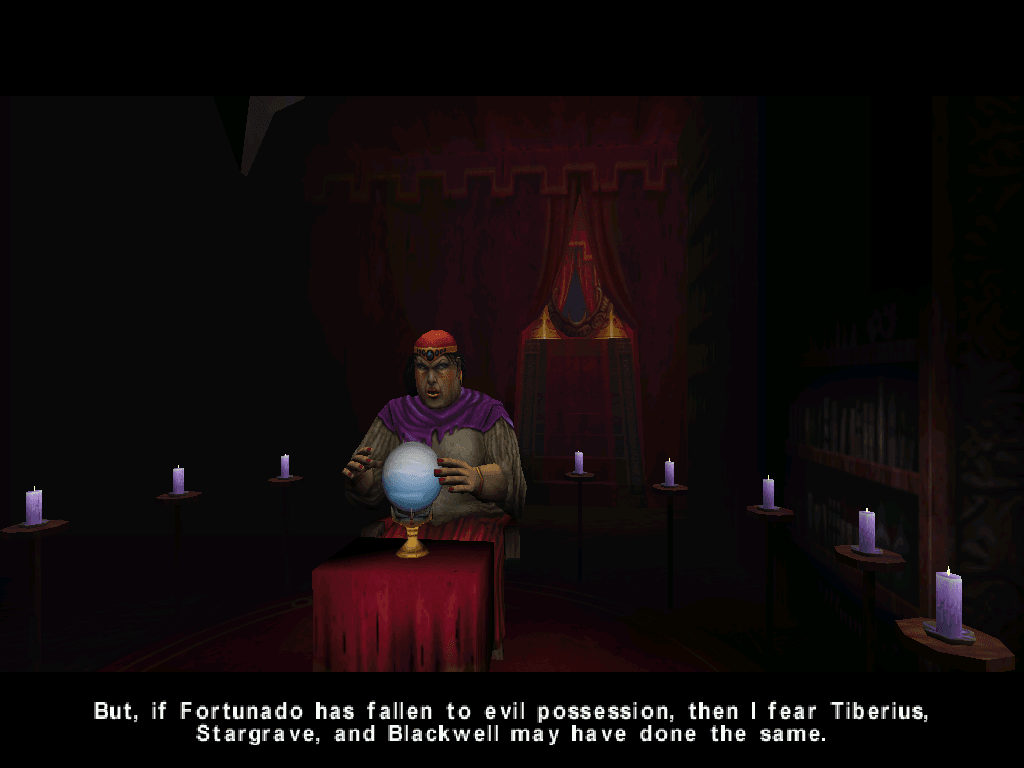
    Instead of playing as members of Kiss, you play as members of a Kiss tribute band who get teleported to a special world ran by this gypsy named Madame Raven. She tells you about this big bad called “The Nightmare Child,” one that will destroy the world, and your band are the chosen ones to stop them.

    I hope you love mystical dialog that barely makes any sense!
    I hope you love mystical dialog that barely makes any sense!

    Separated by the Hall of Mirrors, each band member goes through each world as they grab each of the six pieces that form the respective Elder to stop the mythical Nightmare Child. Admittedly, the story is rather nonsensical even in-game, I had to resort to the manual to understand this bizarre-ass story.

    I can say with authority that this story is so god damn ridiculous that it’s not worth looking further into. Then again, with this being co-opted by a band known for wearing silly outfits and the guy who created freakin’ Spawn, I’m not expecting System Shock 2 levels of storytelling here.

    Here's a goofy little easter egg: The statue is holding the logo of developer Third Law Interactive.
    Here’s a silly little easter egg: The statue is holding the logo of developer Third Law Interactive.

    This game was developed by Third Law Interactive, founded by one of the original members of the Daikatana development team during its first year or so when it was under the Quake engine, so already we’re off to a shaky start. They didn’t do a whole lot of notable stuff outside of this game, my brief internet search found out they worked on an Aliens vs. Predator 2 expansion and added stuff to the Game of the Year edition of No One Lives Forever.

    You may have noticed that’s all Monolith/Lithtech stuff. Unsurprisingly, this game runs on Lithtech 1.5, which is an absolute pain in the ass to get working on modern devices without needing an elder god and maybe dgVoodoo2. Worst off, that this is one of those games that has the pesky disc check, and no patch or update is out to turn it off. A shame, really.

    But let’s get to the meat of Kiss Psycho Circus. In the game, you choose one of the four supernatural characters and go through a set of levels, getting weapons, jumping on platforms, activating switches and killing enemies in your wake. Through the levels, you’re looking for the items make your character part of the Elder, like boots, shoulder pads, and finally the iconic Kiss masks.

    This guy's ready to pull the trigger on his gun. His Love Gun, that is.
    This guy’s ready to pull the trigger on his gun. His Love Gun, that is.
    (more…)
  • Pac-Man Spinoff Games: The Card Game and Two Challenging Puzzles.

    Pac-Man Spinoff Games: The Card Game and Two Challenging Puzzles.

    While I do like writing about video games themselves, I also like blogging about some of the more obscure, lesser-known video game products that aren’t as well known. Before I got fascinated by video games, I was really fascinated by board games. Still got a massive collection, even. So I’m gonna talk about two interesting video game board game spinoffs, featuring a notable pill-chomping hero.

    pacmangameslogo
    I keep saying it, and it bears repeating: I’m a writer, not a graphic designer.

    Board games based on video games were once an interesting art form. People would take classic games like Super Mario Bros. or The Legend of Zelda and try to adapt them to a board game format. Most of the time they really had to stretch what kind of game they could make out of the source material. Others were designed much like old games based on TV shows, movies, or even personalities like Dr. Ruth and Lucille Ball.

    Alas, that’s all disappeared in the modern age in exchange for reskins of Monopoly, Risk and Yahtzee with Pokemon or Metal Gear Solid slapped onto it. I blame USAopoly for homogenizing the licensed board games market.

    Actual picture of a Monopoly section at a board game store in a mall. 90% of these looked the same, from the materials inside to the back of the box!
    Actual picture I took of a Monopoly section at a board game store. 90% of these looked the same, from the materials inside to the back of the box!

    Let’s go back to the past, and talk about a little pellet chomper named Pac-Man. Back when Buckner and Garcia were exclaiming they had “Pac-Man Fever,” and before this beloved character was not being slapped into crappy cartoons written by ex-Tiny Toon Adventures writers, Pac-Man was super-popular in the United States. This was mostly in part because of Midway’s very aggressive marketing, who were the rightsholders for Pac-Man in the US before Namco took back the rights.

    I could cover the Pac-Man board game by Milton Bradley in 1980, but it’s been done to death. It plays much like the arcade game, where multiple Pac-Men could gobble dots for points while being avoided by the ghosts. It’s like Hungry Hungry Hippos, but with a board and actual strategy attached to it. They also made a board game for Ms. Pac-Man, but replaced the power pellets with a die roll, and had only one player take control of Ms. Pac-Man, swapping control to another player when an enemy ghost captured her. Also, the easily losable marbles were replaced with much more sensible chips.

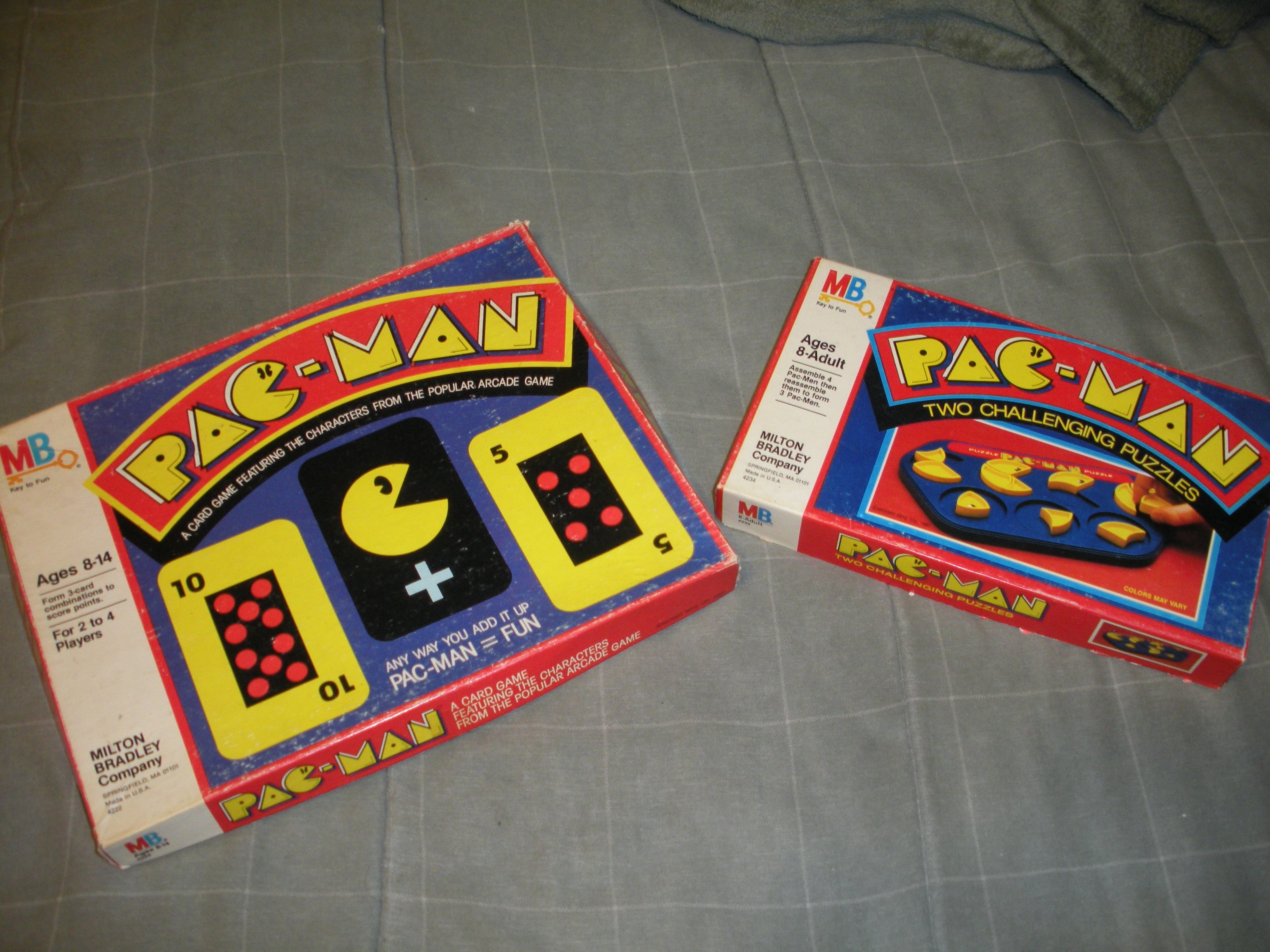
    There’s not a whole lot to say about the Pac-Man board games, they’re simple conversions of the arcade game. But the Pac-Man game train didn’t stop there. Enter Pac-Man: The Card Game, and Pac-Man: TWO CHALLENGING PUZZLES!

    That’s how the packaging calls it, capital letters and all.

    Released around 1980-82, both of these were released to further capitalize on the Pac-Man gravy train. I snagged both of these a long time ago, back when I was using eBay like a madman and buying things left and right. I kinda miss those days, that’s where a fair share of my games collection came from, as well as other obscure stuff I own, like a Wheel of Fortune play-along TV handheld from the late ’80s.

    (more…)

  • Far Cry 3: From partygoer to psychopath.

    Far Cry 3: From partygoer to psychopath.

    The Far Cry games have gone through this weird identity crisis over the years. The first game was a mostly linear, extremely difficult action game with aliens, Far Cry Instincts made your character become a mutated alien with superpowers, and Far Cry 2 was a promising game with too many stupid mechanics and probably the dumbest story to come out of a big-budget action game. To this day, I still don’t understand why people praise Far Cry 2 to the high heavens.

    Surprising no one, Far Cry 3 has nothing to do with the others. Seems to be par for the course for Ubisoft: Instead of making a cohesive story/saga with the series, just make them like Call of Duty games where they’re mostly standalone and different, with the only similarity being a jungle theme. It seems to be working for them.

    Far Cry 3 was one of my many purchases during the Steam Summer Sale this year along with Tomb RaiderDark Souls, the BioShock trilogy, all games I’ll eventually get around to playing someday. I bought it expecting that after the disappointment of Far Cry 2 that it could only get better from here. Turns out I was right, but with some caveats.

    Warning: Minor plot spoilers within.

    When I started Far Cry 3, I was welcomed to a video montage of a bunch of dudes partying out on some island, having fun and being idiots, all set the tune to M.I.A.’s “Paper Planes.” It’s like something out of a horror movie. Then it cuts away to our hero Jason being captured with his brother Grant, who eventually escape, but not without the villain Vaas deciding to kill Grant and leave poor Jason fighting for his life.

    Afterwards, you’re found by a guy named Dennis, who’s part of this jungle tribe called the Rakyat and then you go through the steps of trying to save everyone and get out of the island alive. Eventually it leads to a revenge plot, where Jason eventually wants to kill Vaas and his boss Hoyt while helping the Rakyat tribe along the way. Vaas is probably the best character in the game, as he’s a sign of the general psychotic nature of the hostile people on the island, and it works. Sadly, something happens to him mid-game and he’s pretty much gone, which is a damn shame because Hoyt isn’t nearly as interesting.

    Just ignore the floating magazine and we should be good.
    (more…)
  • Outburst: A board game changed to a game show.

    Outburst: A board game changed to a game show.

    There’s two things I have an unhealthy infatuation with: video games (natch) and game shows. Naturally since I like both of them, I’ve amassed a bunch of game show video games over the years. So I thought about combining them together and making an article series about game show video games. Because what better thing there is to write about than the 20 different versions of Jeopardy! that I own.

    I’m gonna call this series “Game Show a Go Go.” Because I like how it rhymes. While this will cover a bunch of game show adaptations, I won’t cover video game adaptions of game shows exclusively. While there’s a bunch of game show adaptations, there are also video games that try to simulate the feel and entertainment of a game show, and I’ll cover those as well. Such as this entry, which took a simple little board game made it into something bigger.

    I always wondered what those circles meant to convey…

    Let’s jump back to 1995. Hasbro, wanting to get in on the burgeoning video game market, formed Hasbro Interactive. Most of their output was games based on their various board game properties, including Monopoly and Scrabble. Some of these were actually pretty good, others were fairly forgettable, thrown to the world of PC gaming obscurity.

    This is probably the best Monopoly video game in existance. And it was made by Westwood Studios. Yes, the Command & Conquer guys.

    In the late 1990s, they basically became the new company to make Wheel of Fortune and Jeopardy! games when GameTek went bankrupt. The company basically stayed on this path until Hasbro Interactive was bought by Infogrames in 2000, and now they basically are whatever is left of Atari these days. Hasbro the company would eventually get the rights back to license their board games to other companies, including EA and Ubisoft.

    Now we move onto to 1998. Jellyvision’s (now Jackbox Games) You Don’t Know Jack was immensely popular, being one of the biggest PC games throughout most of the mid-90s. Naturally any Tom, Dick and Harry game publisher saw what Jack was doing and wanted in on that money by making You Don’t Know Jack-likes for the PC market. In some cases, they tried to make a trivia game styled like Jack, such as TRL Trivia and Austin Powers in Operation Trivia, or they tried to copy the goofy “adult humor” of Jack and make an original own game show-like game. This game did the latter, and did it by using a mostly-dormant board game franchise.

    I actually scanned this in myself as there’s no good quality images of this on the internet that weren’t like 200×200 or something ridiculously small.

    Remember Outburst? It’s that one board game where you shout out as many answers to a category as you can. It’s not a classic, but it’s one of those party games that gets thrown in along with Taboo and Catchphrase. Hasbro enlisted the development of Outburst by a small games company known as CyberDice.

    Not to be confused with the company that pumps out Battlefield and Star Wars games every two years, CyberDice was a development studio that only made a handful of party games under the parent company of Hersch and Company, the company that actually owns the Outburst brand. From the brief research I did online, the only other game these developers are credited for is Super Scattergories. I’m going to hazard a guess the developer folded shortly after the dot-com bubble burst.

    Though, they’re not the only developers involved: Engineering Animation Inc (EAI), who likely handled some of the CG animation, and surprisingly, a pre-Shantae Wayforward. I can’t tell you exactly what they did as there’s only credits for the publisher and some of the production staff, but they are mentioned in the manual, and founder Voldi Way is given a special thanks credit. In a sense, we’re finding out that developer’s humble beginnings is no different than they are now: Adapting some of the biggest properties into video games.

    A sample round of play. Clearly I wasn’t thinking like the writers of this game were.

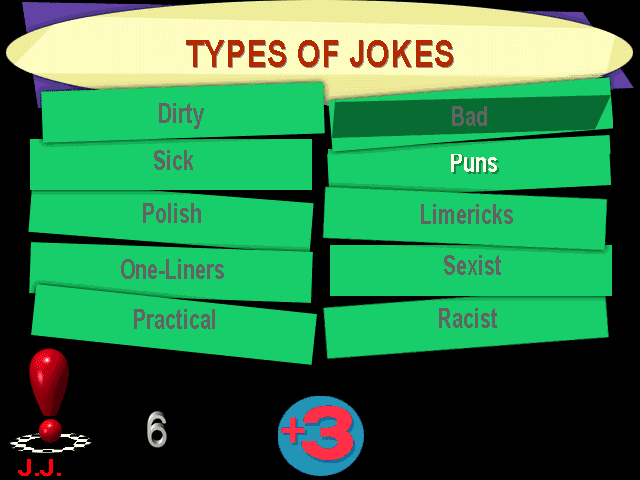
    Outburst the computer game is basically formed like a TV game show. You can play by your lonesome or with other players, online or off. The game has multiple rounds of play, all based on the general theme of giving as many answers as you can within the time limit. After some rounds, you can earn bonus points by having the randomizer hit an answer you gave. The team with the most points after seven rounds wins.

    (more…)
  • A look back at Sonic the Hedgehog cartoons.

    A look back at Sonic the Hedgehog cartoons.

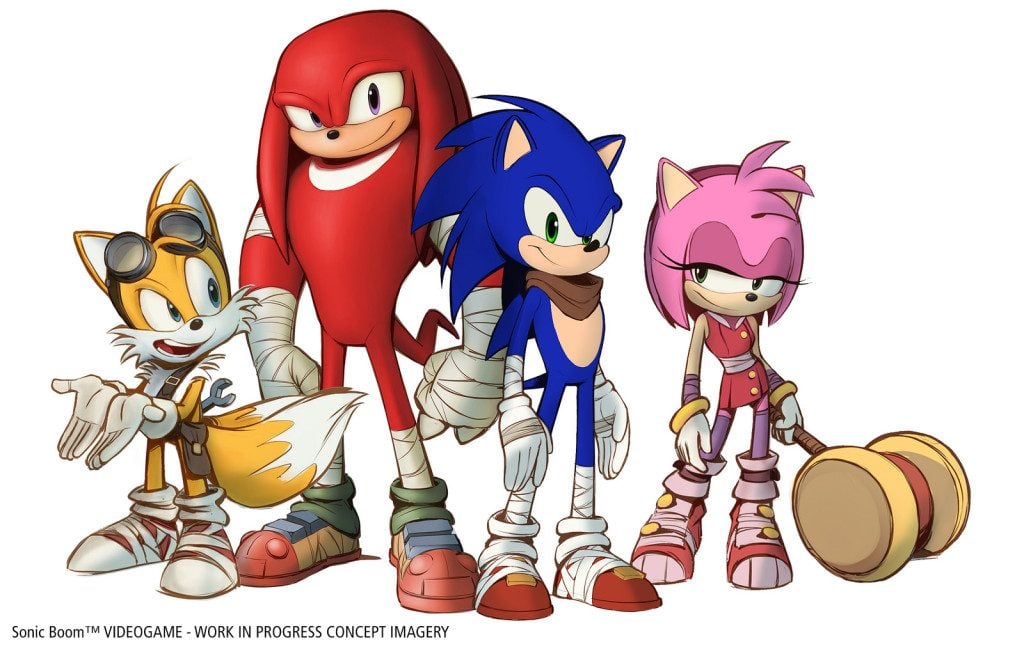
    So, as of this writing in 2014, Sega recently announced a new Sonic the Hedgehog cartoon titled Sonic Boom, complete with the common video game tie-ins. This was buzzing around the internet for the past couple of days, most notably because everybody couldn’t stop complaining about everybody’s character redesigns.

    Tails going “Have you *seen* what these jerks on the internet have said about us??”

    After that announcement, I realized that this will be the fifth cartoon featuring that blue hedgehog in the past 23 years. So for this particular post, I decided to watch a handful of episodes of the previous iterations of Sonic in cartoon form: Adventures of Sonic the Hedgehog, Sonic the Hedgehog, Sonic Underground and Sonic X.

    As a fair share of cartoons back then really didn’t have season-long story arcs, I figured a sampling of each series was good enough. This also gives me a chance to experience my vague memories of two of the series, and whether or not they held up.

    I will say upfront that I am not an authority on Sonic the Hedgehog. I was a big Nintendo kid until about the mid-2000s, and while I had a Genesis and played Sonic in its heyday, it never really grabbed me until years later. The most recent Sonic game I played was Sonic Generations, and despite fan praise, It wasn’t really that fun to me. Before that, it was Sonic Adventure 2, Sonic Battle and Sonic Rush, all games that I never really finished and found too frustrating in spots to complete.

    While I’m not one of those people who goes “maybe Sonic was never good,” I am going at this with a more critical eye than someone who praises the blue blur to the high heavens. But enough about that, let’s take a travel through time and look back at Sonic’s cartoon past.

    This took me about an hour to make. Reminder that I am a writer, not a graphic designer.

    Adventures of Sonic the Hedgehog

    Originally airing in syndication from 1993-94, this was DiC’s first animated Sonic cartoon, and the one that I remember a watching a lot when I was younger.

    Running for 65 episodes, the storyline for each episode was similar: Robotnik would hatch a scheme, get his minions Scratch and Grounder – based on characters from the actual games – to fool Sonic into falling for said schemes, Sonic stopping Robotnik’s plans, and Robotnik screaming in anger at his failed plan. Every time. You could make a supercut of Robotnik going “I HATE THAT HEDGEHOG!”, he says it a lot throughout the series.

    Oh yeah, Sonic also was a master costumer.

    Jaleel White, better known as Steve Urkel on Family Matters, was the voice of Sonic for Adventures, as well as the two cartoons that followed. Robotnik was voiced by noted blues singer Long John Baldry (1941-2005), whose cries of hating that hedgehog and general dramatic demeanor gave Robotnik that cartoon villain attitude which perfectly worked with the rest of the show. Naturally since this came out after Sonic the Hedgehog 2, Tails (voiced by Christopher S. Welch) joins Sonic on these shenanigans.

    Since there was only a handful of regular characters, a bunch of the plots would involve guest characters that would come and go. While there were some repeat visitors, often they would only appear for a single episode. There’s one episode I remember featuring a country singer named Catty Carlisle, which is one of those “only adults will get this reference” things I mentioned earlier.

    Oh Robotnik, you fat, lovable goof.

    Adventures had lots of goofy cartoon antics, jokes, and other silly things that fit right in line with old Looney Tunes cartoons. It’s clearly meant for kids, though it had its moments where adults may find the jokes and more obscure references enjoyable. Like, there’s a handful of scenes has Robotnik’s naked or in a bikini. It’s all goofy stuff.

    After every episode, there’s the rather… infamous Sonic Says segments. Basically Sonic and Tails are giving kids life lessons. This was before it was required for American television to plan at least three hours of programming a week to educational content, so they probably thought ahead on these.

    I wish I could say these were entertaining, but they’re not. They come off as a rip off of stuff like the famous PSAs for G.I. Joe, or the “Planeteer Alerts” from Captain Planet and the Planeteers. They’re just silly commonplace stuff that a parent should be telling you about, not some blue hedgehog.

    It gets even weirder. Some of these “Sonic Says” bits have gained viral video status such as one where Sonic talks about sexual harassment. I am not making this up, I swear. You need to see it to believe it.

    Out of all the Sonic cartoons, this one is the best. It’s cheesy in a typical kids cartoon sort of way, though not incredibly stupid and surreal all the time like Spongebob Squarepants tends to be. Despite the weird “Sonic Says” PSAs at the end of every episode, the show is still entertaining and goofy to this day. Though, it is something you can really only watch one or two episodes of before you get sick of it.

    (more…)
  • Video Games according to Life: A Civil War.

    Video Games according to Life: A Civil War.

    It’s been a while since I’ve done one of those “Video Games according to TV Shows/Movies” posts. Previously, I looked at David Caruso chewing the scenery and giving us the most meme-worthy quotes as I checked out CSI: Miami‘s Urban Hellraisers episode. (You can check that out here.)

    As we bring the series out of moth balls, we look at another TV show that depicted video games in the silliest way possible. This time, it’s a short-lived crime drama that while had an interesting premise, was the wrong place at the wrong time.

    Again, I’m not a graphic designer. Leave your complaints about this at the door.

    This time, our featured show is Life, a short-lived police procedural that aired on NBC from 2007-09. Damian Lewis plays Charlie Crews, a former cop who was imprisoned for 12 years for a crime he didn’t commit. Now hired as a police detective, Crews must solve crimes while trying to solve the mystery of who actually caused the crime he was imprisoned for. It’s like Monk, but instead of an obsessive-compulsive man, we have an eccentric ex-con.

    As opposed to Urban Hellraisers, which I watched without watching any prior episode of CSI: Miami, I actually did watch Life‘s pilot to understand the show’s premise. The acting is solid, Lewis does a fine job showing off Crews’ personality traits. Though, if you decide to watch the series for yourself, expect to see a lot of “technology has changed since he was in prison” jokes. Like in the first episode, I saw him fumble with both trying to use a cell phone and trying to comprehend how he’s answering phone calls from his new car.

    The episode in question is titled “A Civil War,” from the show’s first season. The episode starts with two Persian-American employees of a gas station killed and stored in a refrigerator, with “GO HOME” splashed on the windows in motor oil. Crews tries to find out who caused it, finding out it’s a hate crime by three perpetrators. Later on in the investigation, they find out there’s a third person, Amir Darvashi (Oren Dayan) who was kidnapped being held for ransom, and they ask for help from the gas station’s owner, Mary Ann Farmer (Sarah Clarke).

    I'm sorry, but after watching so much 24, it's hard to see her as anything but a psychopath that might kill anybody at any moment, even in a show like this.
    I’m sorry, but after watching so much 24, it’s hard to see Sarah Clarke as anyone but a psychopath that might kill everyone at any moment, even in a show like this.

    (more…)

  • Music from the Xbox video game NHL Rivals 2004: A soundtrack review.

    Music from the Xbox video game NHL Rivals 2004: A soundtrack review.

    It’s really fascinating how popular licensed music in sports video games have become. For a good while in the 2000s, there was a sense of hype if your song got into the next Madden NFL or NBA 2K title. Nowadays we tend to gloss over it, being just another thing about these games that exist. They’re not particularly exciting these days, unless you’re like me and like cataloging every time Snoop Dogg’s been in something.

    While EA and 2K Sports have become the big-name players for sports games these days, there are many companies willing to throw their hat in the ring and try to carve their own niche. For example: Sony with their MLB The Show series are considered by many to be the gold standard for baseball video games. Other times, some of this competition falls flat and ends up in the annals of obscurity, like the many times Midway tried to re-invent the wheel by making stuff like NHL Hitz. This time, we’re gonna briefly talk about Microsoft’s failed attempt at a sports video game brand called “XSN Sports.”

    In 2003, Microsoft tried to make their own sports brand to rival then-competitors EA and Sega. They introduced XSN Sports as their flagship sports game brand, to make sports games for their exclusive Xbox console, much akin to what their competitors were doing. Under the XSN Sports banner, Microsoft’s sport-focused games featured tournaments and leagues that players could make in-game to share on the respective XSNSports.com website.

    Microsoft’s sports games debut included XSN Sports titles like NFL Fever 2004, Links 2004, and Rallisport Challenge 2. Sadly, they couldn’t make a dent in the competition, and the XSN Sports brand was folded one year later, with only Amped and Rallisport Challenge lasting beyond the brand. The XSN service itself was later shut down in 2006, presumably to shift focus onto the then-new Xbox 360.

    What does that say when half the cover is dedicated to the artists featured?

    As a promotional tie-in for these games, they released a soundtrack, under the “XSN Sports Soundtrack CD Series,” featuring various songs that come from the game’s soundtrack. NHL Rivals 2004 was the featured soundtrack for Volume 1, and what turns out to be the only volume, as there was no Volume 2 that I could find online.

    The soundtrack CD also comes with a bonus DVD, featuring some NHL highlights from the 2002-03 NHL season, some Wayne Gretzky promo videos, and some DVD-ROM exclusive features. Not much to say about all this, as my experience with hockey games begin and end at Blades of Steel.

    I guess this looked good for 2003. The expression on his face is quite off-putting, though…

    The main reason I’m covering this is primarily because of the track listing. Outside of two tracks, the rest of the album is… rather off-putting. Stuff like Boston’s “Long Time” (apparently the “Foreplay” half wasn’t available despite being the better part of the two), Joe Walsh’s “Rocky Mountain Way,” REO Speedwagon’s “Keep On Loving You.”

    As someone who has only been to one or two hockey games ever in their life, these songs seem rather out of place for a hockey game. Most of them are too slow, not evoking the fast-paced nature of ice hockey, or missing the sort of jock jam enthusiasm that you kind of need at a sporting event.

    But what about those two interesting songs, you may ask? Well, they may not be that interesting, but they are to me, at least.

    (more…)
  • Late to the Party: Red Dead Redemption.

    Late to the Party: Red Dead Redemption.

    I had written this shortly after I finished the main campaign of Red Dead Redemption in mid-2011. I was intending to post it as a community blog on Destructoid, but I didn’t get around to it for whatever reason. As I was sifting through my past writings, I found this one and decide to post it here. I only changed minor grammar and spelling errors, and changed the formatted BBCode back to HTML.


    So, I wrote a blog back in January on how I’ve always been behind on video games. Thankfully, I’ve gotten better this year at trying to keep up, but I can’t afford every single game at launch. Because of this, I end up getting games long after their release date, sometimes end up playing them much later after that. Since L.A. Noire just came out a week ago, I think it’s topical that I write about another Rockstar-published game that came out last year. This, my friends, is me being late to the party on Red Dead Redemption.

    Shout out to whoever made the cover. It’s rather stark. If only the rest of the game looked like this.

    Red Dead Redemption
    Played on 360
    Released on May 18, 2010
    Started January 18, 2011, Finished May 14, 2011

    (Finished in this case means “Finished last story mission, roll credits.” Since it’s a free-roaming action game and all.)

    My dad was the one who got me to notice this game. He’s not a gamer, he just pays attention to TV ads and asks if I’m familiar with certain games. This, coupled with the Man from Blackwater Machinima that aired on FOX shortly after the game’s release, made me mildly interested in it. I asked for it as a Christmas gift, and started by dabbling with multiplayer in early January. (First achievement I got? “Red Dead Rockstar.” The viral achievement.) After a while, I started playing the single player on and off, playing it around the same time as other games like Need for Speed: Hot Pursuit and Saints Row 2.

    Now, I hadn’t played a recent Rockstar game. The last Grand Theft Auto game I’ve played was GTA: San Andreas, so I can’t make any comparisons from RDR to GTA4 as I haven’t played it. I also never played the spiritual predecessor, Red Dead Revolver. That game was released back in a time where I didn’t have a large Xbox/PS2/Gamecube collection. I was essentially going into this with little expectations other than who published it — Rockstar, known for high quality and critically acclaimed games — and who developed it — Rockstar San Diego, the guys who brought us Smuggler’s Run back in the PS2/GC days, as well as the Midnight Club games.

    For 2010, this looks rather alright.

    I’ll refrain from spoiling large chunks of the story, as it’s a decent story for a Western-style game. When I started the game, I just assumed that John Marston’s role is similar to The Man with No Name’s from the famous Dollars trilogy of Spaghetti Westerns.

    (more…)

  • Mountain Dew Game Fuel, Halo 4 Edition.

    Mountain Dew Game Fuel, Halo 4 Edition.

    Yeah, you read that right. I’m going to review a soda on this blog. Why, you may ask? Well, because I can. But also because Halo 4 fever is slowly dying and being replaced by Call of Duty: Black Ops II fever, so I gotta squeeze this in now while it’s still relevant. No one’s gonna care about this in a month’s time.

    I like to exaggerate the name of this stuff. Imagine if it was said by some obnoxious 90s announcer.

    So, this is the fourth time that Mountain Dew has done the limited “Game Fuel” thing to advertise whatever hot new video game was on the market. The first time Game Fuel was introduced was in 2007 for Halo 3, then re-released in 2009 for a World of Warcraft: Cataclysm and most recently, last year for Call of Duty: Modern Warfare 3. I honestly expected them to skip this year, judging by the “every other year” cycle, but since Halo started the unique limited flavor/marketing tie-in for Mountain Dew, they might as well do it again for the newest installment involving a Master Chief and some Halos.

    I was never a big Halo guy. I played a leaked prototype of Gearbox Software’s PC port back in 2003, and eventually bought the game the following year. I thought it was interesting and kinda fun, but hardly the mind-blowing revelation that gamers were making it out to be. Halo 2 was a dull, monotonous corridor shooter I’d rather forget, and all I remember of Halo 3 was me and and a friend co-oping it in two long sessions one time. I even got the Anniversary edition of Halo: CE and only finished a level or two before moving on.

    Still, I can’t say I hate Halo, it just never really grabbed me outside of the soundtrack and occasionally its multiplayer. Maybe it’s because I was anti-Xbox ’til about 2006. Forgive me, I was still an oblivious teenager.

    (more…)