Tag: Cauldron

  • Soldier of Fortune: Payback – the low budget finale.

    Soldier of Fortune: Payback – the low budget finale.

    CONTENT WARNING: Blood, gore and violence.

    Longtime readers of this site know that I am a trash connoisseur. I will watch terrible shows and bad movies, and of course I’ll play bad video games. I chalk it up to just absorbing a lot of critically panned media in my youth, but I also look at it as a learning experience: Just why did they make it like this? Engaging with media known for its negative reception is important to critiquing media, in my opinion. Gives you a better understanding of what’s actually good or bad.

    I’ve written about several bargain bin games over the years. Often made by small teams on shoestring budgets and quick development time frames, these are fascinating to play for me. Many times they’re not very good, and I can finish them in just a couple hours. Though, sometimes you can see what they wanted to do, but couldn’t for whatever reason. In some rare cases, a budget label will decide to release a new installment in a long-dormant franchise in an attempt to get a few extra sales from longtime fans. Much like today’s entry.
    Confirmed: That’s a gun firing, alright!

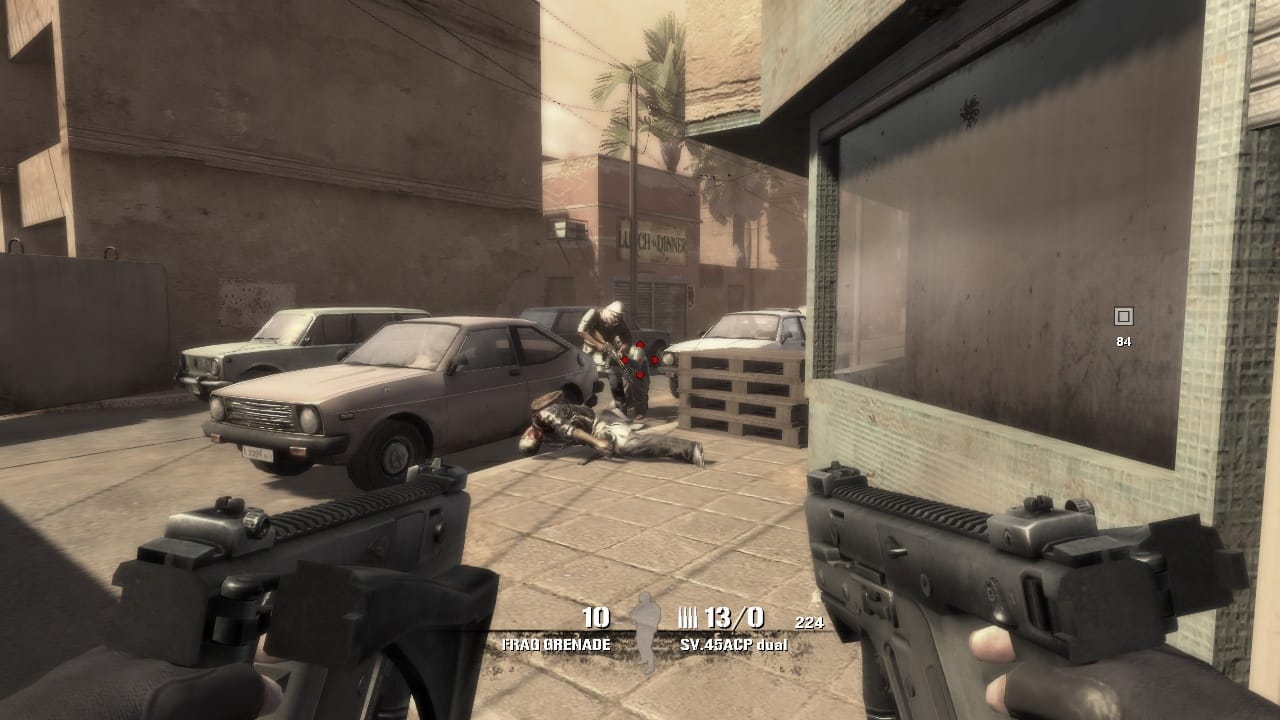
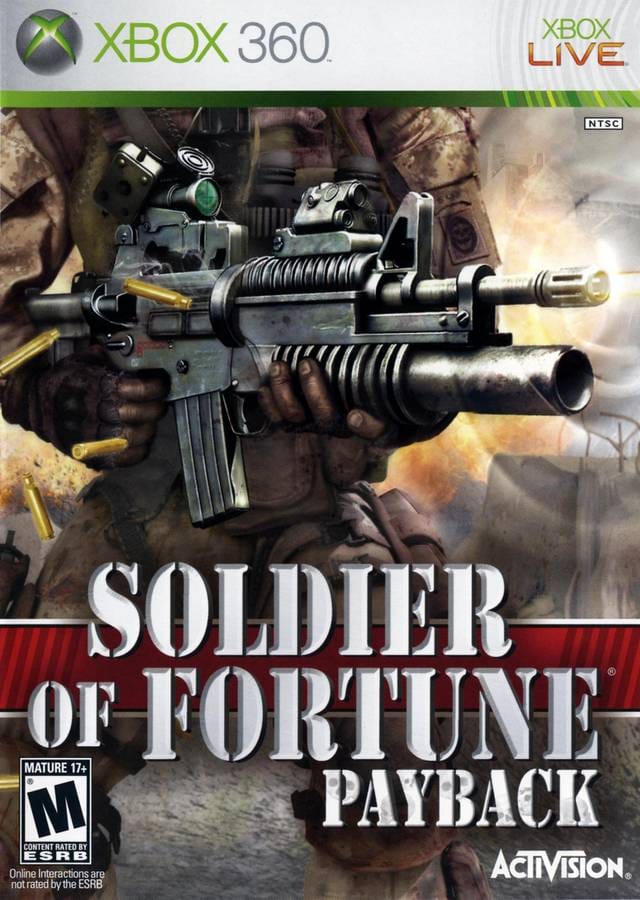
    Soldier of Fortune: Payback is the oft-maligned third and final installment of the Soldier of Fortune franchise, loosely based on the magazine of the same name. Released in 2007, a mere two weeks after the massively popular Call of Duty 4: Modern Warfare, this game came and went to negative reviews, and is mostly forgotten outside of ragebait Youtubers or trash connoisseurs like me.

    Payback was not developed by Raven Software, makers of the previous Soldier of Fortune games. Instead, it was developed by Slovakian development studio Cauldron, who was one of a few studios Activision Value relied on for developing their bargain bin games. According to The Cutting Room Floor, the game was tentatively titled “Mercenaries Wanted,” and likely got the Soldier of Fortune branding due to similarities between it and the previous games.

    While it may seem weird for Activision to publish this game right after the biggest video game to probably come out in 2007, it actually isn’t. You see, for a while, there were two Activisions.

    From 2000 to 2016, Activision Value was a publishing arm of Activision based out of Minneapolis, Minnesota. This was created from a merger of several budget publishers, including Expert Software – known for publishing a good chunk of Sega’s PC output, like Sonic & Knuckles Collection, which I’ve written aboutand Head Games, makers of such infamous games like Extreme Boards & Blades and Juggernaut: The New Story for Quake II, which I’ve also written about. If you’re familiar with the oodles of video games based on the Cabela’s brand of sporting good stores, that’s almost entirely Activision Value.

    Unless you looked closely, there wasn’t much of a noticeable difference between the Activision based out of California that was putting out Tony Hawk’s Pro Skater, Guitar Hero and Call of Duty; and the Activision based out of Minnesota that was putting out stuff like Secret Service or the oodles of History Channel video games. They both had the Activision logo on the box, after all. I find this late 2000s era of Activision fascinating for that reason. They not only wanted be the big AAA publisher, but they also wanted to put out average schlock for $40 a pop. Guess they wanted to eat their cake and have it too.
    Just another day at the office.

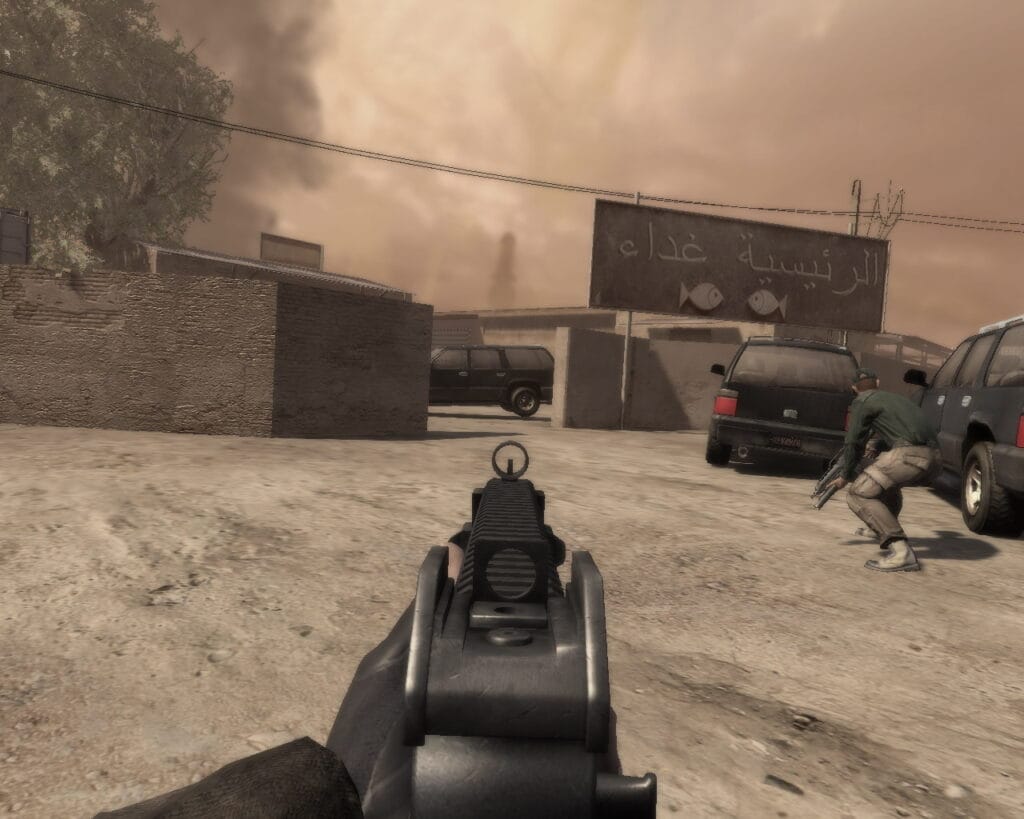
    In Soldier of Fortune: Payback, you don’t play as the bushy mustachioed protagonist John Mullins from the previous games, but instead a generic faceless soldier by the name of Thomas Mason. (No relation to Alex Mason, I assume.) Mason gets double-crossed by another Shop mercenary named Miller, and with the help from Casandra “Casey” Decker back at The Shop, Mason goes through middle eastern towns, South American jungles and Ukranian hotels to figure out who is bribing mercenaries to defect. It’s a fairly basic story pretty much meant to move the player along various locales while shooting bad guys in generic environments.

    (more…)
  • Chaser: The Total Recall game we should’ve got.

    Chaser: The Total Recall game we should’ve got.

    One thing I’ve been trying to do this year is to tackle my long, burgeoning backlog. I’m limiting this to mostly current generation stuff like the 360, PS3, PC and Wii. But only because I wasn’t really up to digging out my Xbox to play Brothers in Arms: Road to Hill 30 and or play through the gauntlet that is Shin Megami Tensei: Persona 4. If I tried to finish everything I owned, I’d be left with a task that would be impossible to finish in my lifetime.

    I’ve been making a slight dent at that backlog in recent months, tackling Borderlands and all its DLC, Saints Row: The Third (which is good timing considering Saints Row IV hits later this year), F.E.A.R. 2: Project Origin and Uncharted 3: Drake’s Deception. Lots of shootybangs, basically.

    BADASS SPACE MARINE COVER

    So it makes sense my most recent completion was this little-known budget FPS called Chaser. A first-person shooter that was developed by Slovakian developer Cauldron and published by JoWood Productions in 2004. I had heard of the game in the past thanks to owning a PC Gamer demo disc that had a demo of the game’s multiplayer. While the demo wasn’t amazing by any stretch, it did seem like an interesting shooter that I might play someday.

    Fast forward to 2012, when I see the game on a Steam daily deal for $2.50, which got reduced even further to $1.24. I have a soft spot for bargains, and when a game hits that “$2 or less” threshold, it’s an instant impulse purchase. Then it sat on my Steam backlog until very recently, when I had decided to try it shortly after beating Redneck Rampage, wanting an “old-school” FPS fix of a different kind.

    Douglas Quaid John Chaser in an unusual predicament.

    You play as John Chaser, an amnesiac stuck on a spaceship being hunted down, with no memories of what happened prior. You eventually make it to Earth and become acquaintances with members of “The Family,” as you try to do missions to find out who you are and what happened. Eventually you find the truth, befriend a few people along the way, and find out you were doing a mission on Mars. So you get your ass to Mars, go to the Hilton and flash the Brubaker ID at the desk.

    Obligatory sewer level screenshot.

    Okay, I know a Total Recall reference sounds dumb here, but Cauldron clearly was looking at the Schwarzenegger sci-fi classic for inspiration: From the amnesiac main character, to befriending people who would later be enemies, being chased through a spaceport, even having to go through murky Mars caves to find the truth. This is the closest we’ll get to a “Total Recall: The Video Game” that isn’t that terrible NES game from many years ago.

    Let’s be honest here, shooting a bunch of dudes is better than punching similar-looking monsters and dodging glory holes.

    The game is not perfect, though. Being made by a game studio where English is not their primary language, there’s that weird case of “eurojank” to Chaser‘s design. Voice acting is a very mixed bag, leading to awkward line deliveries and unusual word usage. Subtitles don’t always match what’s spoken. Jumping physics seemed a bit off, where I was more likely to miss a platform than land on it. There are many points where it wasn’t clear where I needed to go next, which lead me to walking around a lot and frequently backtracking, among other problems that are common to unpolished shooters.

    Cauldron’s CloakNT Engine makes for large, expansive levels. Impressive for a game released in 2004, however it makes later stages like the last few levels drag on considerably.

    Chaser is not just a rough unpolished game, it’s also very difficult. On Normal difficulty, it didn’t take much for the bad guys to whittle my full health and armor down to zero pretty quick. Enemies occasionally drop medkits and armor, but I ended up losing that as quickly as I got it. This even applies to fall damage — later stages have you dropping down on pipes, taking off small bits of your health as you descend, making it pretty easy to miss a jump and easily crater, forcing you to quick save repeatedly.

    This is cruel irony.

    Lately I’ve been trying to avoid playing games on harder difficulties, but Chaser was incredibly difficult to play on Normal, leaving me to go through the remaining 2/3s of the game on Easy just to get through it. Even on Easy difficulty, some of the later stages still kicked my ass, with enemies having grenade launchers that one shot me even with near-full health and armor. The quick save key became my best friend.

    Even the game’s ending is especially bleak. I won’t spoil it, but I was honestly expecting a much different outcome, and playing a shooter with a downer ending, especially the long journey it took me to get there, is disappointing. I would preferred a choice, like in Singularity, another game I played fairly recently.

    That isn’t to say this game is bad per se, it’s just difficult because it was clearly made in a different mindset than most first-person shooters today. Chaser hearkens back to the late ’90s-early 2000s era of first-person shooter design: reflexes, speed, exploration, backtracking, rationing items, and quick saving often to make progress. The average player today would likely have a very difficult time playing through Chaser if they’re used to the Call of Duty style of game play.

    Despite that challenge, I enjoyed the varied level design — from space stations, to cities, to the Russian tundra, even the redness of Mars looked pretty neat. The soundtrack was good, reminding of MOD tracker music that was popular in Unreal Tournament and Deus Ex. There’s a bit of charm to Chaser that I had a soft spot for, despite it’s ridiculous length and punishing difficulty.

    It’s on Steam at an affordable price of $5, though it does go on sale occasionally. It’s worth checking out if you want some early 2000s eurojank in your life. Just remember that it’s gonna kick your ass, but stick with it. Despite that eurojank, it’s not a bad shooter. I’ve played worse shooters out there. Much worse.

    Some screenshots taken from the Steam store page and Mobygames.

    (Update 8/20/2019: Updated the post with a few changes here and there.)