Author: beverly jane

  • Here’s Some Stuff I Bought: All of 2024 (and half of 2025) edition.

    Here’s Some Stuff I Bought: All of 2024 (and half of 2025) edition.

    So back in October 2024, after covering the stuff I got at the Portland Retro Gaming Expo, I had teased I was gonna write a “Some Stuff I Bought” at the end of the year to cover the stuff I got outside of that con. But then I forgot to. With good reason, though.

    Since it is the middle of 2025, and I have bought more things since. So let’s do a bit of catch-up, shall we?

    For the uninitiated: I check thrift stores and other shops of interest for things I think that are neat: Music CDs, video games, DVDs/Blu-rays of movies, that kind of thing. Inspired by places like LGR Thrifts, Oddity Archive’s Archive Thrifting and other similar online content creators, I often do this type of article 2-3 times a year: One around June-July, One in December, and then any separate ones for any conventions I go to – which has been only the Portland Retro Gaming Expo so far, but I won’t rule out opportunities to check out other cons in the future if time and budget allows for it.

    I will be honest with you. My mental health wasn’t in the best of places last year. Current events notwithstanding, it was just really really tough for me to get the motivation to go places and do things that I find enjoyment in doing. I was able to get a bit of thrifting done, just with very, very wide gaps between each thrifting.

    Such as my first trip in March 2024. A small pilgrimage to one of the local Goodwill stores got me these small, yet still interesting grabs.

    Chicago XVII on audiocassette (99 cents)

    Ah yes, the 80s soft-rock gloop classic that brought us “You’re the Inspiration.” The last major album featuring Peter Cetera on lead vocals before he decided to branch off into a solo career that was even more cheesier than when he was with Chicago. I’m more partial to their hard rock stuff like “25 or 6 to 4,” but I don’t hate their more lighter work – “If You Leave Me Now” is cheesy but I have a soft spot for it. This was my first cassette purchase in a while, and at a store that was slowly phasing out stuff like cassettes and 8 tracks.

    You might also know “You’re the Inspiration” from being featured in Elite Beat Agents, with a really touching level attached to it and a damn touching cover to boot. (Hey Nintendo, put out the studio masters of the songs from the Ouendan series and Elite Beat Agents on your Nintendo Music service already!! I know they’re all licensed tracks, but I wanna hear these in their original quality and not through a tinny Nintendo DS speaker.)

    Karaoke Revolution Vol. 2 – PlayStation 2 ($3.99)

    For the longest time I didn’t know Harmonix did music games besides Frequency, Amplitude, Guitar Hero and Rock Band. Turns out Karaoke Revolution was also one of their big successes, and it’s probably why vocals in Rock Band games were so darn good.

    I basically got this to complete my Harmonix game collection, but also to hear how they handled the songs, which are all covers much like the early Guitar Hero and Rock Band games were, even produced by the same company as those games, Wavegroup Sound.

    Now I just need to get over my fear of singing in games like these…

    (more…)
  • RTC-3057 for Doom: Doom with a tinge of survival horror.

    RTC-3057 for Doom: Doom with a tinge of survival horror.

    I. Love. Doom mods. Out of all the things I’ve written about over the years, it’s the one thing I consistently come back to writing about. What folks have done to push that 32-year-old game and its engine never ceases to amaze me. This one in particular was one I wanted to write about as early as last year, and I think it’s time.

    When id software released the Doom source code around 1997, little did they know what folks were gonna do with that “old” engine. From expanding the vanilla limits like Boom, to the more complex scripting that GZDoom brought years later. While there were still levels being made for Boom and vanilla Doom around the 2000s, source ports like Doomsday and ZDoom pushed the idea of expanding beyond what vanilla Doom could achieve, with a myriad of gameplay and levels projects released around that time. One of these in particular was a ZDoom-focused mod that would change Doom into something more like its contemporaries of that time: System Shock.

    The following was released to Patreon subscribers a few days earlier. If you wanna see this stuff early, please consider subscribing to my Patreon. Every dollar helps.

    Wow, so blue…

    The mod is RTC-3057, a creation ran by “Team Future,” a handful of Doom modders lead by one Jacob “Shaviro” Kruse. Initially, the mod was released as a single-level demo in 2002, and would end up being considered as part of the 10 Best WADs for 2003 to commemorate Doom’s tenth anniversary. (This would be a precursor to the later Cacowards, which started the following year.) The final version consisting of the first hub, codenamed Blue, was released on the /idgames archive that same year.

    The RTC-3057 in this case refers to you, a human-cyborg hybrid. Awakening from a bunch of unexplained nightmares, 3057 discovers something has gone incredibly wrong in the spaceship he’s occupying. Armed with the standard pistol and 50 bullets, 3057 must fight their way through all the foes that have invaded the ship.

    Things may look slightly different, but it’s still Doom: the goal is still killing demons.
    (more…)
  • Quake II RTX: An old FPS gets an unnecessary coat of paint.

    Quake II RTX: An old FPS gets an unnecessary coat of paint.

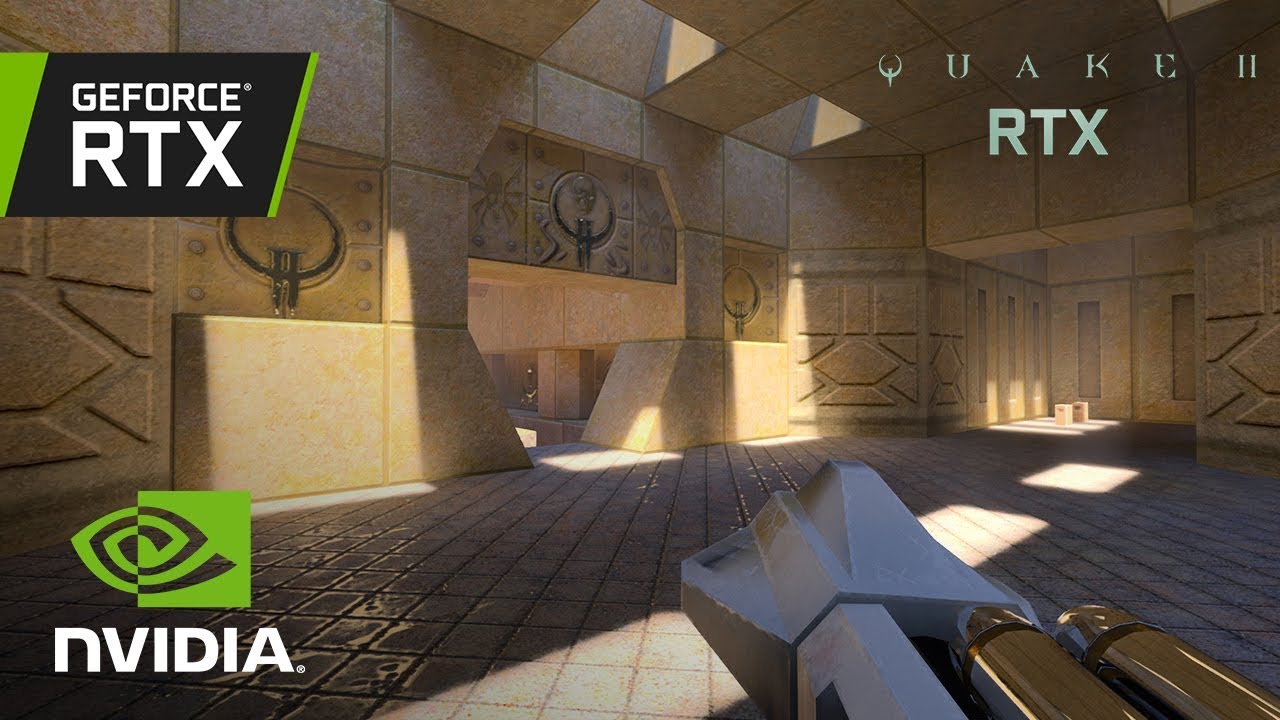
    There seems to be a lot of hay going around about ray-tracing technology in video games. That stuff where lights reflect off of surfaces that makes it look more like real life. Probably the biggest technology arms race next to high dynamic range rendering and accurate water physics. For a modern video game, ray-tracing can be a valuable tool to make your game world feel more alive. But not so much if you’re trying to bolt on ray-tracing to an old shooter from 1997.

    YouTube player
    Official trailer. Source: NVIDIA Geforce’s YouTube.

    Quake II RTX is a remaster of the 1997 shooter classic, but with the engine upgraded to support NVIDIA’s RTX ray-tracing technology. Released on June 6, 2019 for PC by NVIDIA’s in-house Lightspeed Studios, this game was made as a way to show off their fancy new RTX technology. Quoting from NVIDIA’s blog:

    “We are giving Quake II back to gamers with a bold new look, as Quake II RTX,” said Matt Wuebbling, head of GeForce marketing at NVIDIA. “Ray tracing is the technology that is defining the next generation of PC games, and it’s fitting that Quake II is a part of that.”

    Now, I personally have my doubts that a remaster of a shooter that’s nearly 30 years old truly defines the next generation of video gaming, but I don’t work at NVIDIA. It’s not like this kind of marginal upgrade hasn’t existed beforehand: Doom95 as a shell to play Doom and Doom II in Windows 95 without needing to run DOS, GLQuake being an OpenGL render for Quake back when graphics accelerator cards were still new to the PC market, that sort of thing. Usually if you wanna tout this technology you’d use a fairly recent game. But let’s see how Lightspeed took Quake II and made it look shiny and pretty for a modern PC audience.

    Since there might be folks who are wondering: I had this article idea before Microsoft announced using their Copilot generative AI demo that trained off Quake II data as a base. This was merely a coincidence. In fact, what did inspire me to write about this was another RTX game that just came out: Half-Life 2 RTX, a version of Half-Life 2 that uses the RTX technology, just done by a group of modders rather than in-house at NVIDIA Lightspeed in the case of Quake II RTX and Portal with RTX.

    Once more, into the breach…

    Now, I’ve talked at length about Quake II several times over the years. Mostly the unofficial expansions like Juggernaut: The New Story for Quake II and maps made to advertise a mostly forgotten ‘90s TV show. But my opinion on the original Quake II hasn’t really changed much: It’s a solid shooter that feels kinda bland artistically. It’s the embodiment of the John Carmack era of id Software: Fancy technology over anything else. It’s a perfectly fine game, and the Nightdive remaster from 2023 rebalanced the game a bit to push it from being merely a solid game for its time, to standing with the id classics like Doom and Quake in a much better light.

    At the time I did not have a computer that could really handle running Quake II RTX smoothly. My previous PC, which housed a GeForce GTX 1060, was not enough to hit the specifications to turn on the RTX features. Once I got my current computer, which has a GTX 3070 in it, I was able to run Q2RTX pretty smoothly at around 60 frames per second with not much trouble. Much like other tech demos, sometimes it’s worth upgrading the PC just to try it out. Provided it doesn’t cost an arm and a leg to upgrade, that is.

    (more…)
  • Shadowgrounds: Survivor: Top down alien shooting, Now with Physics!

    Shadowgrounds: Survivor: Top down alien shooting, Now with Physics!

    Way back in 2016 I wrote about Shadowgrounds, a top-down horror shooter by Frozenbyte, the developers of the Trine franchise. I thought it was a neat little game for what it was, and while it wasn’t super unique, it was at least a bit of fun for a few hours. Towards the end of the article I wrote:

    One day I’ll get around to the sequel, Shadowgrounds: Survivor, which might be more of the same, but I don’t see that as a bad thing.

    Then I mostly forgot about it. The original Shadowgrounds was a fun little romp for what it was, and I guess I felt I needed some time before I jumped right in. It wasn’t until almost a decade later would I actually get around to playing it. It wasn’t quite worth the wait.

    Wouldn’t be a 2000s video game without a cute lady on the title screen.

    Developed again by Frozenbyte and published by Meridian4, Shadowgrounds: Survivor is basically a standalone expansion pack to the original game. This was released one year after the original Shadowgrounds, and since Frozenbyte wasn’t a super big developer at the time, this felt a bit more like a tech demo than anything resembling a sequel.

    Taking place concurrently with events from the original game, you play as three characters: Luke “Marine” Giffords, a generic soldier; Bruno “Napalm” Lastmann, a Russian drunken soldier stereotype; and Isabel “Sniper” Larose, a cute goth assassin lady. During the story you switch between these characters as they all get a message from McTiernan, a scientist who is trying to help fix a base in New Atlantis to cull the impending alien threat.

    Why is there always sewers……

    Like its predecessor, Shadowgrounds: Survivor is a top down action game. Each character has a unique set of weapons they use and procure throughout their journey to kill the alien threat, which is the general gamut of pistols, assault rifles, rocket launchers, flamethrowers, and railguns.

    All the major arsenal from Shadowgrounds reappears here, but this time locked to specific characters. Marine only gets a pistol to start, but eventually picks up the legally-distinct-from-Alien Pulse Rifle. Napalm starts with a flamethrower, natch, but can get a shotgun. Sniper naturally has a special handgun but later picks up a railgun. Each character also has grenades they can throw at any time, as well as a tactical dodge to avoid gunfire.

    (more…)
  • Mad Max (2015): Maybe we do need another hero.

    Mad Max (2015): Maybe we do need another hero.

    I gotta say, 2025 has been off to a terrible start. What with everything happening in the USA, I decided to try to take my mind off things by well, doing anything that didn’t involve doomscrolling 24/7. Watching movies, playing games, that sort of thing. I ended up picking up a game that was a post-apocalyptic free roaming action game from 10 years ago that felt… a bit too on the nose at times considering current events.

    This is the most “box art by committee” I’ve seen in a while.

    Mad Max is a game based on the famous film series created by George Miller. Our hero, Max Rockatansky, trudges along the wasteland of a blown out world, where chaos and disorder reign supreme. During his travels he’ll help out stragglers, get into epic car chases on desert lands, and even fight his way in the Thunderdome. Developed by Avalanche Studios and published by Warner Bros. Games, this came out in 2015 to fairly above average reviews. I had heard how alright this game was for being a small little timewaster, and since it was constantly going on sale, I decided to get on Mad Max’s wild ride.

    And yet, he lives.

    Our story begins with ol’ Max Rockatansky driving his godlike car until he meets a powerful villain by the name of Scrotus. Scrotus and his gang of thieves steal Max’s car and supplies, intending to leave him for dead. It’s not until Max meets a gremlin-like character by the name of Chumbucket, who is a wizard with cars. Max must get his ride back and build enough trust with the various folks around the wasteland to get to his ultimate goal: Get to Gastown and continue his travels.

    While the game is based on the film franchise, it’s a standalone entry that does not require watching the movies to understand. There’s winks and nods to the previous films, but sadly no other characters besides Max himself appear. No Furiosa or Tina Turner-likes here.

    My apologies for the blurry image. Taking screenshots while in combat is not something I do often.

    Max has a combat system similar to Rocksteady’s Batman Arkham games: Tap X to punch, hold for a stronger hit that can stop enemies from blocking, enemies will choreograph an attack that can be countered with Y, there’s finishers that can be activated with A, that sort of thing. Build up enough of a combo to activate a rage mode where Max can do more damage more quickly. Since Mad Max relies on weaponry alongside the usual fisticuffs, pressing B will shoot Max’s shotgun, locking on to any nearby target, instantly killing any non-boss foe.

    During some combat sections, there will be a War Crier that, if not dispatched, will buff enemies. This is a real pain if there’s several enemies to fight at once. There’s two ways to take him out: destroying the chain that’s holding him up, or with gunfire/explosions. Eventually I got into a groove where taking out the War Crier was priority one, which he was easily killed by shotgun or stray explosive. Since he explodes once killed, it also helped do damage to his buddies and make fights a bit less monotonous.

    On the road again….

    While most of the game is Max on foot fighting foes Batman Arkham style, there is a good chunk of the game centered towards the vehicles. Max gets a car from Chumbucket called the “Magnum Opus,” which can be upgraded with scrap – a material all around the wasteland – to have power nitro boosters, spikes on the car to avoid enemies jumping on it, sidefire jets to damage foes from the side, the grappling hook to yank doors open or eliminate snipers. Speaking of snipers, Max has a portable sniper of his own that he can use while in the Magnum Opus, which can be useful for some annoying targets at range, but keeps you completely stationary. It’s a nice deviation but I tended to use some of the other weapons in my arsenal instead.

    (more…)
  • Halo with chips: A mystery solved.

    Halo with chips: A mystery solved.

    The box quote. We all have our favorite oddball ones – “under-water-based levels very reminiscent of Mario 64” for Bubsy 3D, “our frothing demand for this game increases” for Ikaruga, and so on. (Please leave a comment for what your favorite oddball quote is.) A somewhat lost art, you’d see so many gaming publications make such oddball quotes that makes you wonder who were the ad wizards who were thinking of that one. But there’s been one boxquote that’s been stuck in my head for years, literal years that I had to figure out if it was real.

    The rather infamous box quote.

    “Halo with Chips.”

    This is a quote from Maxim magazine about the game Stacked with Daniel Negreanu. I already wrote about Stacked back in 2020, and even when I was playing the game for the article, that particular quote kept jumping out at me. It’s so absurd when you think about it: It’s pretty clear they’re saying it’s as addictive as Halo, but it feels very hamfisted.

    Look at that PS2 Daniel!

    At the time I wrote about Stacked, I had no idea where it came from. Saying it came from Maxim could really mean anything at the time: Was it in the magazine, or the website? Did it come from the US or UK branch of the magazine? Was it even something printed or was it just something made up by Maxim’s PR department? These were some lightly burning questions, so when I wrote about Stacked and a handful of times after publication, I kept trying to find the source.

    (more…)
  • Save Room – Organization Puzzle: Got a collection of good things on sale, stranger.

    Save Room – Organization Puzzle: Got a collection of good things on sale, stranger.

    I like Resident Evil. Whether it’s the horror aspects of the first few games, or even the goofy action-driven pivot the series took after Resident Evil 5, it’s one of those franchises I have a soft spot for. Except for Resident Evil 6, that game is… not good.

    One of the core mechanics Resident Evil relies heavily on is the inventory system. Your character can only hold a fixed amount of items, thus there’s a bit of strategy beyond exploring a place and killing all the zombies. Knowing what items and weapons to bring, making sure you’re equipped for whatever the game throws your way, whether or not it’s worth getting the big ticket item now or coming back later once your inventory’s empty. While it can be frustrating that you can’t just hold everything, it’s a deliberate design choice that I can appreciate.

    The RE4 inventory system in action. (courtesy of r/oddlysatisfying on Reddit, likely taken from elsewhere.)

    By the time we get to Resident Evil 4 it starts being more complex, where they use a grid system, with each item taking a specific number of slots in the game’s inventory system, now depicted as a large briefcase. It feels a bit more realistic, but also a game within a game, as one has to occasionally do a bit of adjusting to fit the new weapon or the dozens of fish they caught. It’s that one thing people always mention when they talk about RE4 that isn’t complaining about Ashley Graham being annoying. In 2022, 17 years after the original game’s release, a bunch of Brazilians were inspired by this interesting inventory system and liked the concept so much that they made a game out of it.

    I assure you, in spite of the simple title screen, this is not an asset flip.

    Save Room: Organization Puzzle is a game made by Fractal Projects, an indie studio based out of Brazil. Unfortunately I couldn’t find much information on the studio itself, but it’s made a few indie games like Npc Problems: Vertex Coloring and How to Bathe Your Cat, which are mostly pixel-driven indie games that are likely enjoyable games for the sub-$5 price all of their games go for. They don’t really have a website or a broad social media presence, so I can’t really pinpoint if these folks have prior game experience outside of their own work. Funny enough, while there aren’t clear credits for who made this, they do credit the assets they used in from the Unity store, so they’re at least considerate even if they’re semi anonymous.

    If you want to progress stranger, solve my puzzle!

    There isn’t much of a story. A Merchant – likely a reference to the merchant from RE4 – asks you to solve his puzzles, which involve having a bunch of items and fitting them within a specific grid of tiles. You click and drag them into specific spaces, right click rotates the item 90 degrees, and clicking on an item without moving it gives an option to inspect, combine or use, like in Resident Evil 4. Once you’ve filled all the slots, you can move on to the next puzzle.

    (more…)
  • H2H-XMAS.WAD for Doom: Santa the Doom Slayer.

    H2H-XMAS.WAD for Doom: Santa the Doom Slayer.

    Every time December rolls around, I always feel a compulsion to write about a Christmas-themed video game. There’s some pretty okay ones, but there’s one that’s always been on my mind and have thought about writing about it, but just felt there wasn’t enough material there to justify it.

    This fight is annoying, primarily because he keeps saying “HO HO HO It’s not nice to shoot Santa!” repeatedly.

    That game was Duke: Nuclear Winter, an official expansion for Duke Nukem 3D by Simply Silly Software, and while it has a decent Christmas theme to it, really feels slapdash and hastily put together. Hell, the first two levels are literally just Red Light District and Hollywood Holocaust from Duke 3D but with snow all over them. Compared to the other official expansions – Duke Caribbean: Life’s a Beach and Duke it Out in D.C., respectively – it feels like the black sheep of all the Duke expansions. Hell, Alien Armageddon, a mod I covered on this site previously, has pretty much ignored its existence yet given the other Duke expansions a complete overhaul.

    The best computer art 1994 had to offer.

    But Simply Silly Software didn’t spawn out of nowhere. Its founder and head honcho, Joe Wilcox, was making middleware for games like Doom, where stuff like DOOM/Master were his big claim to fame. Of course, he dabbled in Doom mapping as well, making one map for a small Christmas-themed mapset called “Xmas Doom,” which eventually got a bigger, badder sequel in December 1995. H2H-XMAS.WAD is that followup.

    This was made by several members of the Head 2 Head Gaming Network, a community of Doom fans where one could dial up to a network and play Doom multiplayer with others online, similar to services like DWANGO. And like DWANGO, H2H-Xmas was made as something to promote their gaming service. To commemorate Doom‘s tenth anniversary, H2H-Xmas was put on the “Top 100 WADs of All Time” on Doomworld, basically a precursor to the modern-day Cacowards.

    Wilcox was one of several folks who spearheaded this project, as well as contributing one map, which is… quite mediocre. H2H-Xmas definitely has the vibe of what would show up in Duke Nuclear Winter a few years later. Though Duke is a vastly different beast from Doom in terms of design and gameplay.

    I like how the HUD is both Christmas and Halloween themed at the same time.

    The plot is simply silly: After returning from vacation, Santa Claus finds Doomguy bruised, battered and bloody, with Martha Claus being kidnapped by the demons. Unable to finish his mission, Doomguy gives Santa Claus his trusty pistol and tells him to rip and tear those demons like unopened presents.

    If you’ve played Doom, you know what to expect. A pistol, 50 bullets, kill demons, find keys, exit, repeat. Except now there’s a lot of snow and Christmas music to get you into the holiday spirit. Weirdly, the monsters look the same as they do in Doom II, which is odd to me, considering Xmas Doom changed the sprites of the monsters to have santa hats, Cacodemons look like christmas tree bulbs, and Imps throwing snowballs instead of fireballs.

    I thought I might’ve botched something in the install – this was made in the days when you had to run batch EXE files to create the WAD to play it in Doom II, a more complex process compared to the drag-and-drop usability of today – but other videos and images I’ve seen of this WAD seem to match my experience with it, so maybe that was just how it was back then.

    (more…)
  • Legendary Original Soundtrack: A high note in an otherwise average performance.

    Legendary Original Soundtrack: A high note in an otherwise average performance.

    Hey look, another post about this game! But this time, we’re focusing on one little part of it: The music. I briefly hinted at it when I wrote about Legendary, but the music is probably the game’s most shining moment. Which is me kinda lowering my standards here, since we’re talking about something as average as Legendary. Though it had been nearly a decade since I last played the game, the music is the one thing I remember from it besides the literal soul sucking and that time where I fell through the elevator at the end of the game.

    For a little context: I like film and game scores, especially when it’s stuff that is mostly forgotten. It’s become one of those things I tend to collect because it’s neat to listen to scores to mostly forgotten films like Paycheck or the TV score for the 2000s reality show The Mole. That also applies to video game scores. Since Legendary was released around the time where companies were going “Oh yeah, we can do soundtracks for our video game,” a lot of games got soundtracks. And of all the games to get a soundtrack, this was one of them.

    Okay, it looks fairly cheap, but hey, better than nothing.

    Composed by Jack Grillo (the audio director at Spark Unlimited at the time, who’s since moved on to Crystal Dynamics, working on audio for the Tomb Raider games) and Ricardo Hernandez (presumably a drummer friend of Grillo’s, his name is hard to find info on him easily), this soundtrack was released in September 2008 on most digital storefronts, and also got a physical release on Melee Sound Design Records, Hernandez’s self-published label.

    So what does it sound like? It’s mostly chugging guitars and heavy drum hits. After “Prologue,” which is mostly a monologue with occasional guitar playing throughout, “Flashpoint” is the first proper song on here, which plays while in the game’s main menu. It starts with a suspenseful guitar intro, before the drums kick in and layers of guitars are blended into this fairly intense menu music, which is probably the best way to get you pumped up to play the game.

    It’s also really interesting how there’s voice lines from the game featured. “Prologue” and “Epilogue” are literally featured from the game itself at those particular sections, which is expected, though they are truncated from the actual dialogue. featured However, the way it’s framed makes the album as trying to tell its own story, outside of the game. “It’s Just Business” is framed like Deckard just got severely wounded and about to get killed by LeFey, but in the actual game he says this line from a hijacked video line before a squad of baddies come to murder Deckard and Vivian in a subway. I’ll chalk this up to creative liberty with the material featured, but honestly I could’ve done without the random dialogue bits featured here.

    You can kinda tell they had to put a different TV model in front of the original model. That’s game design hotfixes for you, baby!
    (more…)
  • Legendary: Maybe we shouldn’t open Pandora’s Box.

    Legendary: Maybe we shouldn’t open Pandora’s Box.

    (Update 10/24/2025: Minor grammar edits, removed mentioning “generations” (a Wikipedia standard that is incredibly stupid) and specifying what console or time period I’m talking about instead, added a link to the soundtrack article.)

    I kind of miss the Xbox 360/PlayStation 3 era of shooters. Sometimes you’d find a game that while not amazing, was at least trying something interesting. Other times you could end up stuck in the sluice gate of Activision’s budget hell, with games like Soldier of Fortune: Payback, Jurassic: The Hunted or The History Channel: Battle for the Pacific. (By the way, those are all by the same developer: Cauldron, a Slovakian game studio that’s since been absorbed into Bohemia Interactive, makers of ArmA.)

    But regardless, I miss that B to C-tier type of game, something to waste a few hours of your time with that might’ve had promise but couldn’t deliver for whatever reason. And the game I’m talking about this time around definitely fits that criteria perfectly. Time to open up Pandora’s Box with this one.

    Not endorsed by Barney Stinson.

    Legendary – which is such a very generic title that it definitely will be hard to find info on in Google searches – is a first-person shooter that definitely fits this C-tier 360/PS3 mold. Developed by Spark Unlimited, a developer best known releasing Turning Point: Fall of Liberty and this game in the same calendar year; as well as working on the third game in the Lost Planet series and a Ninja Gaiden spinoff, before closing up shop just as the Xbox One and PlayStation 4 were coming out, and the 360/PS3 era was coming to a close. They definitely were a C-tier developer.

    I can’t see this logo without thinking of Noel Videogames from Gigaboots, who upon the start of the stream of this game, saw this logo and yelled “GAMECOCK!”

    This game was also published by the rather infamous Gamecock Media Group, a publisher that was known for having fairly aggressive marketing tactics. I tend to remember them most for storming the stage during the Spike Video Game Awards while Irrational Games’ Ken Levine was about to give a speech to promote Hail to the Chimp. In essence, they were basically the proof of concept of what would become Devolver Digital. (Fitting, since Mike Wilson was one of the head honchos at Gamecock, as well as Devolver.) Besides that, I couldn’t tell you any other game they published that was memorable besides the game I mentioned and the one I’m talking about now.

    Our… “hero,” I guess.

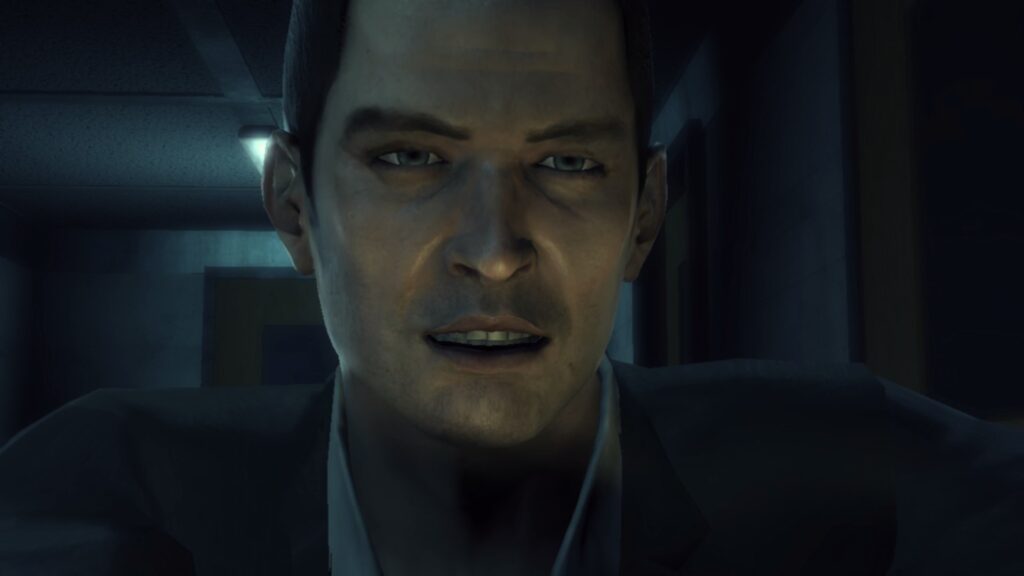
    Anyway, the story goes a little something like this: You play as Charles Deckard, a generic white dude protagonist who’s a graduate of the Gordon Freeman school of FPS character development. Deckard is given an offer from Osmond LeFey, leader of the sinister-sounding Black Order, to procure Pandora’s Box, which is conveniently hidden in The Metropolitan Museum of Art in New York City. After sneaking in and inserting a fancy key and a blood sacrifice, all hell breaks loose, as Pandora’s Box opens a portal to evil gods and beings flooding the city. With the help of Vivian Kane and his new Signet powers, Deckard must close up Pandora’s Box, while making sure LeFey doesn’t get it for evil nefarious deeds that evil nefarious villains do.

    Sewers…. why does it always have to be sewers…

    Legendary is a bog-standard FPS for the time. WASD moves, Left click to fire, right click to aim down sights, Shift sprints, E uses objects. Deckard can only hold two weapons, following the Halo and Call of Duty formula, alongside his trusty axe and two explosives that you switch between. Despite taking several pages from the 2000s FPS ethos, there are a few things it tries to do differently, such as no regenerating health, and fancy powers thanks to the Signet on his arm. Though, Deckard also has the cool ability to turn valves and “hack” keypads to open doors.

    Deckard’s abilities really boil to down to two things: A kinetic blast that helps destroy objects and stuns Pandora’s foes, and healing yourself. I ended up using the blast a lot to make certain foes easier to fight, and a few times for destroying physics objects when the game asked me to, but the heal feature was the most helpful. That is, if I could find places to heal and have enough animus energy to even heal in the first place.

    To quote Spaceballs: “Suck… suck… suck!!!”
    (more…)