Tag: game music

  • Counter-Strike: Global Offensive Music Kits Series 5: Of Masterminds and Missing Links.

    Counter-Strike: Global Offensive Music Kits Series 5: Of Masterminds and Missing Links.

    I never thought I would ever come back to this. After a steady stream of music packs released throughout 2014-2016, I assumed Valve was done with the whole “CS:GO music kit” concept. After the Radicals Box hit in 2016, there had been nary a peep when it comes to that kind of content.

    Then something changed. Throughout 2019 to 2020, Valve started slowly doling out individual kits, which was a better strategy to me as I could basically write about them when I had enough music kits to review. Then in late April of this year, they just dropped a pack of 7 new kits, which means I had to throw those plans immediately in the garbage.

    It’s weird. The last major music kit release was in 2016, so to see them go from absolute silence to adding new ones every few months is a surprise. Especially with the spread of musicians we have on offer this time.

    While I don’t play much Counter-Strike: Global Offensive these days – Call of Duty: Warzone has been my current vice, as my previous article could tell you – I still find some charm in the game. Global Offensive does things that seem absolutely baffling by modern shooter standards, yet works perfectly well without feeling too old school and too modern. That Valve has mostly stuck with it while adding elements of its competition like character skins makes it interesting to look at as a game, even if I’m not as invested as I once was. But we’re here to talk about the music, and talk we shall.

    This was available first to people on Patreon. If you wanna see content like this one week early, check it out here. Just $1 will get you to see this content early.

    To start, I’ll cover the four music kits released in the interim between the Radicals Box and the Masterminds Box. Like before, I’ll cover information about the musician in question, whether the music itself is good, and whether it fits in the context of Global Offensive’s gameplay. I’ll finish it off with a verdict. So let’s get started.

    Like before, I’ll link to a YouTube video or to CS:GO Stash if you want to listen along.

    The Verkkars, EZ4ENCE

    DESCRIPTION: The Verkkars rise through the Finnish charts with a heart-pounding tribute to ENCE. Can it really be so EZ?

    LISTEN ON: YouTube (courtesy of YouTube user ThEMaSkeD), CS:GO Stash

    AVAILABILITY: Available for purchase as a standard kit for $4.99, a StatTrak variant for $7.99, or on the Steam marketplace.

    The first of the interim kits, this was released as a promotional kit after the Intel Extreme Masters Katowice tournament in 2019. The Verkkars are an electronic dance band based in Finland, the same country that Major qualifiers ENCE are from.

    ENCE is an eSports team that consists of noted Finnish CS:GO players, including allu, one of the replacements for Fifflaren in the classic CS:GO Ninjas in Pyjamas lineup, and was a fairly reliable player during his tenure with that team. Combined with some other good players from the Finnish CS:GO scene, they came to be the underdogs of the tournament, getting as far as the finals in Katowice.

    The downside was that their opponents in that final were Astralis. Or as I like to call them, The New England Patriots of Counter-Strike: A team that you can’t deny their high-tier skill and abilities while playing, but they are absolutely boring to watch them dominate everyone. (Surprising no one, Astralis beat ENCE 2-0 in the final, winning their second consecutive Valve-sponsored major.)

    This was clearly made as a promotion for the team ENCE, and the title is a reference to a line that people were spamming in Twitch chat about the team when they were at their peak. The song itself is… okay. It’s bog-standard EDM. It really didn’t grab me.

    Then the chorus got stuck in my head. The whole song is in Finnish (except for some sampled English dialogue from a tournament that plays during the breakdown), but the tone of the chorus just… hits the right notes to just get stuck in my head in the most obnoxious way.

    I put “EZ4ENCE” in a category I’ve called “terrible god damn earworms,” where a specific portion of a song – usually the chorus – gets stuck in your head in all the worse ways and never ever leaves you. The Verkkars’ ENCE anthem is in the same league as Paul Oakenfold’s “Starry Eyed Surprise,” or Paul McCartney’s “Temporary Secretary,” which is quite an impressive feat.

    If you’re a fan of the team, it’s a good pack. If you’re not, Mord Fustang’s Diamonds does the same kind of EDM stuff but without the earworm chorus. Even listening to it again for this review has that damn chorus stuck in my head for the rest of the day.

    EZ4ENCE, ENCE, ENCE

    Dens putted upperbelt

    Putted upperbelt…

    VERDICT: Only recommended if you’re a fan of the team. Otherwise I lightly recommend it, get it on the Steam marketplace.

    (more…)
  • Game composers recycling their own music.

    Game composers recycling their own music.

    Let’s say you’re a fairly notable game composer. You’ve worked on some bangers and lesser-known hits. You got a good pedigree of work, and you’re suggested to work on someone’s new game. Life feels good.

    Though, sometimes your creativity fails you. You struggle to make a new composition and the game’s about to go gold. So you dig into your back catalog of previous works, adjust the tempo and change a few instruments, and bam, you got a new song.

    What do these two games have in common? You’re about to find out.

    I call this “Game music recycling.” It’s a phenomenon that has existed for a long time, even outside the video game realm, but I’m particularly interested in the gaming side specifically.

    Now I’m gonna lay down some ground rules for this. They’re not particularly complex, but they’re to avoid things that wouldn’t really count. So here they are:

    • The tracks in question have to be in a commercially released game. Bobby Prince released a handful of demos of licensed music for Doom that later got reused in later games, but since those weren’t made to be commercially released, they don’t count.
    • The recycling has to come from the same composer. Tim Follin basically redid the theme to Starsky & Hutch for the NES game Treasure Master, but that’s more of an homage than anything.
    • It has to be a full song. A composer throwing in a jingle from another game they made as a tribute doesn’t really give me much to work with.
    • It must come from different games in different franchises. There will be an exception with this first entry, but this is to avoid the obvious of someone blaming a composer for using the same theme in every game.

    For this entry, the recycled music are all from composers based in Europe. American and Japanese composers have done similar recycling, which I’m gonna save for future entries. Let’s get started.


    David Wise:

    Menu from Sid Meier’s Pirates, 1990.
    “Gang-Plank Galleon” from Donkey Kong Country, 1994
    “Snakey Chantey” from Donkey Kong Country 2: Diddy’s Kong Quest, 1995.

    This first one was one I didn’t really know about until someone on Twitter pointed it out fairly recently.

    I have never played a Sid Meier game. Basically simulations that require me to complex strategy to succeed really bores me and at times feels like it has too high of a skill ceiling to really enjoy anything out of it. It’s why I’ve never played Civilization. But the original Pirates! seemed to have a modest following, and got ported to a bunch of different systems, including the NES in late 1991.

    While it was released on several platforms, there wasn’t a distinct soundtrack for each, thus each version has their own unique set of music. This was ported over by Rare, who pretty much one of several go-to contract developers for NES games throughout the late 80s-early 90s. David Wise, at the time Rare’s sole composer, made a simple little ditty for the game’s main menu as you planned out your pirates story.

    Cut to a few years later. Rare works on what is one of the biggest games of the year, Donkey Kong Country. The final boss, King K. Rool, takes place on a giant pirate ship. Naturally, this was the most fitting place to rearrange a small tune made for a port of a Commodore 64 game. While it does borrow part of the melody from the Pirates! tune, it does go off into its own tune after that.

    The tune would get a second arrangement in the game’s sequel, Diddy’s Kong Quest. Called Snakey Chantey, the tune is a much more deliberate homage to that specific menu track, this time with a bit more of a jazzy sound to it.

    Until I was made aware of this, I only had two entries for this article. I’m a strong supporter of the “rule of threes,” and two just felt too little. Then this started making the rounds, and gave me a third entry, anda  good starting piece. Thanks to TheBalishChannel on Twitter for finding this one.

    (more…)
  • Activision and its weird SNES localizations.

    Activision and its weird SNES localizations.

    (Updated 4/15/2024 with updated links and clarification.)

    Activision. I probably don’t need to say any more, but I’m going to. They’re a company that fully endorses the practice of “make something until it stops making money, then burn it alive and dump the ashes.” Franchises like Tony Hawk’s Pro SkaterGuitar Hero, and James Bond came out practically yearly until the quality suffered. Many iconic studios like Neversoft, Bizarre Creations, and Radical Entertainment were among the casualties when their games didn’t sell well enough. Others, like Raven Software, were enslaved to make Call of Duty after two back-to-back commercial failures  in Wolfenstein and Singularity. Even then, who knows when the COD bubble will finally burst?

    But before Activision was the monstrous juggernaut they are now, they were still a company that was recovering from the ’80s. A bunch of bad business deals forced the company to be bought by a holding firm in the early ’90s, ran by Robert “Bobby” Kotick, who still runs the company to this day.

    While Activision was trying to rebuild during the ’90s, they decided to do something unusual in terms of localization of two Super Famicom games to the west. Localizing games originally from Japan is fairly common, which usually meant changing stuff like minimizing Hitler and Nazi references in Bionic Commando on the NES, to straight up overhauls of existing games, such as Masked Ninja Hanamaru being transformed into Yo! Noid, a game involving Domino’s short-lived mascot for the NES.

    In Activision’s case, their localization approach was somewhere in the middle: they decided to scrap the original Super Famicom soundtrack, get a contract deal with some fairly popular electronic bands, and have their songs be part of the new American soundtrack, complete with advertising this fact on the box and in the game itself.

    So, all I can say now, is “Are you ready for this?”

    (Before I go any further: Shout out to online buddy LanceBoyle for giving me the inspiration to write about these. Not the guy from MegaRace, though I’ll give him a shout out too, because why not?)

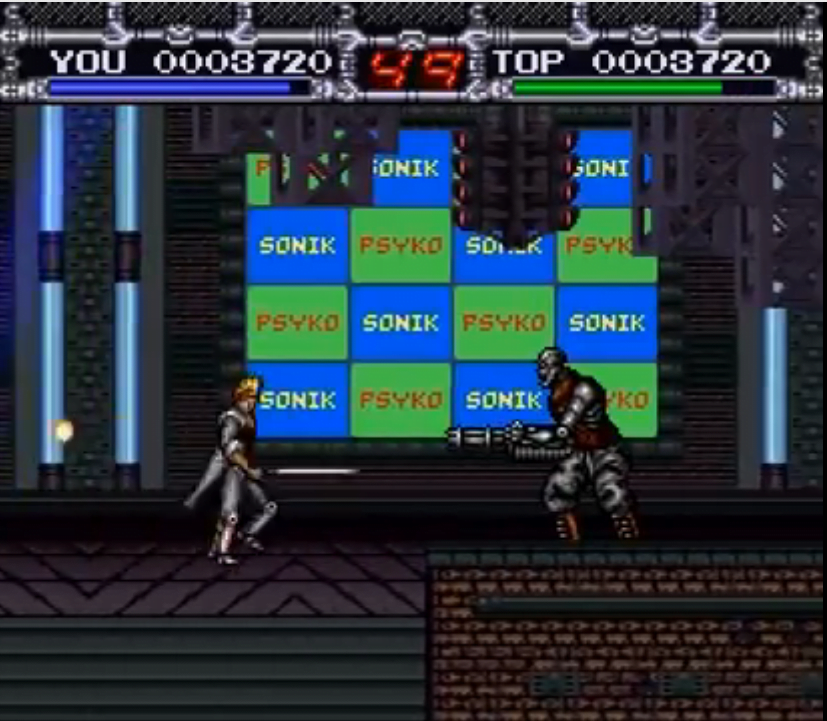
    The first game they attempted this with was BioMetal, a fairly innocuous shoot-em-up with powerups that was a decent little R-Type clone. Alas I am very bad at these kind of games, so I couldn’t get past the first stage. Though from what I’ve seen, it seems to be just one of many shoot-em-ups on a system that was already filled with them. It’s why stuff like Phalanx had that weird hillbilly on the cover, to make it stand out.

    Activision’s attempt to make it stand out didn’t involve a cover change, but rather something a bit more unusual: Composer Yoshio Nagashima’s soundtrack was replaced by songs from the band 2 Unlimited. 2 Unlimited was the band that made that fairly popular electronic song “Get Ready for This,” a song that plays practically at every sporting event you could imagine. It plays during the title screen and appears on Stage 2.

    BioMetal also features other cuts from their debut album Get Ready!, such as “Twilight Zone” (Stage 1) and “Delight” (Stage 3). Though not all of the songs come from that album, Stage 4 uses “Tribal Dance” off their followup album No Limits!, whereas one other track, that one that plays on the Continue screen, Stage 5 and the Credits, is one I couldn’t immediately pinpoint. The closest equivalent might be “Maximum Overdrive” from No Limits!, but it could also be an original composition meant to emulate the 2 Unlimited sound by composers/arrangers Ali Lexa and John Rodriguez of Ubik Musik Productions. If you have any idea, feel free to let me know in the comments.

    (more…)
  • Counter-Strike: Global Offensive Music Kits Series 4: Let’s Get Radical!

    Counter-Strike: Global Offensive Music Kits Series 4: Let’s Get Radical!

    I’ll admit that my interest in Counter-Strike: Global Offensive has dropped off in recent months. There not being a lot of major updates is the main reason, but also because I love when they announce new music kits. Just when I thought Valve was basically saving 2017 to be the “year of CS:GO,” they drop a bomb on us:

    ss-2016-11-30-at-12-01-41


    A bunch of gloves that are rare as a god damn knife, but that’s not what I’m here to talk about. I’m here to talk about those darn music kit!

    I know this whole project sounds silly, but I’m always interested in what musicians Valve can cajole into this project. This time, it’s all lumped into a $7 case called “The Radicals Box”, and they’re all “StatTrak” versions so any time you get an MVP in a competitive match, your teammates and enemies will know how awesome you are.

    This time, we got seven more music kits. Three of them are from bands from Red Bull Records, which I covered previously, while three more are from a different record label, Hopeless Records, the band that notably had artists like Taking Back Sunday, Sum 41 and Yellowcard. Sadly those bands aren’t featured here, but instead we get the B-tier bands on their catalog. The last remaining kit is from a returning musician, and it fits with the theme of rock and metal. (Hint: It’s not Daniel Sadowski.)

    Like before, I’ll link to a YouTube page and the CS:GO Stash page so you can listen along. That being said, let’s get rocking.


    Beartooth, Aggressive

    beartooth_02


    Beartooth is back for round two. This new music kit hits harder and is even more aggressive. We’ve also made the MVP anthem extra heavy so your opponents feel really bad after they’ve lost to you.

    LISTEN ON: YouTube (through the official Red Bull Records YouTube channel), CS:GO Stash

    Our first returning act, Beartooth has another pack based on their newest album, Aggressive. Their last music kit was one of those that took a while to warm up to, but this one’s actually damn good. All the tracks are various cuts from the album, in instrumental form. “Loser” highlights as the main menu track, and their other singles “Aggressive,” “Always Dead” and “Hated” contribute to various parts of the kit from action cues to bomb timers. But they even went for album cuts for the remaining sections, such as “Censored” being one of the round/action cue timers.

    Since these are the instrumentals, they really do highlight the rocking metal feel of the tracks without someone screeching over them. This also didn’t take long for me to like it, compared to “Disgusting”, which took a while for me to warm up to.

    VERDICT: Recommended. A lot less harsh than Disgusting, and is quite catchy in spots.

    (more…)
  • Counter-Strike: Global Offensive Music Kits Series 3: A goddamn smorgasbord.

    Counter-Strike: Global Offensive Music Kits Series 3: A goddamn smorgasbord.

    About a day or so after I finished writing the last post about Counter-Life, I took a nap. When I woke up, I found out about this:

    More CS:GO music kits.

    Not only more of them, but practically doubling the total number of music kits from 16 to 30. I nearly fainted after that. This time it seems we’re getting a big variety sampler pack, from returning artists to new contributions from notable film composers, to even an interesting collaboration between Valve and a record label. In addition to the new music kits, they now added “StatTrak” variants that keep track of the times you’ve become the MVP in competitive matches. It seems a bit silly, almost like a joke someone made to Valve without saying they were kidding afterwards. But if you want it, it’s there for $6.99 if you want them, or on the marketplace for cheaper.

    Since I’ve written about the previous ones before, it’d be remiss of me not to continue the tradition. Like before, I’m gonna write how I felt about each one, mentioning some of my favorite tracks, and whether or not it’s worth the $5-7 to grab, with a quick verdict at the end.

    Now in the last collection, I had made videos of the new kits, but this time I passed on doing that. It’s not that it wasn’t fun to make, it’s that considering my meticulous nature for making these things, I would’ve taken a month to work on something that’s already been eclipsed by other YouTubers for lesser effort. So for the sake of this, I linked to other YouTubers or CSGOStash if you wanna listen along.

    So without further ado, let’s get started…

    AWOLNATION, I Am

    awolnation_01

    AWOLNATION Alternative Rocker AWOLNATION brings you a music kit for the ages. This kit is jam-packed with an eclectic selection of tunes and includes cuts from singles ‘I Am’ and multi-platinum hit ‘Sail’.

    LISTEN ON: YouTube (through the official Red Bull Records YouTube channel), CS:GO Stash

    Over the past year or so, we’ve gotten fairly notable electronic musicians: Noisia, Feed Me, that sort of jazz. For this series of kits, Valve teamed up with Red Bull Records to bring three notable artists from their label, including AWOLNATION.

    AWOLNATION (yes, in all caps) is a notable artist because of their multi-platinum award winning song “Sail.” A lot of this music kit features tracks from their recent album Run, though it’s all instrumental with the occasional shout here and there.

    Alas my knowledge of the band comes from “Sail” and little else, so I had to hunt down what songs were used for each track thanks to Spotify.

    The kit is named after one of the songs, “I Am.” Surprisingly, it’s not the main menu track as expected, but another track from the album, “Windows.” Other songs like “Hollow Moon (Bad Wolf)”, “Run” and “Jailbreak” are used for the Action cues, Bomb Timers and Lost Round/10 Second Timer, respectively. “I Am” shows up as one of the action cues, whereas their biggest hit “Sail”, the only song from their previous album, shows up as both an action cue and the MVP Anthem.

    Yep, once you frag dudes and get the MVP, everyone will be hearing the keys along with Aaron Bruno yelling “SAIL!” at the end. It’s worth it just for that alone.

    VERDICT: Recommended just on the MVP Anthem alone.

    Beartooth, Disgusting!

    beartooth_01

    DESCRIPTION: Beartooth brings an agressive [sic] back-to-basics hardcore stomp that gets crowds moving and breaking stuff. A perfect soundtrack for your no-scope scout frags. Rock ’till you’re dead.

    LISTEN ON: YouTube (through the official Red Bull Records YouTube channel), CS:GO Stash

    Here’s Valve/Red Bull Records collab number two. Beartooth is a metalcore band by Caleb Shomo of Attack Attack! fame. (Just so we’re clear: We’re talking about the Attack Attack that did that awful guitar crab-walking to a song called “Stick Stickly,” not the Attack Attack from Wales that’s the infinitely superior band.)

    I’m fairly picky about my taste of music. If there’s anything I hate about metal sometimes, it’s a guy screeching incomprehensible words into the microphone. If that’s all the talent you need to be a metal singer, then I should be auditioning to be one right now. Thank god the music kit is strictly instrumental, which unearths some pretty decent metal underneath.

    All the songs here come from their 2014 album Disgusting. Their single “In Between” serves as the main menu track, whereas other songs like “Keep Your American Dream” and “Body Bag” are the action/round cues. There’s some pretty okay metal on these tracks, and if you loved stuff like Skog’s Metal from the original set of nine, this is right up your alley. I’d be okay with them releasing more stuff like this.

    VERDICT: Lightly recommended, get it on the Steam marketplace for cheap. Great for those who want more rocking in their CS:GO soundtracks.

    Daniel Sadowski, The 8-Bit Kit

    danielsadowski_03

    Daniel Sadowski creates the first ever 8-bit Music Kit for Counter-Strike complete with authentic 8-bit sounds.

    LISTEN ON: YouTube (courtesy of YouTube user DeezTurbed), CS:GO Stash

    Our first returning composer, and I honestly wasn’t expecting him to return for a third time. This is Sadowski’s third music kit for CS:GO. This, along with the DOTA 2 music kit he also did recently, makes me think he’s practically a official composer for Valve considering how much he contributes to their games recently. It’s great, really.

    Considering the name, you can guess this aims for a chiptune approach, which is drastically different from his previous offerings (Crimson Assault and Total Domination). While we got fairly close to chiptune with an unused MVP track in Feed Me’s High Noon, this is the first music kit to actually go for the retro game music approach, and he does a fine job here.

    Some of my favorites include the Start Round, Choose Team and Start Action tunes. A lot of these fit right in line with NES-era music, which I consider to be a fairly difficult thing to master.

    After hearing this, I’d love to actually see notable chiptune composers have their take on chiptune game music for CS:GO, such as Rushjet1, or Danny Baranowsky. If someone like Sadowski can make a solid retro game music soundtrack, I’d love to hear someone else’s take at this.

    VERDICT: Recommended. Good for those who love chiptunes that actually are chiptunes and aren’t just someone adding samples to crappy MIDIs.

    Darude, Moments CSGO

    darude_01

    Yield freely in the soundscapes of Finnish producer Darude’s familiar musical flavours and tones. Enriching yourself with access to a heavy fusion of progressive overtones and scores of tingling melodic structure from the sounds banks of one of dance music’s most renowned pioneers.

    LISTEN ON: YouTube (courtesy of YouTube user CSGOPoetry), CS:GO Stash

    Ah yes, Darude. That guy who made that “Sandstorm” song that got popular in the early 2000s. Then it got popular again because Twitch chat users thought it’d be funny to go “DUDUDUDUDUDUDU Kappa” and make “Sandstorm” jokes on DOTA2 and CS:GO matches. It seems Darude has taken this in stride, at one point DJing at The International 4 after party and pretty much trolling the entire crowd by teasing “Sandstorm” the entire night before finishing it as the encore.

    I’ll mention this upfront: No, “Sandstorm” is not in this kit. The kit itself has tracks that sound like “Sandstorm,” but none of the tracks are actually “Sandstorm.” Rather, it’s a unique track made specifically for the game, though it’s titled after his most recent album. Despite being named after an existing Darude song, “Moments,” it sounds nothing like the music kit featured here. In fact, I really couldn’t find the song he used here, so it’s likely an original composition named after his most recent work.

    A lot of the tracks have the same catchy beat to it, with additional instrumentation where appropriate. The first Start Round/Action has good instrumentation, and I like the slowdown touches on the Round Loss and Deathcam cues. But a lot of it sounds similar, which is slightly disappointing, but hey, this is a bigger get than when DOTA2 got deadmau5.

    VERDICT: Lightly recommended, get it on the Steam marketplace on discount. It’s not Sandstorm, but Darude made a good enough substitute.

    (more…)
  • Counter-Strike: Global Offensive Music Kits Series 2: Crossovers and… Christmas?

    Counter-Strike: Global Offensive Music Kits Series 2: Crossovers and… Christmas?

    Let's ignore the stickers and look at the big prize: NEW MUSIC!
    Let’s ignore the stickers here and look at the big prize: NEW MUSIC!

    It’s that time again. On February 12, 2015, Valve introduced a second batch of music kits for Counter-Strike: Global Offensive. I had written about the first nine late last year, and it’s become one of my more popular posts recently. If you wanna see my reviews for the first nine music kits, click here.

    Since there’s new ones, I thought it’d be nice to come back and write about these brand new ones and see if they’re worth your money.

    Naturally, I’m going to review these, complete with videos so you can listen along. Like before, these music kits will randomly appear in the game as an offer for $4.99 for a standard one, or $6.99 for a StatTrak one that counts your MVPs in competitive matches. If you’re cheap like me, you can buy these on the Steam Marketplace at a cheaper value if there’s a specific kit you’re interested in.

    I’m also gonna throw one in that came out in December, after I had written the original CS:GO music kits post. Consider these music kits part of a “Series 2,” if you will.

    (The Midnight Riders music kit video is courtesy of YouTube user wtiw. All the other music kit videos are made by me.)


    Midnight Riders, All I Want for Christmas

    “HAPPY HOLIDAYS, ****ERS!” -Midnight Riders

    LISTEN ON: YouTube, CS:GO Stash

    Wow, the first official Valve crossover in CS:GO. Granted, some of the maps in Arms Race and Demolition are based off stuff from Left 4 Dead 2, but this is the first item that actually references another game entirely.

    Midnight Riders is a fictional band that appears in the Left 4 Dead 2 universe. Their music is mostly southern rock, with such awesome songs like “Midnight Ride” and “One Bad Man.” In late 2009, they released a new track, “All I Want for Christmas is to Kick Your Ass,” which is used as the base of this music kit.

    Most of the kit is taking the 3 minute track and splicing it together to fit CS:GO‘s music. Some of these, like Round Start 1, Lost Round and Death Cam make good stingers, but the rest is kinda slapped together, especially since a lot of the tracks like Won Round have a hard stop that’s a bit jarring. More proof that this feels slapped together is that the Bomb 10 Second Timer and Round 10 Second Timer are exactly the same. There’s not even any changes in instruments, they are literally the same track. Feels real lazy.

    Compared to the other music kits, this seems slapped together as a Christmas promotion, and it could’ve been better. This one is currently unavailable for purchase in game, but you can still buy it on the Steam Marketplace if you’re curious. Though I can’t blame you if you’re not interested.

    I wouldn’t mind seeing another Midnight Riders music kit, just put a bit more effort into it next time, Would you Valve?

    VERDICT: Want some holiday cheer? This’ll work. Even works outside of the holiday season. Lightly recommended, get it on the Steam marketplace on discount.

    (more…)
  • A look at Counter-Strike: Global Offensive’s first music kits.

    A look at Counter-Strike: Global Offensive’s first music kits.

    So for the past month and a half, I’ve been fixated on something a bit unusual:

    When you need some jams while getting the ace on Dust II.

    Valve introduced “music kits” to Counter-Strike: Global Offensive back in October 2014. These special items replace the game’s default music with unique tracks by nine different musicians. You can get one of these offered randomly in-game for $4.99, or buy one on the Steam marketplace if you’re looking for a specific one. Alternatively while in-game, you can borrow anyone’s music kit if they have one equipped, so you can give it a try in action.

    I love video game music. I also tend to get nerdy about the parts of video game music most people don’t notice. Naturally when this was announced, I was excited for something that was probably done to distract us from how broken the CZ75-Auto is in CS:GO (at the time). But I was curious on what each one sounded like, and if they were any good.

    The first nine music kits introduced. A nice mix of game composers, DJs and hard rockers.

    For the sake of this, I’m gonna give a review of each kit. Granted, I’m not an expert at reviewing music, but I’ll try to review it to the best of my abilities, and links that feature each kit so you can listen to them for yourself. Without further ado, let’s get started.

    I’m not gonna review the stock default that’s been in the game since 2012, but I will say this: It’s fine. It works. It’s credited to just “Valve,” but some of it seems to be split between Valve composer mainstay Mike Morasky and DOTA2/Myst V composer Tim Larkin. It’s what I kinda hate about Valve’s philosophy of only crediting the company rather than specific employees: It makes it harder to credit who made who.

    Videos courtesy of YouTube user TheLeafyfille.

    Austin Wintory, Desert Fire

    Grammy nominated game composer Austin Wintory asks, why bother hunting your enemies when you can lure them in with a deadly, admittedly insane, tango?

    LISTEN ON: YouTube, CS:GO Stash

    Austin Wintory’s done music for most of thatgamecompany’s work, such as fl0w, and Journey, which I heard was a great game. (I still need to get around to playing that one.) Out of all the game composers featured here, barring Sean Murray, I’d say he’s probably the most famous game composer out of everyone here.

    Wintory’s Desert Fire opts for an acoustic guitar with an orchestral accompaniment, fitting right at home on maps like Inferno, Mirage or Dust II. One of my favorites is the second action cue (startaction02) that plays immediately as a round starts, with a brassy horn section finely tuned to the action. The MVP Anthem is another favorite, with quick percussion and a flute solo, which fits perfectly for when you fragged the entire enemy team, or successfully defused a bomb.

    It may be a bit cliche on the acoustic guitars and the woodwinds, but it works insanely well. We’re already off to a great start.

    VERDICT: Highly recommended.

    Daniel Sadowski, Crimson Assault

    Video Game Composer Daniel Sadowski delivers Edgy Action mixed with CRAZY FAT beats in this pulsating, exhilarating Music Pack.

    LISTEN ON: YouTube, CS:GO Stash

    I’ve never heard of Daniel Sadowski, but he’s done music here and there for some movies and games, most notable the 2009 A Boy and His Blob reboot, and doing music for something like Counter-Strike is enough to get you noticed more, so good on him.

    Crimson Assault goes heavy on the techno, a 3-note motif appearing throughout all the tracks in his score, becoming the only notable thing about it. The score itself is very much pulse-pounding action, and the bomb timer music being one of the highlights, fitting perfectly with the suspense of bomb defusal mode.

    This music kit took a good while to grow on me. At first, I felt it was bad techno and was probably the worst of the pack, but after a few listens and hearing it in action in-game, it fits in CS:GO. If you’re looking for something that will get your blood pumping, Crimson Assault’s not a bad choice.

    VERDICT: Lightly recommended, get it on the Steam Marketplace on discount.

    Dren, Death’s Head Demolition

    From game music composer Dren, this cinematic, superhero-metal inspired music pack puts the ‘ill’ into KILL!

    LISTEN ON: YouTube, CS:GO Stash

    For this first group of music kits, Valve really went all over the place with who they chose. Dren isn’t a composer I’m familiar with, but he’s done music for other games, mostly mobile games like Transformers: Age of Extinction. As I said, getting featured in a game like this gets you noticed, especially with his music kit.

    Filled with heavy percussion and a chugging bass line, Death’s Head Demolition ends up being a good mix of dramatic orchestral score with subtle hints of rock, which does crop up on some other games like Call of Duty. It makes it feel very innocuous, which isn’t bad, it compliments the game without being too obnoxious. This was another one that I thought wasn’t great as first, but after a few listens and hearing it in-game, it fits perfectly fine in the game.

    If CS:GO didn’t have a soundtrack in it already, Death’s Head Demolition would probably be the closest to an “official” soundtrack. It strikes a good balance of orchestra and rock, fitting right at home in a game like this. Death’s Head Demolition’s a good music kit, even if it’s not incredibly outstanding.

    VERDICT: Recommended.

    (more…)
  • From a Half-Life mod to Splinter Cell: How I discovered a song by accident.

    From a Half-Life mod to Splinter Cell: How I discovered a song by accident.

    Over the years, I’ve amassed ridiculous amounts of video game knowledge. I created the Secret Area as a good place to share said video game knowledge with people. Often times it’s rather crufty trivia that I couldn’t resist sharing, but other times it’s about my personal experiences with games, much like this entry.

    Video game music is something I’m also interested in. While I am a bit of an outlier in terms of my game music tastes – I usually prefer stuff by American and European composers, and don’t really care much for Japanese game music past the SNES/Genesis era – I still love finding information about game music, much like a lot of things I like.

    So I’m gonna get nerdy about video game music. I’m gonna write about something that came to mind fairly recently that I thought would be worth sharing. Such as how a game mod introduced me to a hip-hop artist’s music by accidentally hearing it in a AAA game.

    2014-09-21_00001

    Poke646 is one of the best Half-Life mods out there. At the time, most Half-Life mods reused most of the existing templates that the original game used, making Black Mesa look like a research facility that spanned a whole continent. Mods like They Hunger and many others changed how people looked at Half-Life, but not nearly as much as Poke646 did. People were even pointing out how creator Marc Schröder basically made an art style that predicted the later City 17 style of Half-Life 2 years before its announcement.

    But I’m here to talk about the music. The game’s credits, featured below, featured this haunting, ambient hip-hop tune with prominent piano accompaniment.

    YouTube player

    The hip-hop styled track really fit in line with the rest of the game, which also had some great original ambient music. Thankfully all this music is in the Poke646 mod folder, which makes it easy to listen to outside of the game.

    Cut to 2010. I had recently picked up Tom Clancy’s Splinter Cell: Conviction Special Edition for $35 at Ubisoft’s online store because of an issue of the special USB keys not working on some copies. As I was going through the game itself, a certain tune started to play that sounded rather familiar…

    (more…)
  • A Tribute to Red Book CD audio.

    A Tribute to Red Book CD audio.

    When it comes to video games, CDs were a god damn revelation back in the day. Before then, people were developing games on cartridges that barely held a few megabytes. CDs, on the other hand, held up to a much bigger size of 700MB, and as a result, developers found out they could use that extra size for things they couldn’t have before on cartridges. This had the side effect of giving us a lot of crappy full motion video games around the mid-’90s, but they also brought us something amazing: CD quality audio.

    Courtesy of Wikipedia.
    So shiny, but holds a lot of stuff.

    No longer were developers constrained by the YM2612 and SPC700 sound chips — the sound chips for the Sega Genesis/Mega Drive and the Super Nintendo, respectively. Musicians could now make the music as it was intended to be heard: with live instrumentation (or a close approximation).

    A fair share of CD-based systems like the Sega CD, the Turbografx-CD, the PlayStation, and Sega Saturn had CD audio support. While playing these games, the rich CD audio played through your television, giving you music that you’d never heard before in video games. This was known as the Red Book CD audio standard. Introduced in 1980, it set the standard for audio in video games throughout most of the 1990s.

    I remember the PC version of Sonic CD being one of the earliest examples of this. It was pretty neat to listen to most of the game’s music outside of the game.

    Not only could you hear the awesome music in game, you could listen to it outside of the game. In most cases, you could put the game CD in a CD player and start listening to the music without having to play the game itself. To me, this is what made CD audio awesome: Being able to listen to the soundtrack outside of the game.

    Previously, if you wanted to listen to the game music, you had to hope for a soundtrack CD, or in the case of PC gaming, dig through files and play them on media players that could support MIDI or MOD Tracker files. The Red Book audio standard changed that to something more simple: putting in the CD in a CD-ROM drive and pressing play. Be careful though, since Red Book audio CDs are mixed mode CDs, you need to tune to track 2 to hear the game music, unless you want to hear a lot of unlistenable static that could damage your speakers or the disc itself.

    (more…)
  • Game Show Themes vs. Their NES Counterparts.

    Game Show Themes vs. Their NES Counterparts.

    There’s two things that I love fondly that I grew up with: Video games (natch), and game shows. I’m not exactly sure what gravitated me towards game shows: Could be the flashy sets, the catchy themes, the thought of people winning $25,000 in mere seconds; but whatever it was, I was hooked. I still enjoy the classic game show every now and then, even though my interest in the genre has waned in recent years.

    1526100
    The rare sunburst logo. The common white and blue logo wouldn’t show up ’til the 1990s.

    Since I like game shows and video games, having the two come together sounds amazing. It’s my version of a peanut butter cup. There were a whole bunch of them on the ol’ NES, almost all of them published by GameTek, a US-based software company. I think the game show games were their only hallmark, though they did publish games like Frontier: Elite II and Corridor 7: Alien Invasion, as well as working on publishing Robotech: Crystal Dreams before filing for Chapter 11 bankruptcy in 1999. There were some NES game show games published by other companies, such as Hi-Tech Expressions, but the less said about those games, the better.

    Woflogocomparison
    Okay, it doesn’t fit one-to-one, but you get what I’m going with this, right?

    Now, there’s a fair share of game show games on the NES by GameTek, including four different editions of Wheel of Fortune and Jeopardy!, as well as Double Dare, Hollywood Squares and many others. What most people don’t know is that some of these were developed by Rare. Yes, that Rare. Donkey Kong Country Rare. Banjo-Kazooie Rare. Kinect Sports Rare. For those who don’t find that as surprising as I do, Rare is a games company based in Twycross, England. All the game show adaptions that they had made weren’t as well known on British TV at the time, so to have a company based in England to do American TV game show video games is funny. I would assume the production companies would send them episodes of the show as well as the rules of the game so they understand what they’re trying to make.

    David Wise is one of my favorite European composers, next to Tim Follin, Richard Jacques, and Simon Viklund. You could consider this post part of the “David Wise Appreciation Station,” if really you want to.

    Since Rare was a small skeleton crew throughout the ’80s, they only had one composer: Dave Wise (pictured). Wise pretty much composed all of Rare’s games solo up until the early ’90s, and seeing him try to recreate some of game show’s iconic themes on the NES sound chip sounds intriguing. Let’s see how well he did on each of them…

    Jeopardy! (also includes Jeopardy! Junior Edition and Jeopardy! 25th Anniversary Edition)

    Guys, the globe goes *behind* the logo, not under it!

    The NES version:

    COMPARED TO: 

    “Think!”, Jeopardy!‘s theme from 1984-1991 (originally composed by Merv Griffin):

    There really isn’t much to say about Jeopardy! as a show. Surprisingly, there were several NES adaptations by Gametek, with new editions out about a year apart from each other.

    The theme to Jeopardy! is undeniably the most well-known and iconic game show theme. Merv Griffin’s little think tune eventually became the show’s hallmark theme since the show’s revival with Alex Trebek. Being one of the earliest Rare/GameTek collaborations, this is probably one of the closest. However, the intro – used during the contestant selection in the game – goes up three keys rather than two like the actual theme does.

    Mutant David Letterman faces off against two random ladies in this exciting game of Jeopardy!

    The rest of the game has random little ditties that play throughout, and none of them resemble cues from the show. The theme is the closest they get, and it’s surprisingly passable.

    Now who ever seen a kid with a beard? Especially on Jeopardy! of all shows…

    The two later releases of Jeopardy! by Rare, 1989’s Junior Edition, and 1990’s 25th Anniversary Edition, have the same exact music. 25th Anniversary adds a little ditty during the copyright screen, which would also appear in Wheel of Fortune: Family Edition.

    There really isn’t much difference between the three editions besides new clues — the Junior Edition might be even harder than the other editions unless you know a lot of 50s-60s stuff — even the 25th Anniversary edition recycles the contestant sprites from Junior Edition, except giving one of the kid models a mirror-universe beard for some reason.

    These are alright versions of Jeopardy!, especially by 80s standards. You could do much worse.

    (more…)